IR Absorption Spectroscopy
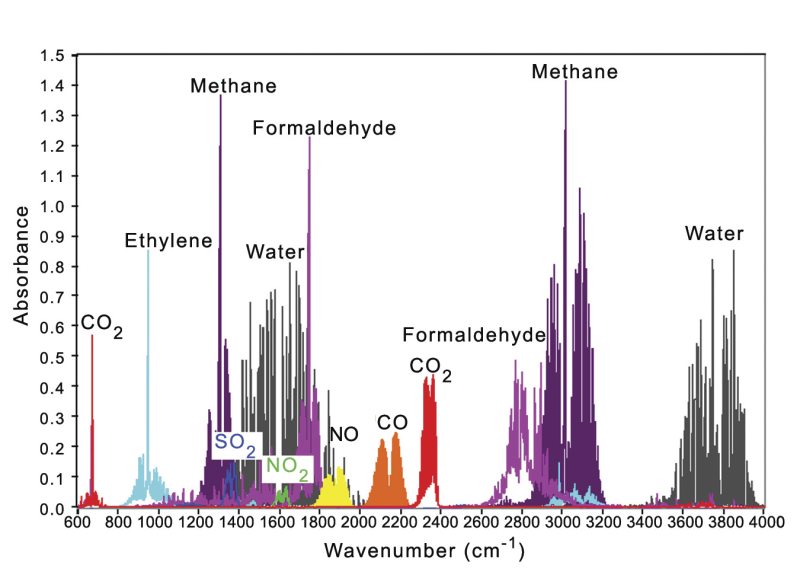
IR spectroscopy can be used for both qualitative and quantitative non-destructive analysis of gases, liquids, pastes, powders, films, and surfaces. The absorption spectrum of a molecule provides a unique "fingerprint" of absorbances that can be used to deduce a sample's chemical composition and species concentrations. Figure 1 shows IR absorption spectra for some of the gases that are routinely measured in stack emissions monitoring applications. Each of the gas species labelled can be seen to exhibit a unique pattern of IR absorption.
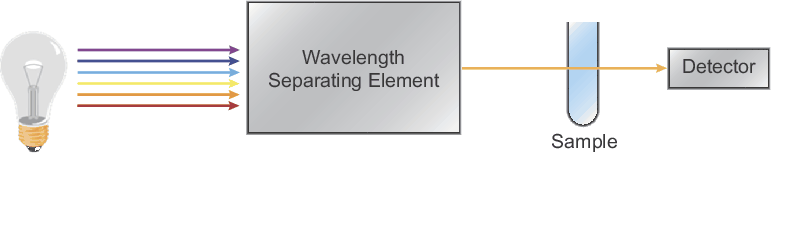
IR spectrometers typically consist of a broadband IR light source, a wavelength separating device and a detector, as shown in Figure 2. Liquid or gas samples are typically contained in a sample cell. Solid samples can be analyzed using absorption or reflectance spectroscopy, in situ or in a standoff measurement system, or as a pressed disc of powder diluted by an IR transparent material or diluted in pastes commonly referred to as mulls.
IR Spectrometers
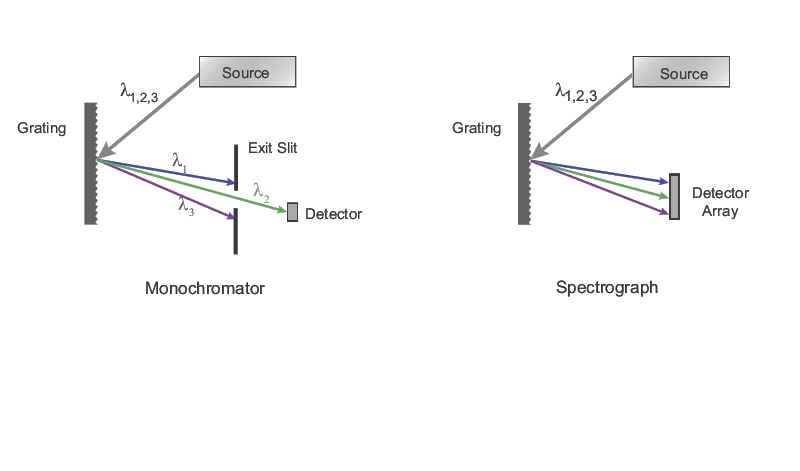
Dispersive or Grating Spectrometer
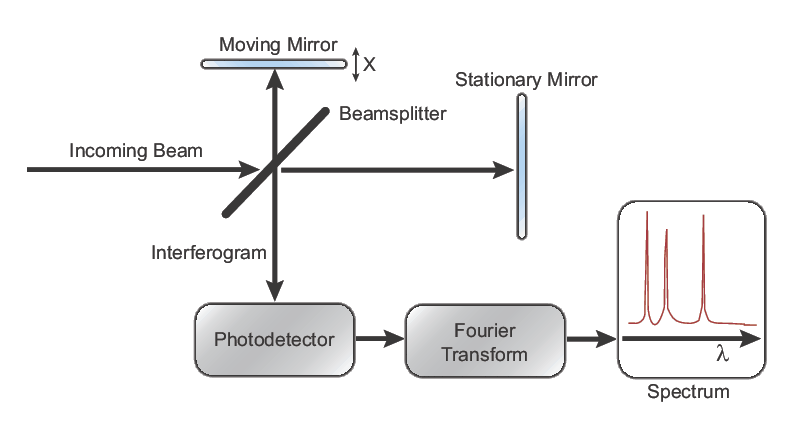
FTIR Spectrometer
Non-Dispersive IR (NDIR) Analyzer
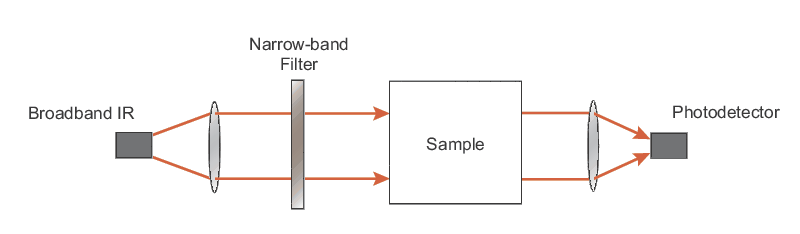
The main advantage of an NDIR instrument is the simplicity of its hardware. This makes NDIR instruments both low-cost and rugged, making them ideal for industrial applications. MKS Process Sense™ is an example of an NDIR analyzer used in semiconductor process applications.
Tunable Filter Spectrometer (TFS™)
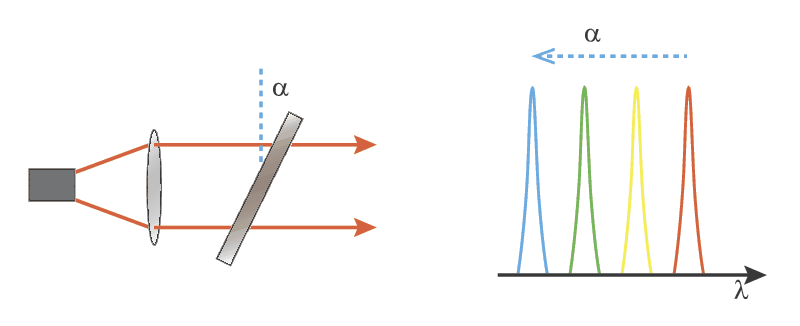
IR Spectroscopy Applications Using MKS Products
Emissions Monitoring
Chemical Agent and Toxic Industrial Chemical Detection
Semiconductor Process Monitoring
Heating Value Measurement of Hydrocarbon Gases
For additional insights into photonics topics like this, download our free MKS Instruments Handbook: Principles & Applications in Photonics Technologies
Request a Handbook