Perovskite Solar Cell Processing
The first solar panels were based on silicon wafers, and c-Si, or crystalline silicon, continues to be the dominant material used in photovoltaics. But ever since the first solar panels were deployed, there has been a continuous quest for higher efficiency and lower cost panels. A second-generation material, CdTe, or cadmium telluride, is a thin-film semiconductor that has begun to achieve commercial success. Although not as efficient as silicon, CdTe is lower cost.
A third-generation material, Perovskite, could be a game-changer. It has the potential for both higher efficiency and lower cost compared to c-Si and CdTe. However, Perovskite is still laboratory-based and has not yet reached commercial viability. Nevertheless, the growth rate of Perovskite's demonstrated efficiency has been faster than that of silicon and CdTe.
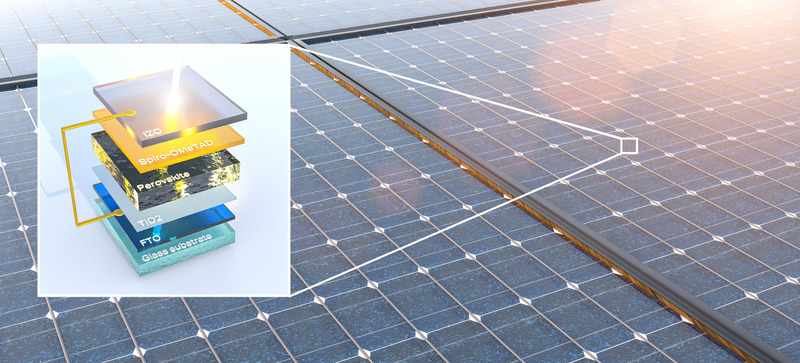
Lasers Will Help Enable Commercial Viability of Perovskite Solar Cells
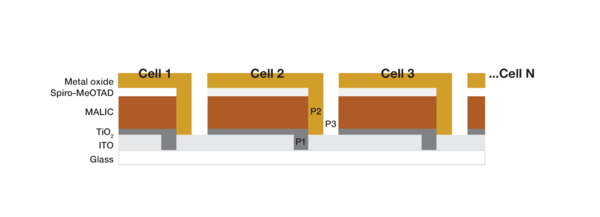
Perovskite solar cell manufacturing is a roll-to-roll process. Part of the process involves removing very narrow portions of thin-film layers of material in a multi-film stack without delamination or debris. This is commonly referred to as "patterning" or "scribing," which is done to achieve monolithic serial interconnections with adjacent cells. Traditional mechanical scribing methods, such as with a blade, and wet chemical etching methods have limitations and may cause undesired problems. Thankfully, a superior solution for Perovskite solar cell manufacturing is available: lasers. Here are some of the reasons why.
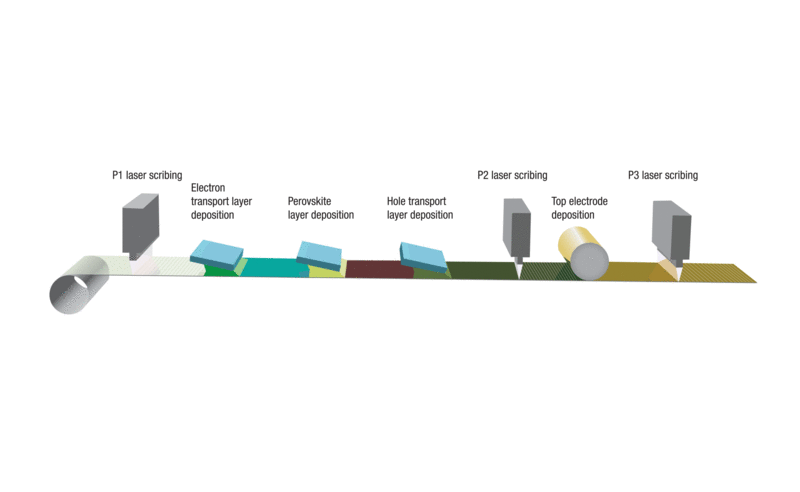
- Lasers are very high precision devices that can perform accurately and repeatability on the order of microns. This helps increase manufacturing yields. By contrast, traditional mechanical tools cannot reliably perform on nearly the same scale. In addition to their high precision, lasers offer more variable and intricate patterns for scribing compared to mechanical tools, which may enable more complex, and possibly more efficient, Perovskite solar cell designs.
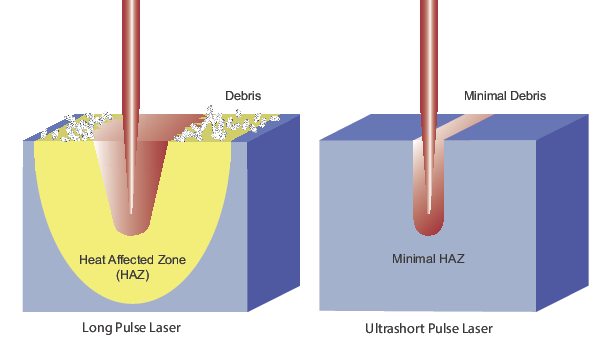
- Lasers deliver higher quality results by producing fewer burrs than mechanical scribes and cuts do with less thermal damage to the surrounding areas. This further results in higher manufacturing yields, as less of the material is wasted. Additionally, this can also lead to better quality and reliability of the product in the field, as fewer of these issues will end up in the final assembly.
- Laser scribing is a contact-free operation with no tool wear. Thus, replacement downtime is exceedingly infrequent by comparison to mechanical methods.
- Lasers are a more "green" technology. By contrast, a particular concern of wet chemical etching is that the waste management required presents extra complications and costs. Lasers, however, do not produce environmental waste.
Taken all together, MKS believes that incorporating lasers into Perovskite solar cell manufacturing will help to accelerate their commercial viability.
MKS Solutions for Perovskite Solar Cell Processing
| Challenges in Perovskite Processing | MKS Solutions |
|---|---|
| Selective removal of targeted materials without delamination | High-power UV, green and IR lasers to ablate required materials High power/high fluence optics to manage the lasers |
| Precise, repeatable control of manufacturing process | Lasers with versatile and consistent pulse control Power meters and beam profilers to ensure optimal laser output Robust, stable optical mounts |
| Preventing collateral damage, contamination or particle generation | Ultrafast lasers for highest quality micromachining |
| Scaling capacity at larger surface areas | High-power lasers for more operations |
Your Partner for Perovskite Solar Cell Processing
- 50+ years and thousands of laser micromachining systems for industrial applications
- Long-term partner to photovoltaic processing companies
- Full range of products: lasers, optics, opto-mechanics, beam analysis
- Custom capabilities
- Product availability
- Ability to scale with you
- Global corporation and presence

Lasers
Beam Analysis
Optics
Opto-Mechanics- Ultrafast (femtosecond and picosecond) and nanosecond lasers
- DPSS Q-switched lasers
- UV, green and IR lasers
- Laser thermal sensors
- Beam profilers
- Laser power/energy meters
- High energy mirrors
- High energy lenses
- High energy beamsplitters
- Zero order waveplates
- UV, visible and IR optics
- Mirror mounts
- Lens positioners
- Prism mounts
- Posts and pedestals
- Manual positioners
Lasers
Criteria for Selecting Lasers
When choosing a laser, there are several criteria to consider. First is the application or function of the laser – for Perovskite solar cell manufacturing, it is patterning by ablation, and more specifically, sequential removal of thin film by ablation. Next, the requirements of the application must be addressed, including the type and thickness of the material to be processed. For Perovskite solar cells, this includes not only Perovskite but also hole-transport, electron-transport, top electrode, back contact and glass coating materials whose thicknesses will be on the order of microns. Then, the specifications of lasers, such as wavelength and power, must be evaluated. Listed here are the criteria that MKS believes are most important when selecting lasers for Perovskite solar cell processing.
- Application Requirements
- Function
- Type of Material & Thickness
- Speed
- Resulting Size of Heat Affected Zone (HAZ)
- Laser Specifications
- Wavelength
- Power
- Pulse Width and Repetition Rate
- Stability
Perovskite Solar Cell Processing Lasers
- IceFyre® Picosecond Lasers: Versatile UV, green and IR picosecond lasers: The new standard for picosecond micromachining.
| IceFyre® | ||||
|---|---|---|---|---|
| Wavelengths | UV | Green | IR | 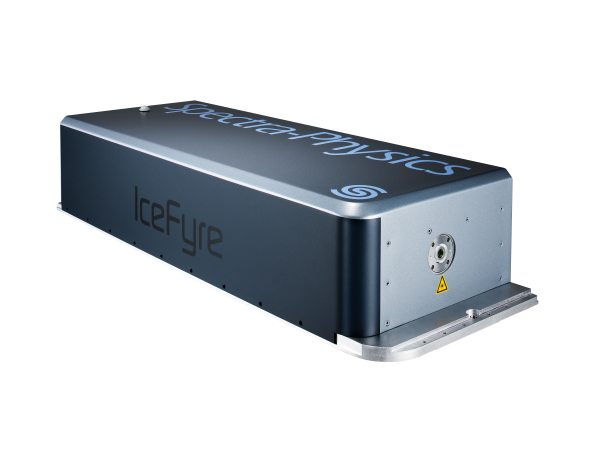 |
| Power | Up to >50 W | |||
| Pulse Width | <12 ps | <15 ps | ||
| Repetition Rates | Single Shot to 10 MHz | |||
| Max Pulse Energy | Up to >60 µJ | Up to >100 µJ | Up to >200 µJ | |
| Power Stability | <1%, 1 σ, over 8 hours | |||
| Other Features | 24/7 industrial reliability TimeShift™ technology for pulse control Laser/controller in single, compact package |
|||
- IceFyre ®FS Femtosecond Lasers: Highest performing fs lasers on the market for 24/7 micromachining of critical materials
| IceFyre® FS | ||||
|---|---|---|---|---|
| Wavelengths | UV | IR | 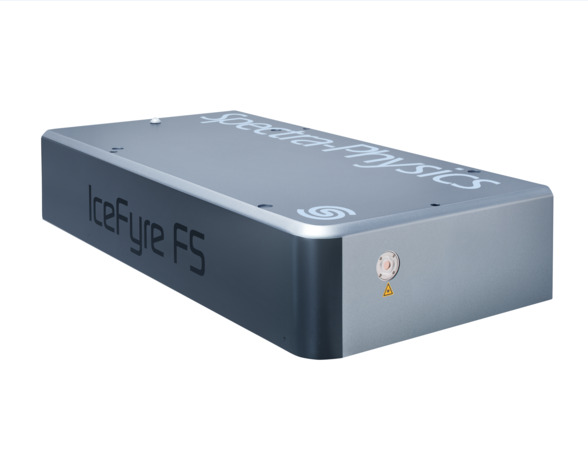 |
|
| Power | >50 W @ 1 & 1.25 MHz | >200 W @ 1-50 MHz | ||
| Pulse Width | <500 fs | |||
| Repetition Rates | Single Shot to 3 MHz | Single Shot to 50 MHz | ||
| Max Pulse Energy | >50 µJ @ 1 MHz | >200 µJ @ 1 MHz | ||
| Power Stability | <1% rms over 8 hours (after warm-up) | |||
| Pulse-to-Pulse Energy Stability | <2% rms | |||
| Other Features | 24/7 industrial reliability TimeShift™ technology for pulse control Laser/controller in single, compact package |
|||
- Talon® Ace™ High-Power UV Laser with Programmable Pulses: Highest single-mode ns UV power in the industry, with TimeShift™ programmable pulse capability
| Talon® Ace™ | ||
|---|---|---|
| Wavelengths | UV | 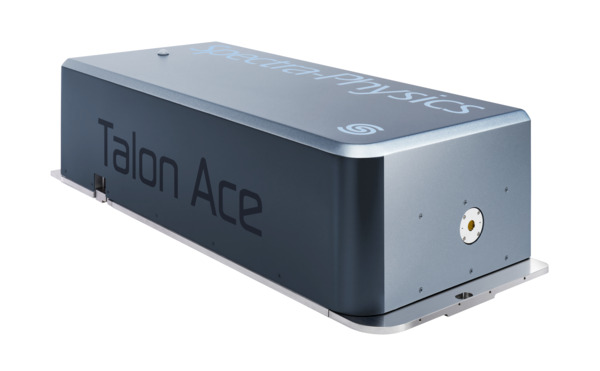 |
| Power | >100 W | |
| Pulse Width | <2 or 50 ns | |
| Pulse Energy | >500 µJ | |
| Repetition Rates | Single shot to 5 MHz | |
| Pulse-to-Pulse Energy Stability | <3%, 1 σ | |
| Other Features | 24/7 industrial reliability TimeShift technology for pulse control Laser/controller in single, compact package |
|
- Talon® Diode-Pumped Solid State Q-Switched Lasers: Superior combination of performance, reliability and cost
| Talon® | ||||
|---|---|---|---|---|
| Wavelengths | UV | Green | 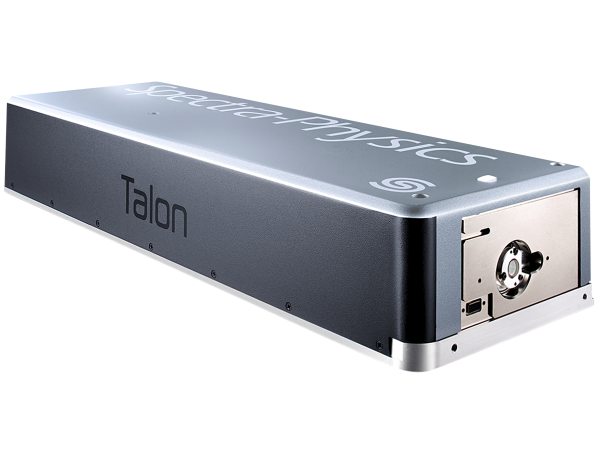 |
|
| Power | >45 W | >70 W | ||
| Pulse Width | <25 or 35 ns | <25 or 43 ns | ||
| Pulse Energy | Up to 500 µJ | Up to 1000 µJ | ||
| Repetition Rates | 0 to 500 kHz | 0 to 700 kHz | ||
| Pulse-to-Pulse Energy Stability | <5% rms | |||
| Other Features | 24/7 industrial reliability E-Pulse™ technology for superb stability Laser/controller in single, compact package |
|||
- Explorer One: The most compact UV and green nanosecond lasers in its class with high peak power and short pulse widths.
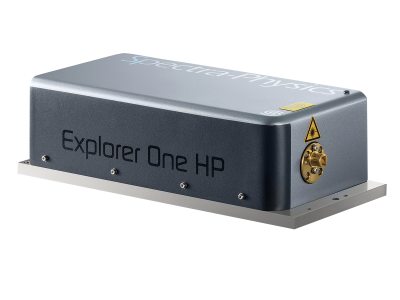
| Explorer One | Explorer One XP | Explorer One HP | |
|---|---|---|---|
| Wavelength | UV, Green | UV | |
| Power | Up to 2 W | 2 W (UV) or 5 W (green) | >4 or >6 W |
| Pulse Width | <5, <10 or <15 ns | <10 ns (UV) or <12 ns (Green) | <12 or <15 ns |
| Repetition Rates | Single shot to 200 kHz | Single shot to 500 kHz | Single shot to 200 or 500kHz |
| M2 | <1.3, TEM00 | ||
| Stability | <2% | ||
| Other Features | It’s in the Box™ design Very compact, lightweight air-cooled designs Thousands of hours in the field |
||
Lasers for PV Perovskite Processing Selection Guide
Presented here is a summary of recommended MKS lasers for various Perovskite manufacturing applications. Please use this as a reference guide only, and always contact us to discuss your application and requirements in detail so that we may provide the best solution for you.
| IceFyre® | IceFyre® FS | Talon® Ace | Talon® | Explorer® One | ||||
|---|---|---|---|---|---|---|---|---|
| Material | UV (ps) |
Green (ps) |
IR (ps) |
UV (fs) |
IR (fs) |
|||
| Perovskite | ✓ | ✓ | ✓ | ✓ | ✓ | ✓ | ||
| Hole-transport materials (e.g., Sprio-MeOTAD, NiOx) |
✓ | ✓ | ✓ | ✓ | ✓ | ✓ | ||
| Electron-transport materials (e.g., TiO2, ZnO) |
✓ | ✓ | ✓ | ✓ | ✓ | ✓ | ||
| Top electrode / back contact materials (e.g., Ag, Pt, Au) |
✓ | ✓ | ✓ | ✓ | ✓ | ✓ | ||
| Coatings from glass surface (e.g., ITO, FTO) |
✓ | ✓ | ||||||
Laser Beam Analysis
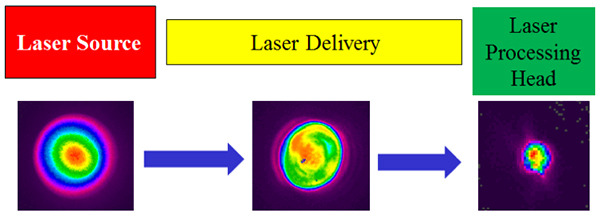
Even with the advantages that lasers provide over traditional tools, lasers systems can degrade over time, leading to reduced output power or a change in focus. This, in turn, could result in lower quality laser operations. Therefore, it is very important to monitor your laser beam frequently, and the critical parameters of the laser should be checked before and after each important step of the laser manufacturing process.
Laser Power Sensors
MKS offers a comprehensive portfolio of power sensors. Shown here are examples of sensors designed to measure optical output power of short-pulsed lasers, such as IceFyre, Talon and Explorer One that operate in fs, ps and ns pulse widths.
- Laser Thermal Power Thermal Sensors: very high damage thresholds for hundreds of watts power measurement.
| F150(200)A-CM-16 | 30(150)A-SV-17 | F80(120)A-CM-17 | ||
|---|---|---|---|---|
| Spectral Range | 0.248-9.4 µm | 0.19-11 µm | 0.248-9.4 µm | 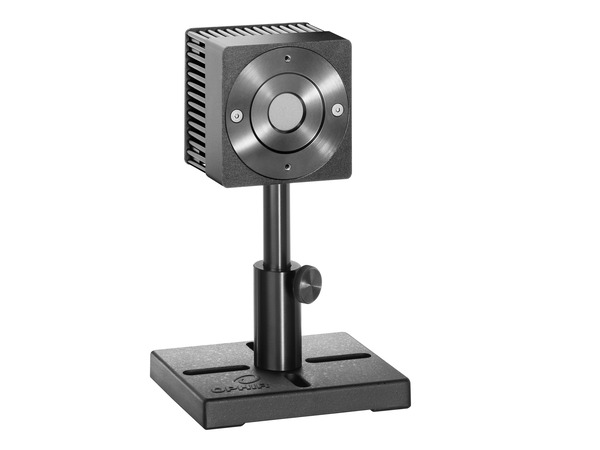 |
| Power Range | 300 mW - 200 W | 100 mW - 150 W | 100 mW - 120 W | |
| Energy Range | 50 mJ – 200 J | 50 mJ – 300 J | 50 mJ – 200 J | |
| Max Avg Power Density | 35 kW/cm2 | 60 kW/cm2 | 35 kW/cm2 | |
| Max Energy Density (2 msec) | 45 J/cm2 | 50 J/cm2 | 45 J/cm2 | |
| Aperture | Ø16 mm | Ø17 mm | Ø17.5 mm | |
| Response Time | 3 sec | 1.7 sec | 2 sec | |
| Other Features | Not water-cooled | |||
Power Meters
Ophir laser power and energy meters work on the smart plug principle. This means that almost any power meter can work – plug and play – with almost any of the wide range of Ophir optical sensors.
| Power Meters | Virtual Power Meters | ||
|---|---|---|---|
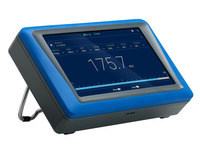 Centauri |
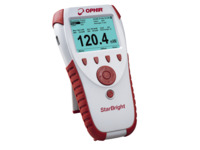 StarBright Handheld |
 Juno+ |
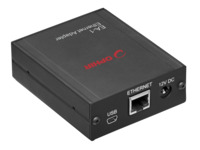 EA-1 |
|
|
|
|
Beam Profilers
- SP932U Beam Profiling Camera: high resolution, real-time viewing and measuring of laser structure with highest accuracy in the industry.
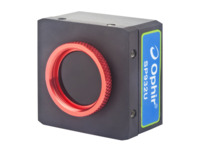 SP932U |
|
|---|---|
| Spectral Range | 190-1100 nm |
| Damage Threshold | 50 W/cm2, 1 J/cm2, <100 ns pulse width |
| Beam Sizes | 34.5 µm to 5.3 mm |
| Pixels | 2048 x 1536 Effective Pixels, 3.45 µm Pixel Size |
| PC Interface | USB 2.0 |
| Other Features | BeamGage® software included UltraCal™ correction algorithm Measures cross-sectional intensity 72 dB true dynamic resolution 24 Hz frame rate in 12-bit mode |
Optics
Criteria for Selecting Optics
- Wavelength
- Laser Damage Threshold
- Substrate Material
- Coating
- Reflectivity/Transmission
- Size and Shape
High-Energy Laser Mirrors
High-energy laser mirrors optimized for 355, 532 and 1064 nm offer very high reflectivity and damage thresholds, and standard broadband metallic mirrors offer a more economic option for good performance and value over very broad spectral ranges.
| High-Energy Laser Mirrors | |||
|---|---|---|---|
| Wavelength | 355 nm | 532 nm | 1064 nm |
| CW Damage Threshold | 3 kW/cm2 | ||
| Pulsed Damage Threshold | 3.5 J/cm2 @ 10 ns, 20 Hz | 10 J/cm2 @ 20 ns, 20 Hz | 45 J/cm2 @ 10 ns, 20 Hz |
| Reflectivity | Rs > 99.7% Rp > 99% |
||
| Diameter | 1 and 2 inch | ||
| Substrate Material | UV Grade Fused Silica | ||
| Angle of Incidence | 45° | ||
High-Energy Plano-Convex Lenses
High-energy lenses optimized for 355, 532 and 1064 nm offer very high transmission and damage thresholds, and standard fused silica lenses offer good performance and value over very broad spectral ranges.
| High-Energy Spherical Lenses | |||
|---|---|---|---|
| Wavelength | 355 nm | 532 nm | 1064 nm |
| Pulsed Damage Threshold | 15 J/cm2 @ 20 ns, 10 Hz | ||
| Average Reflectivity per Surface | < 0.25% | ||
| Diameter | 1 inch | ||
| Substrate Material | High Purity Fused Silica | ||
Nanotexture Surface Lenses
Highest laser damage resistance and lowest reflection loss
| Nanostructure Surface Fused Silica Plano-Convex Lenses | |
|---|---|
| Wavelength | 250 to 550 nm or 500 to 1100 nm |
| CW Damage Threshold | 15 MW/cm2 |
| Pulsed Damage Threshold | 35 J/cm2 @ 10 ns, 1064 nm |
| Reflection Loss | 0.1% |
| Diameter | 0.5 in. |
| Shapes | Plano-Convex or Plano-Concave |
| Substrate Material | High Purity Fused Silica |
| Other Features | Sub-λ AR nanotextures etched directly into surface (no thin film coatings) |
High-Energy Polarizing Cube Beamsplitters
Optimized for 355, 532 and 1064 nm, these cubes offer high damage thresholds, efficient polarization, and high extinction ratio.
| High-Energy UV Polarizing Cube Beamsplitters | Laser Line Polarizing Cube Beamsplitters | ||
|---|---|---|---|
| Wavelength | 355 nm | 532 nm | 1064 nm |
| Pulsed Damage Threshold | 5 J/cm2 | 10 J/cm2 | |
| Reflectivity | Rs > 99% | Rs > 99.5% | |
| Transmission | Tp > 90% | Tp > 95% | |
| Extinction Ratio | Tp/Ts >200:1 | ||
| Size | 1 in. | 0.5 in. | |
| Substrate Material | UV Grade Fused Silica | ||
|
Other Features |
Optically contacted, no cement |
||
Zero-Order Waveplates (λ/4 and λ/2)
Very high damage threshold, low sensitivity to temperature and wavelength variation.
| Zero-Order Waveplates | |||
|---|---|---|---|
| Wavelength | 355 nm | 532 nm | 1064 nm |
| CW Damage Threshold | 2 MW/cm2 | ||
| Reflectivity per Surface | < 0.25% | ||
| Diameter | 0.5 and 1 in. | ||
| Substrate Material | Quartz | ||
| Temperature Coefficient | 0.0001 λ/°C | ||
| Other Features | ±λ/300 retardation accuracy | ||
Opto-Mechanics
Criteria for Selecting Optical Mounts
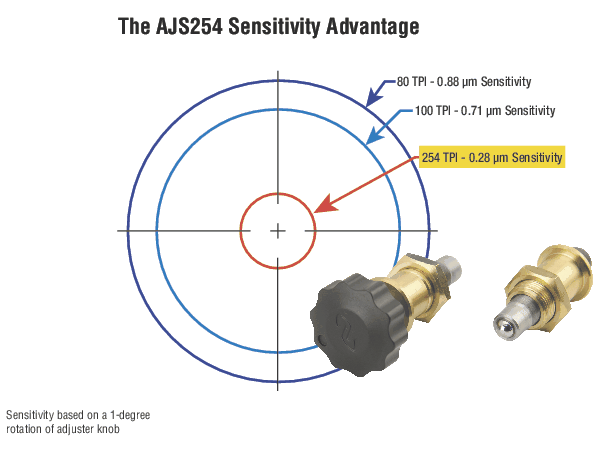
- Resolution/Sensitivity
- Long Term Stability
- Lockable
- Size and Shape
Optical component mounts are needed to hold and adjust optics. Long term stability and low drift is crucial. Minimizing drift caused by vibrations or thermal drift over time will ensure laser alignment to the desired spot and also reduce any potential downtime due to misalignment and errors. Having a locking mechanism on these mounts can also prevent misalignment of the beam, especially during shipping and also if anything else happens during usage.
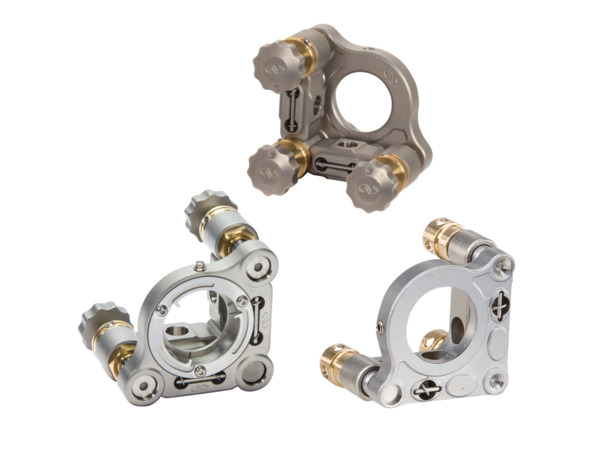
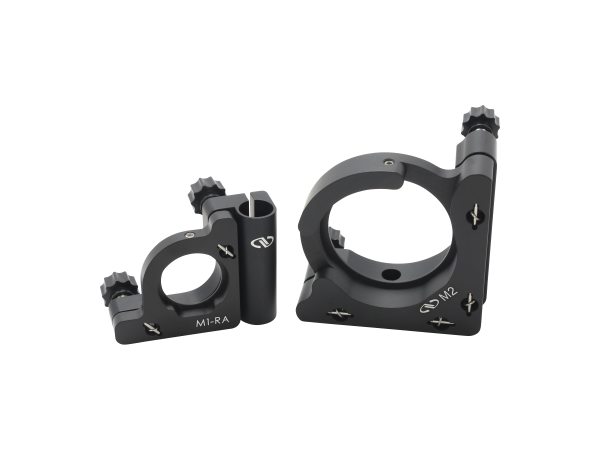
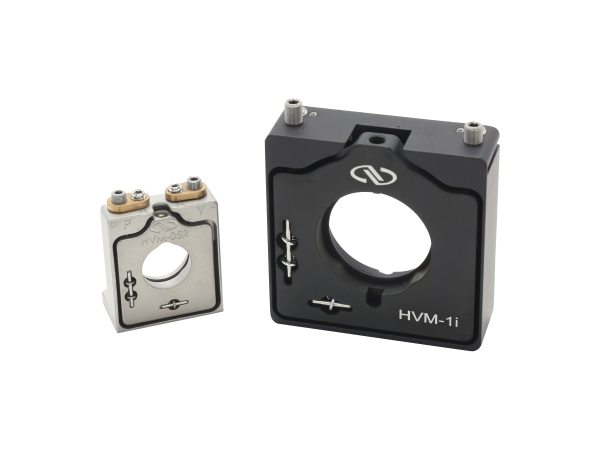
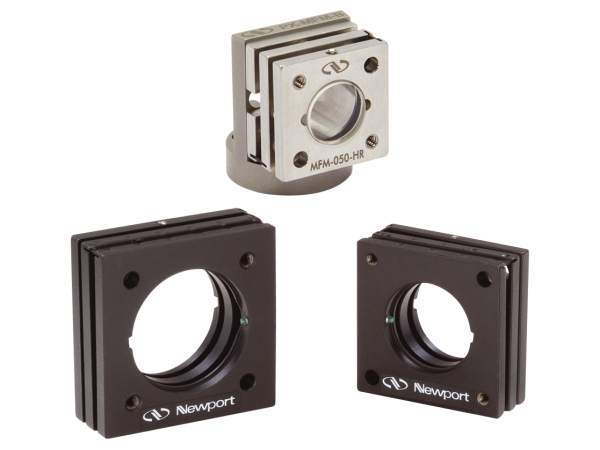
HVM industrial mounts are recommended for robust long term usage in compact space. The Suprema® mirror mount is excellent for its stainless steel construction that gives better thermal performance than an aluminum mirror mount. Ultra-fine 254-TPI adjusters provide alignment sensitivity as low as 1.5 arc sec. For applications that are really concerned about the thermal changes that can be potentially caused by prolonged high powered laser usage, the ZeroDrift™ version will compensate for some thermal changes as well. For those mirror mounts that need to be set-and-forget for a long period of time, we recommend the MFM flexure mirror Mount. These are excellent for their small footprint so that machine size can be reduced.
- Suprema® Stainless Steel Mirror Mounts: The industry's best thermal performance for long-term stability.
- M-Series Aluminum Mirror Mounts: The new standard for affordable mounts.
 Suprema |
 M-Series |
|
|---|---|---|
| Optic Diameters | 0.5, 1 and 2 in. | 0.5, 1 and 2 in. |
| Resolution | 50, 100, 127 and 254 TPI | 100 TPI |
| Angular Range | ±7° | ±4° |
| Material | Stainless Steel | Aluminum |
| Drive Types | Knob Hex Key Exchangeable Actuators |
Knob Hex Key |
| Lockable Versions | Yes | No |
| Other Versions | Clear-Edge Front- and Rear-Loading Right- and Left-Handed Low Wavefront Distortion ZeroDrift™ |
Clear-Edge Front- and Rear-Loading Right- and Left-Handed |
- HVM Top-Adjust Mirror Mounts: For use in compact spaces so your hands do not have to cross the beam path for adjustment.
- MFM Flexure Mirror Mounts: Designed for "set and forget" applications.
 HVM-Series |
 MFM-Series |
|
|---|---|---|
| Optic Diameters | 0.5, 1 and 2 in. | 0.5, 0.75 and 1 in. |
| Resolution | 80 and 100 TPI | 80 and 100 TPI |
| Angular Range | ±2.5°, ±3° and ±3.5° | ±2.5° |
| Material | Anodized Aluminum, Stainless Steel | Stainless Steel |
| Drive Types | Hex Key | Hex Key |
| Lockable Versions | Yes | No |
| Other Features | Front- and Rear-Loading Versions | Shock Resistant Front- and Rear-Loading Versions Adhesive wells for permanent mounting |
- A-Line™ Fixed Position Lens Mounts: Fast, easy and economic mounting, aligning and focusing of optics.
- Compact Lens Positioners: ideal solution for applications with limited table space.
- LP Precision Multi-Axis Lens Positioners: Highest performing lens positioners.
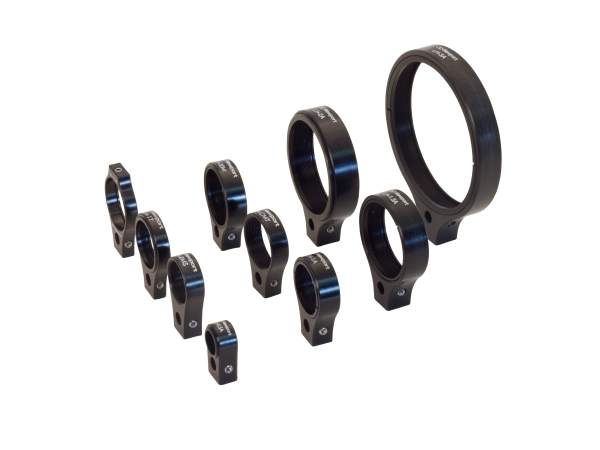 A-Line |
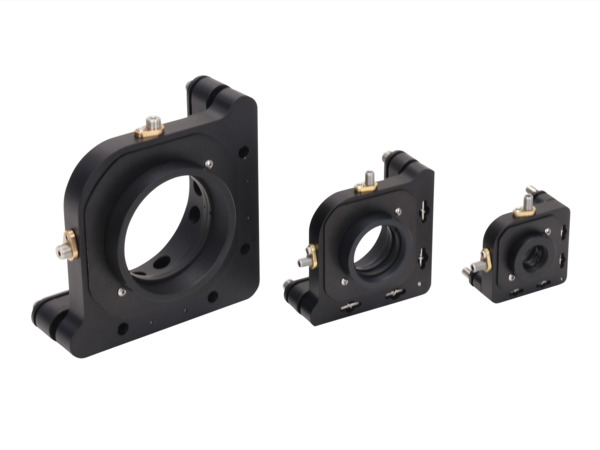 Compact |
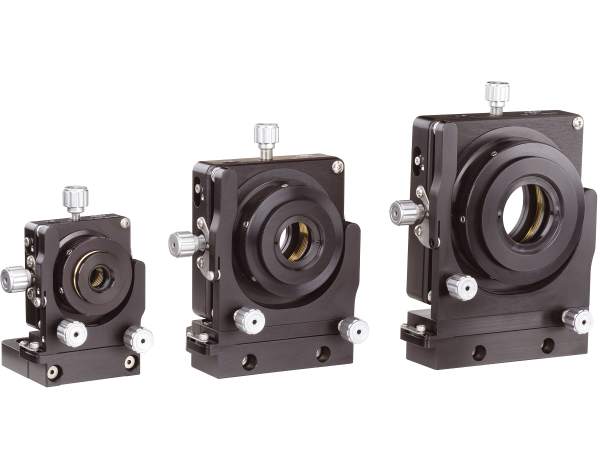 LP-Series |
|
|---|---|---|---|
| Optic Diameters | 0.5 to 3 in. | 0.5, 1 and 2 in. | 0.5, 1 and 2 in. |
| Resolution | - | 100 TPI | 100 TPI |
| Adjustments | Fixed | XY, XYZ, XYZθxθy | XY, XYZ, XYZθxθy |
| Material | Aluminum | Aluminum | Aluminum |
| Other Features | Self-aligning design Large clear aperture Compatible with A-Line alignment system |
Adapters for other optics Lockable positions |
Zero-freeplay XY mechanism True Gimbal adjustments Independent non-influencing locks Adapters for other optics |
- Ultima® Gimbaled Cube/Prism Mount: Precision alignment of beamsplitter cubes and prisms.
- RSP High Performance Optic Rotation Mounts: Smooth, continuous 360° rotation of optics.
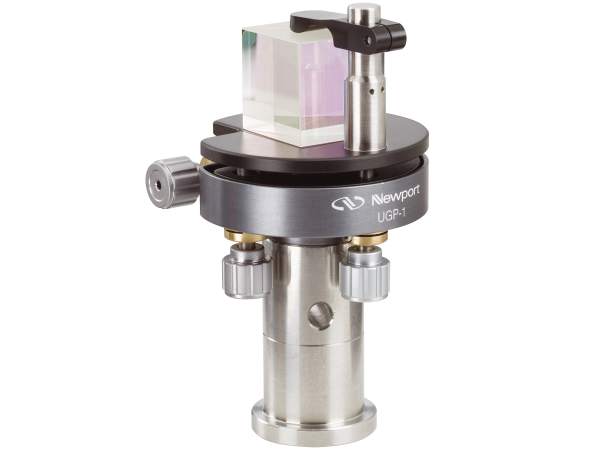 UGP-1 |
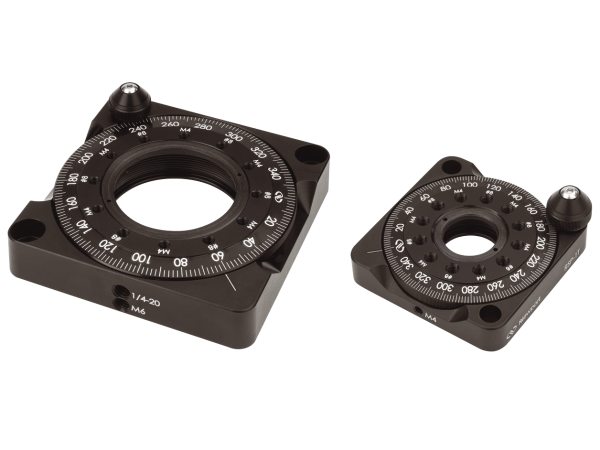 RSP-Series |
|
|---|---|---|
| Optic Size | 0.5 and 1 in. cube | 1 and 2 in. |
| Resolution | 100 TPI | 4 arc min |
| Angular Range | ±5° | 360° |
| Material | Aluminum | Aluminum |
| Drive Types | Knob w/ Hex Hole | Coarse: knurled edge Fine: knob |
| Lockable | Yes | Yes |
| Other Features | True gimbal motion Adapters for other optics |
Full ball bearing races Adapters for other optics |
- ULTRAlign™ Crossed-Roller Bearing Steel Linear Stages: Highest smoothness, precision and stability.
- SDS Low Profile Ball Bearing Steel Linear Stages: Lowest profile positioner for moderate loads
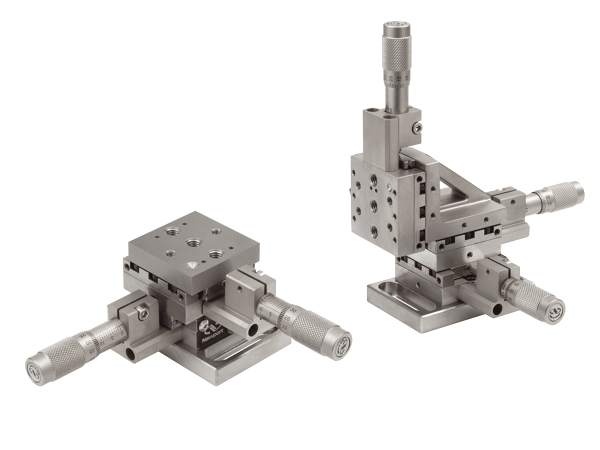 Ultralign |
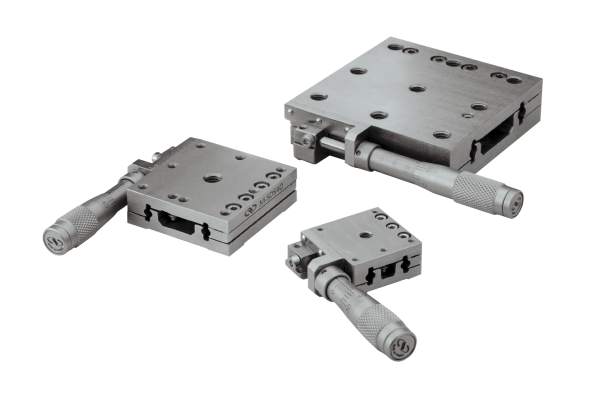 SDS Low-Profile |
|
|---|---|---|
| Travel Range | 13 and 25 mm | 10, 16 and 25.4 mm |
| Axes of Travel | X, Z, XY, XZ and XYZ | X, Z, XY and XYZ |
| Angular Deviation | <100 µrad | Pitch: <100 µrad Yaw: <150 µrad |
| Bearings | Crossed-Roller | Ball (Gothic Arch Bearing Ways) |
| Material | Stainless Steel | Stainless Steel |
| Drive Type | Adjustment Screw Micrometer Motorized Actuator |
Side-Mounted Micrometer |
| Lockable | Yes | Yes |
| Other Features | Extra thick plates for more stability Low profile Right- and left-handed configurations |
<20 mm height Non-influencing locking mechanism |
Resources
Perovskite Brochure(7 MB, PDF)