Zero-Order Waveplate, Quarter-Wave, Quartz, 25.4 mm Diameter, 1064 nm
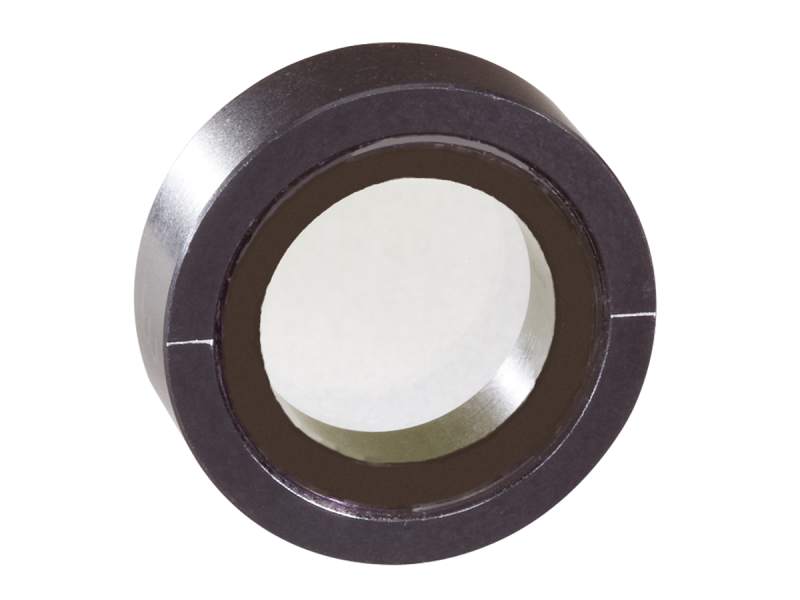

Model: 10RP04-34
Product Series Overview
Quartz Zero-Order Quarter-Wave PlatesZero-Order Quarter-Wave Plate Construction
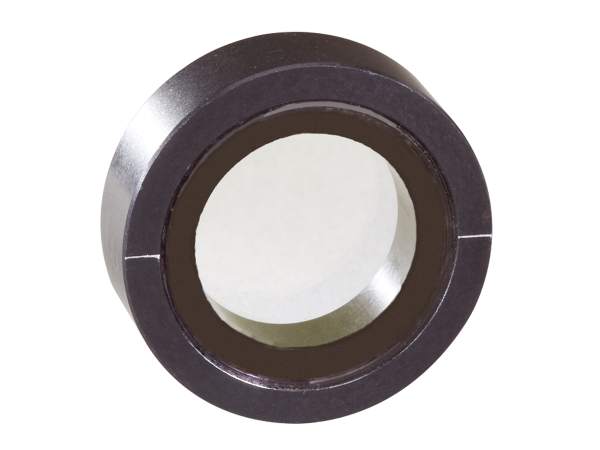
These zero-order wave plates are constructed of two quartz plates, air-spaced to allow for use with high-power lasers. By combining two wave plates whose retardations differ by exactly λ/4, a true quarter wave plate results. The fast axis of one plate is aligned with the slow axis of the other, so that the net retardation is the difference of the two retardations. We offer zero-order wave plates antireflection coated to maximize transmission for major laser wavelengths from 248–1550 nm. The waveplate assembly is mounted in a 12.7 mm or 25.4 mm diameter black anodized aluminum housing to protect the waveplate and permit convenient handling and mounting. Lines on the housing indicate the direction of the slow axis.
Convert Plane-polarized Light to Circularly Polarized
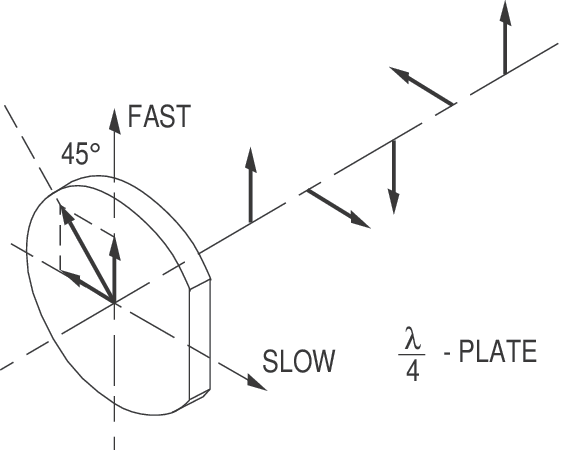
Quarter-wave waveplates are used to turn plane-polarized light into circularly polarized light and vice versa. To do this, we must orient the wave plate so that equal amounts of fast and slow waves are excited – for example, by orienting an incident plane-polarized wave at 45° to the fast (or slow) axis. On the other side of the waveplate, we again examine the wave at a point where the fast-polarized component is at maximum. At this point, the slow-polarized component will be passing through zero, since it has been retarded by a quarter-wave or 90° in phase. If we move an eighth wavelength farther, we will note that the two are the same magnitude, but the fast component is decreasing and the slow component is increasing. Moving another eighth wave, we find the slow component is at maximum and the fast component is zero. If we trace the tip of the total electric vector, we find it traces out a helix, with a period of just one wavelength. This describes circularly polarized light.
Retardation is Insensitive to Wavelength
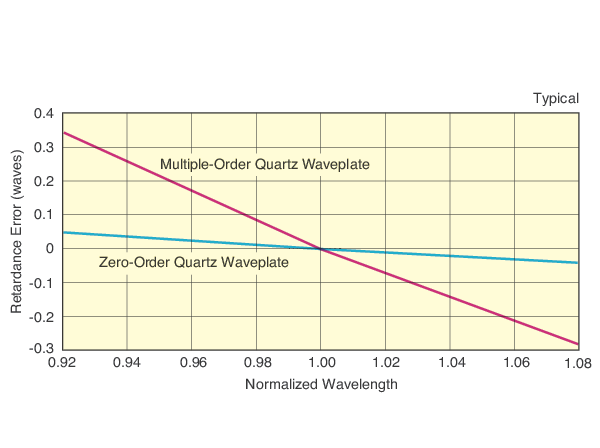
Zero-order wave plates offer several distinct advantages over multiple order wave plates. The primary benefit is a moderate insensitivity to wavelength change, making them ideal for laser diode or tunable laser applications. For example, a zero-order wave plate designed for 780 nm will provide useful retardance from 765–795 nm.
Retardation is Sensitive to Incidence Angle
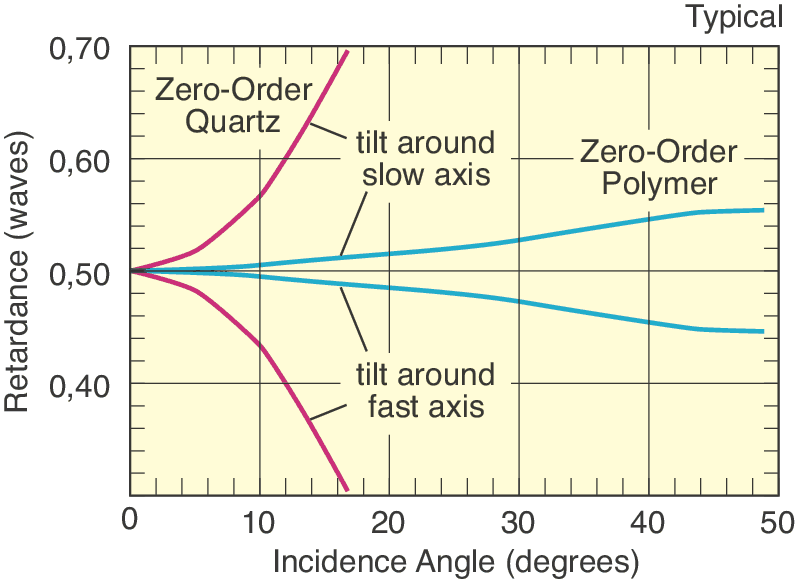
Quartz waveplates are more sensitive to incidence angle than our Polymer waveplates. Polymer waveplates have excellent angular field of view and the retardation changes by less than 1% over a ±12° incidence angle.
Resources & Downloads
Drawings And Cad
ZERO-OR1-S(111.5 kB, PDF)
Other
10RP04-34 RoHS Certificate(704.4 kB, PDF)
Related Products
Similar
| Compare | Description | Drawings, CAD & Specs | Avail. | Price | ||
|---|---|---|---|---|---|---|
| 10RP02-34Zero-Order Waveplate, Half-Wave, Quartz, 25.4 mm Diameter, 1064 nm | |||||
 | 10RP34-1064Zero-Order Waveplate, Quarter-Wave, Polymer, 25.4 mm Diameter, 1064 nm | |||||
 | 10RP14-34Quarter Wave Plate, Multiple-Order, Quartz, 25.4 mm Diameter, 1064 nm |
Compatible
| Compare | Description | Drawings, CAD & Specs | Avail. | Price | ||
|---|---|---|---|---|---|---|
 | RSP-1TOptic Rotation Mount, 25.4 mm, Fine Adjust Knob, 8-32 and M4 | |||||
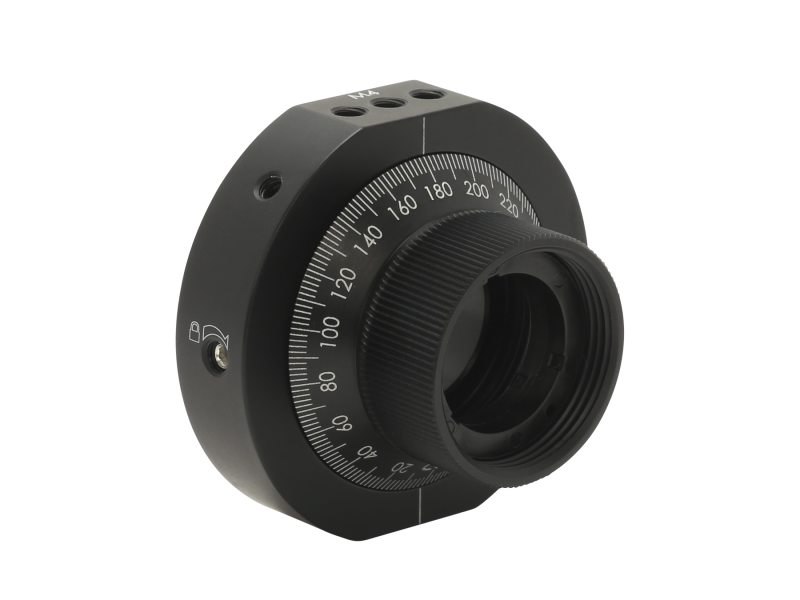 | RM25AOptic Rotation Mount, 25.4 mm, 2° Graduations | |||||
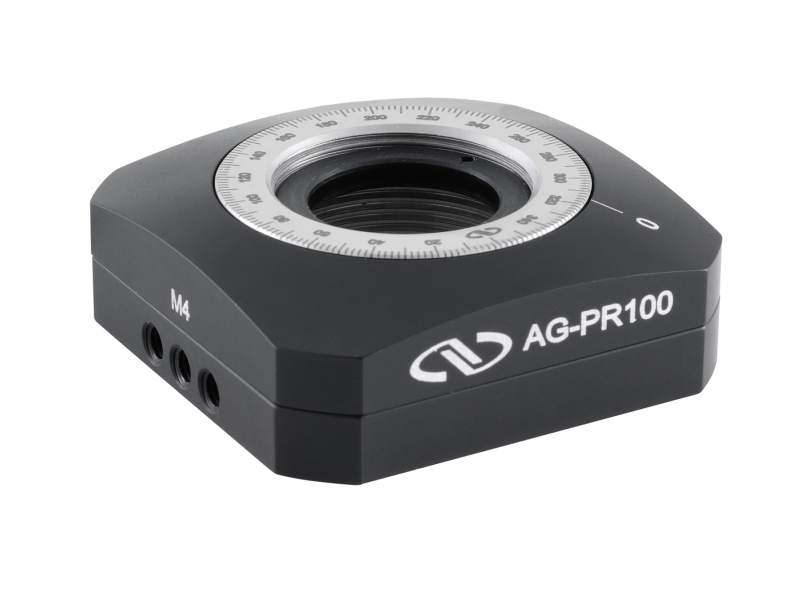 | AG-PR100Piezo Rotation Stage, 1 inch, Agilis™ | |||||
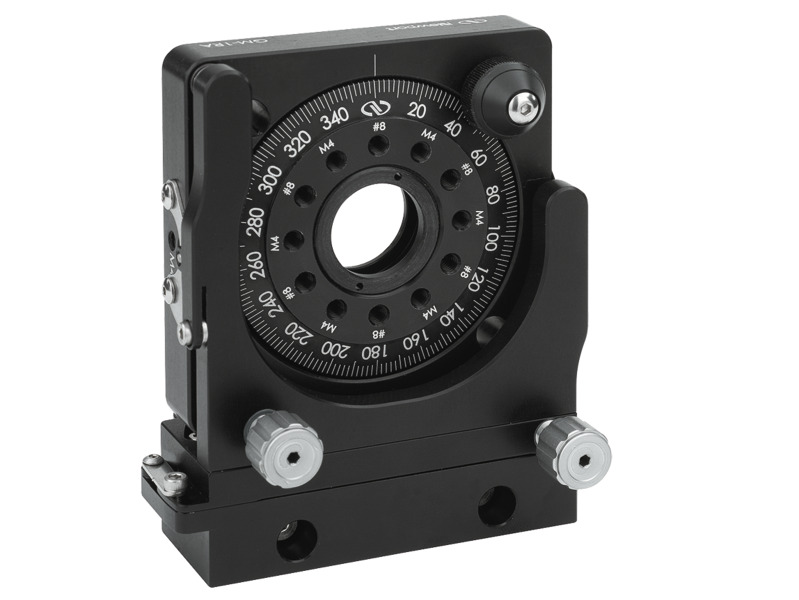 | GM-1RAOptic Rotation Mount, Gimbal Tip-Tilt, 25.4 mm, 100 TPI | |||||
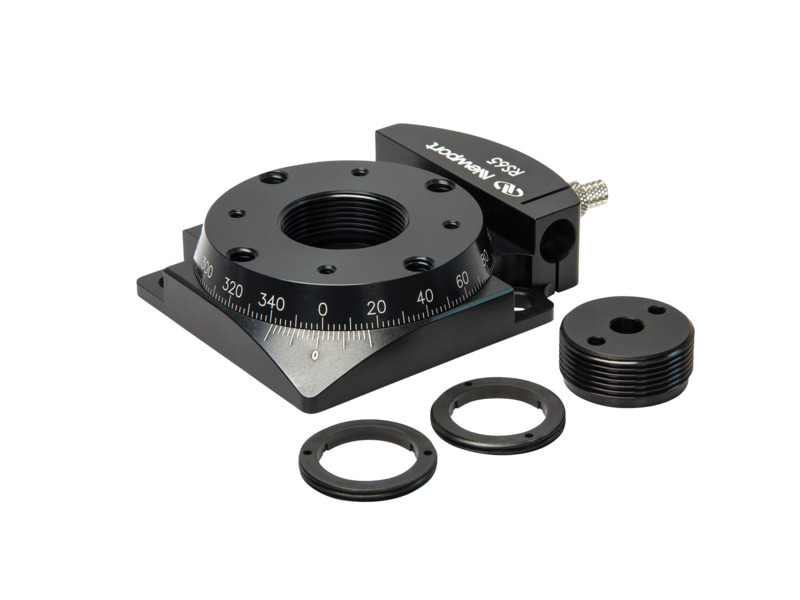 | RS65Manual Rotation Stage, Aperture , 2.65 in. Diameter, 10° Fine, 6-32 and 1/4-20 |