Rotatable Glan-Thompson Calcite Polarizers
Rotatable Glan-Thompson Calcite Polarizers
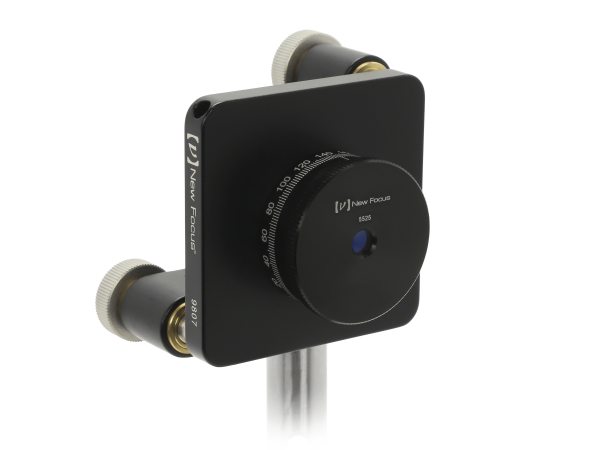
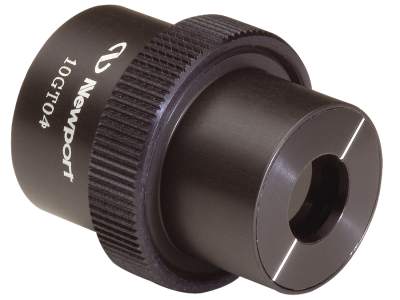
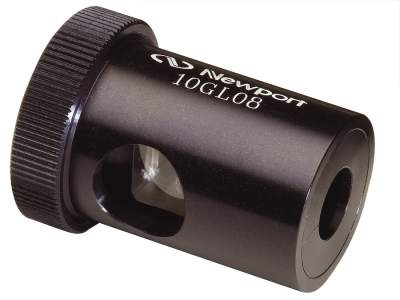
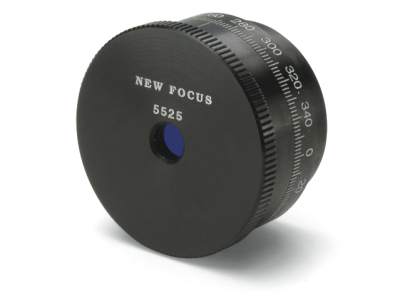
These Glan-Thompson Calcite Polarizers are built into a rotation mount, which easily mounts into standard 1.0 in. diameter optic mounts. At the interface between two calcite prisms, total internal reflection takes place for one polarization state while the other is transmitted. This proven Glan-Thompson design yields extinction ratios greater than 100,000:1. The polarizers are offered with broadband AR coatings for visible, NIR and into the SWIR regions.
- Glan-Thompson calcite linear polarizer design
- Extinction ratio >100,000:1
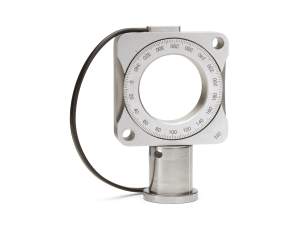
- Housing design incorporates a manual rotation mount
- Mounts in standard 1 inch optic mounts See All Features
| Compare | Description | Drawings, CAD & Specs | Avail. | Price | ||
|---|---|---|---|---|---|---|
 | 5524Glan-Thompson Linear Polarizer, 1.0 in. Rotatable Housing, 100,000:1, 400-700 nm | |||||
| 5525Glan-Thompson Linear Polarizer, 1.0 in. Rotatable Housing, 100,000:1, 700-1000 nm | |||||
| 5526Glan-Thompson Linear Polarizer, 1.0 in. Rotatable Housing, 100,000:1, 1000-1600 nm |
Specifications
- Diameter25.4 mm
- Polarizing MaterialOptical Grade Calcite
- Extinction Ratio100,000:1
- Housing360° Rotatable Anodized Aluminum Housing with 2° Scale
- Clear Aperture5.0 mm
- Transmission>95%
Features
Glan-Thompson Polarizer Construction
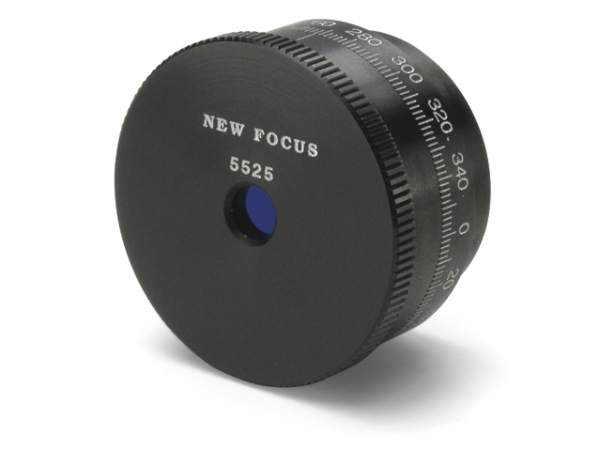
Our Glan-Thompson polarizers are fabricated using two matching optical grade calcite prisms with their hypotenuses cemented to one another to form a rectangular optic. The cemented prism pair is assembled into a black anodized aluminum housing which is a rotation stage marked with a 360° scale. The rejected component of the beam is totally internally reflected and eventually absorbed by the anodized aluminum walls of the housing.
How Glan-Thompson Calcite Polarizers Work
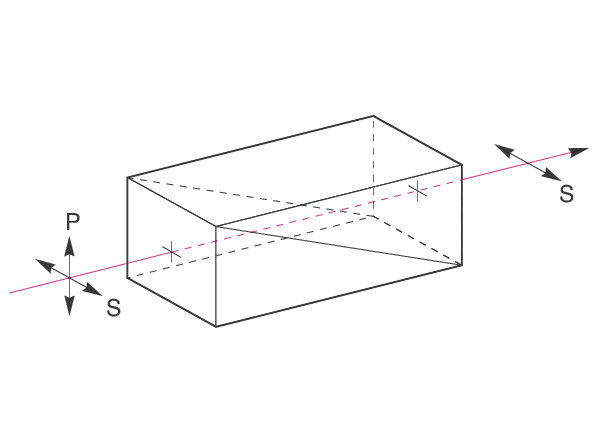
Glan-Thompson prisms are formed using two identical calcite prisms with hypotenuses cemented to one another to form a surface that efficiently transmits one polarization state specifically. The prisms have the same optic axis orientation as one another, which is perpendicular to the plane of reflection (the shared hypotenuse). Light that is s-polarized with respect to the reflective hypotenuse experiences the higher ordinary refractive index of calcite. Because calcite has a large index difference between extraordinary and ordinary rays, the polarizer has a fairly wide range of acceptance angles that result in transmission of only highly pure s-polarized light. Thus Glan Thompson prisms have a wide usable acceptance angle and are especially well suited for use with diverging and converging beams.
Mounting the Rotatable Housing
The housing itself is a manual rotation mount with a 5-mm clear aperture and 2° graduations marking. It can be easily mounted into standard 1.0 in. mirror mounts or other rotary stages.