Nikon Microscope Isolation Platforms
Nikon Microscope Isolation Platforms

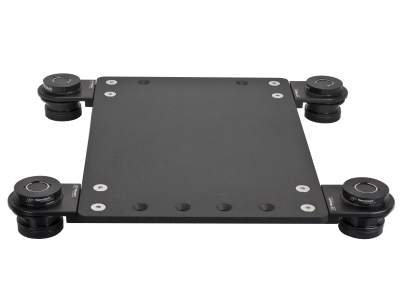
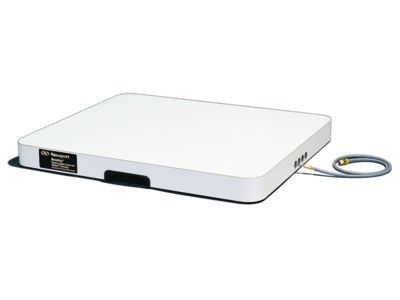
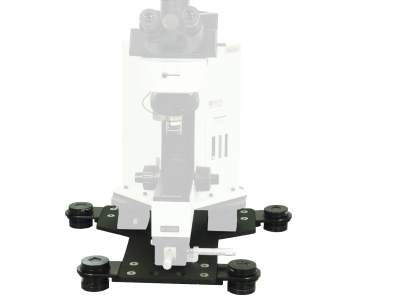
Nikon microscope isolation platforms are specially designed for mounting and isolating Nikon microscopes.
- Designed specially for Nikon microscopes
- Ideal for upright and inverted light microscopes
- Mechanical isolation as low as 8 Hz
- Low profile design
- No compressed air required See All Features
| Compare | Description | Drawings, CAD & Specs | Avail. | Price | ||
|---|---|---|---|---|---|---|
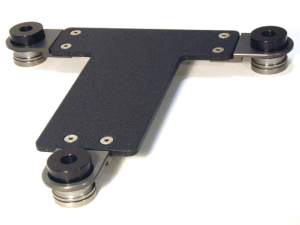 | VIP3200-N-003Microscope Isolation Platform, Nikon ECLIPSE E800 or E1000 | |||||
 | VIP3200-N-005Microscope Isolation Platform, Nikon Diaphot 200 or 300 | |||||
| VIP3200-N-006Microscope Isolation Platform, Nikon ECLIPSE E400 or E600 | |||||
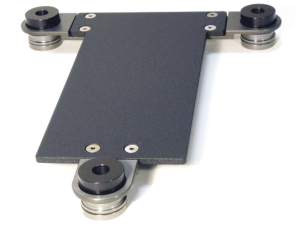 | VIP3200-N-007Microscope Isolation Platform, Nikon TE2000S, TE2000U, TE2000E | |||||
| VIP3200-N-010Microscope Isolation Platform, Nikon Epiphot 200 or 300 | |||||
| VIP3200-N-012AMicroscope Isolation Platform, Nikon ECLIPSE 80i or 90i, 20-30 lb. | |||||
| VIP3200-N-012BMicroscope Isolation Platform, Nikon ECLIPSE 80i or 90i, 45-75 lb. | |||||
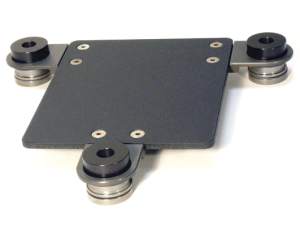 | VIP3200-N-013Microscope Isolation Platform, Nikon E600FN | |||||
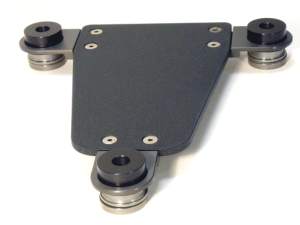 | VIP3200-N-016Microscope Isolation Platform, Nikon ECLIPSE 50i or 55i | |||||
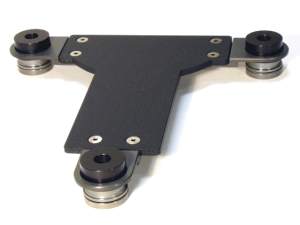 | VIP3200-N-018Microscope Isolation Platform, Nikon LV100D, LV150, or LV150A | |||||
| VIP3200-N-020AMicroscope Isolation Platform, Nikon ECLIPSE Ti-S, Ti-S/L100 or Ti-U/B, 55-85 lb. | |||||
| VIP3200-N-020BMicroscope Isolation Platform, Nikon ECLIPSE Ti-E or Ti-E/B, 75-115 lb. | |||||
| VIP3200-N-020CMicroscope Isolation Platform, Nikon ECLIPSE Ti, 115-150 lb. Payload | |||||
| VIP3200-N-020DMicroscope Isolation Platform, Nikon ECLIPSE Ti, 150-200 lb. Payload | |||||
| VIP3200-N-NE4186Microscope Isolation Platform, Nikon ECLIPSE Ni-E, 41-80 lb. Payload | |||||
| VIP3200-N-NE80138Microscope Isolation Platform, Nikon ECLIPSE Ni-E, 80-138 lb. Payload |
Features
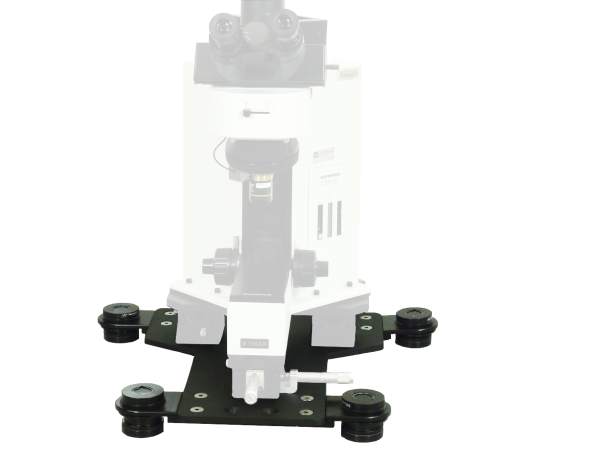
Platform Designed to Match Nikon Footprint

Superior Mechanical Design
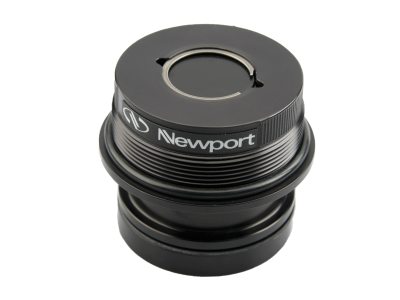
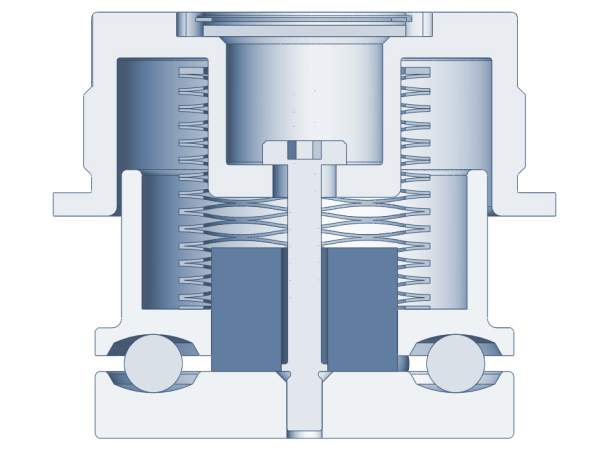
VIBe™ technology works in horizontal direction by utilizing ball bearings sandwiched between precision raceways, forming the plane of isolation. The balls that displace between the raceways due to micro-vibrations are restored to the neutral position by gravity, which acts as a non-linear spring. Since the spring force (i.e., the restoring force) is non-linear, it is constant and independent of the frequency and amplitude of the input vibrations, meaning the balls’ oscillating motion has no “natural” frequency. Instead, the motion has an infinite number of frequencies, one for each increment of displacement, which makes the resonance between the two halves of the plane of isolation physically impossible. As a result, the isolator filters out a broad band of input vibration frequencies and ensures a constant level of vibration transmission reduction.
Vertical vibration isolation is addressed by the Newport's proprietary, nonlinear spring mechanism with near zero tangential stiffness for vibrations. The natural frequency of the spring remains relatively low and constant across a large range of spring compression, effectively isolating the vertical vibrations.
Improve Microscope Performance
Depending on your environmental conditions, building vibrations and disturbances from surrounding lab equipment can impact a microscope’s performance. Using a vibration criteria curve, researchers can determine if the measured or anticipated vibration levels will allow imaging to the desired resolution. Higher resolutions require more control over vibration. An effective vibration isolation and control system needs to offer high-performance vibration resistance while maintaining a compact, low profile to decrease space requirements and increase usability. Our microscope isolators feature a 6.8 Hz vertical resonance frequency that begins isolating at 9 Hz and a horizontal resonance of 6.3 Hz with isolation beginning at 8 Hz. This is sufficient performance to eliminate more than 85% of vibration noise seen within typical laboratories.
VIBe™ Mechanical Vibration Isolation Technology
Proper Loading
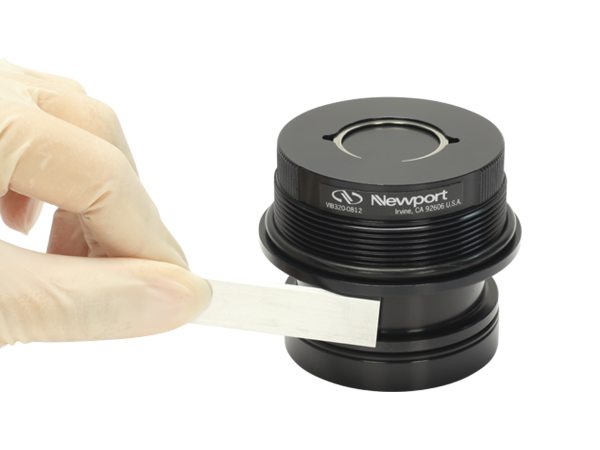
Each of the VIBe™ isolators in the platform needs to be properly loaded in order to achieve maximized vibration isolation performance. A special gap tool is shipped with the platform to verify the proper loading of the isolators. This gap tool measures 0.56 inch wide by 0.1 inch thick and it is used to determine that the gap in the isolator is more than 0.1 inch but less than 0.56 inch. If the gap is larger than 0.56 inch, the bearing does not have enough weight on it. Conversely, if the gap is smaller than 0.1 inch, it is overloaded.
Resources
Manuals
VIBe Series Isolation Platforms User's Manual(396.9 kB, PDF)