Quadrant Cell Photoreceivers
Quadrant Cell Photoreceivers
Quadrant-cell photoreceivers are ideal when you need to measure deviations in the position or pointing of your laser beam, such as that required in beam-stabilization systems.
- Ideal for beam-stabilization applications
- Analog output
- Convenient adjustable gain settings and switchable output normalization See All Features

Specifications
- Sensor Size2901: 3 x 3 mm
2903: Ø3 mm - Transimpedance Gain2x102 to 2x10⁶ V/A
- Optical InputFree Space
- Analog OutputX, Y, SUM
- Analog Output Voltage RangeX & Y: ±2.5 V
SUM: 0 to +2.5 V - Connector, Analog OutputMale BNC
- Analog Output Impediance1 kΩ
- Power Requirements±15 V, 50 mA power supply or 9V Battery
- Bandwidth (-3 dB)100 kHz (30 Hz for SUM)
- Detector Material2901: Silicon
2903: InGaAs - Rise Time4 µs
Features
Silicon or InGaAs Sensors

Model 2901 offers silicon sensors which are responsive in the 190-1050 nm wavelength range. Model 2903 uses InGaAs sensors for 900-1700 nm responsivity.
Highly Sensitive Beam Position Measurement
Quadrant-cell photoreceivers consist of four individual yet identical photocells positioned very close to each other (100-µm gaps). To increase the sensitivity of these photoreceivers, each of the cells’ photocurrents is sent to its own individual amplifier before being processed with the other photocell signals to generate top-minus-bottom difference (vertical error) and right-minus-left difference (horizontal error) signals. A sum-of-all-quadrants signal is also provided for normalization purposes.
Battery Operated or External DC Supply
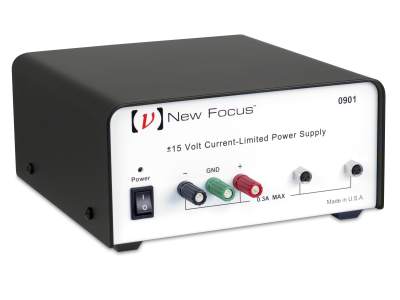
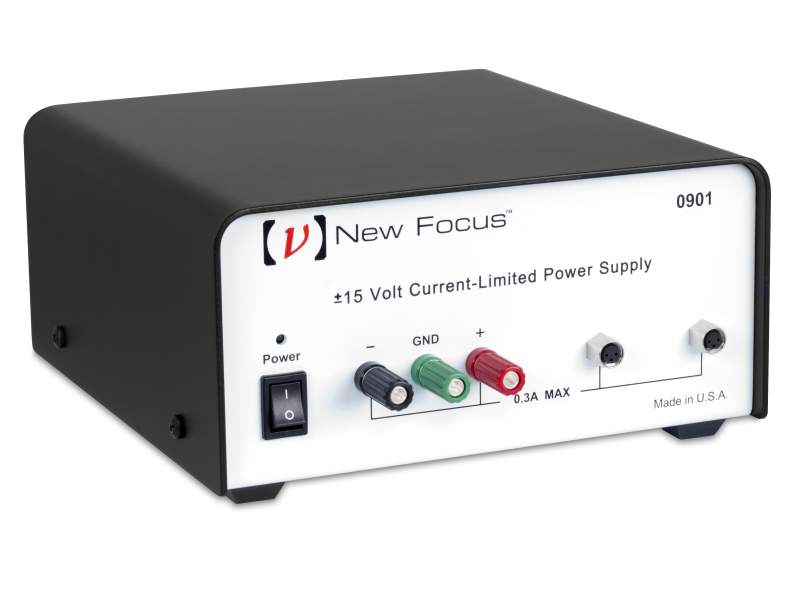
The 2901 and 2903 quadrant-cell photo-receivers can run off batteries or your own DC power supply. To ensure low noise operation, we strongly recommend our Model

Using Optical Filters
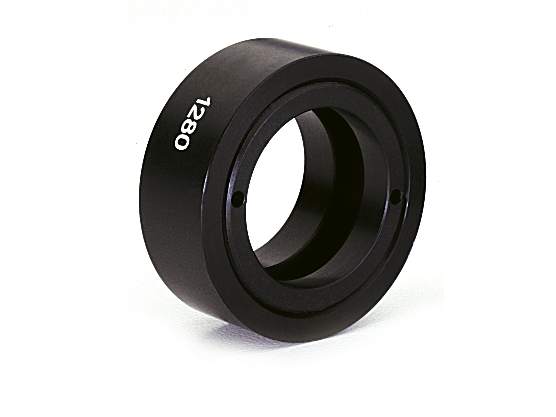
Bandpass and neutral-density filters for filtering out unwanted light or attenuating the beam can be attached to the front of these photoreceivers with the aid of Newport's
Applications
- Shared-beam experiments
- Beam stabilization
- Semiconductor capital equipment
- Defense and aerospace
- Life sciences
Resources
Drawings & CAD
290X-POWER-ON-BACK-2006-Update.pdf(274.4 kB, PDF)