Ytterbium Doped Laser Mirrors
Ytterbium Doped Laser Mirrors
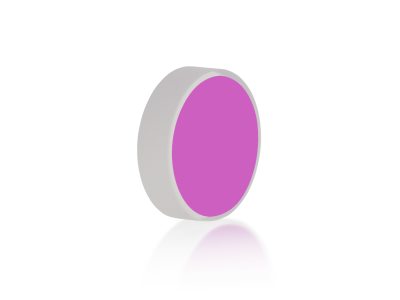
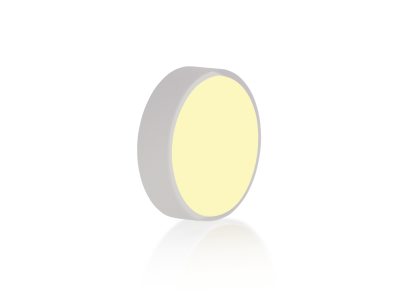
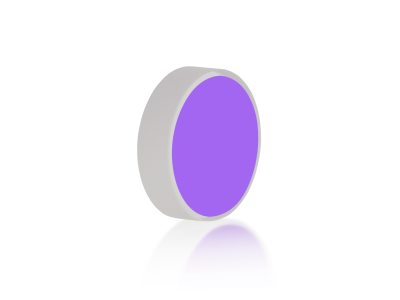
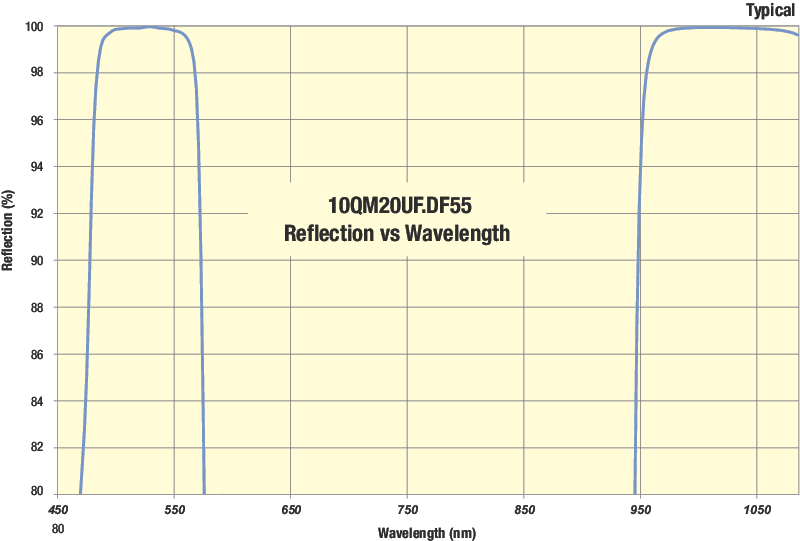
Intended for the fundamental and second harmonic of Ytterbium (Yb) doped lasers, these mirrors reflect over 99.5% from 505-530 nm and/or 1020-1050 nm. They feature a proprietary low-Group Delay Dispersion (GDD) coating. Designed to steer ultrashort pulses at 45° AOI with minimal effect on pulse dispersion, these mirrors are ideal for use with Spectra-Physics ultrafast lasers such as the Spirit® high power femtosecond laser.
- Proprietary low GDD coating design
- Designed for the fundamental and second harmonic
- R>99.5% @ single or dual wavelengths
- Polished back surface allows transmission at other wavelengths
- Fused silica substrate for low thermal expansion and absorption See All Features
| Compare | Description | Drawings, CAD & Specs | Avail. | Price | ||
|---|---|---|---|---|---|---|
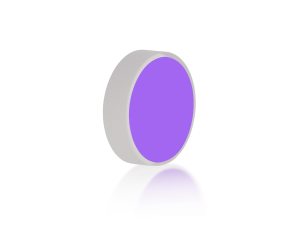 | 10QM20UF.DF55Low GDD Mirror, Ytterbium Laser, 45° AOI, 25.4 mm, 505-530 nm and 1020-1050 nm | |||||
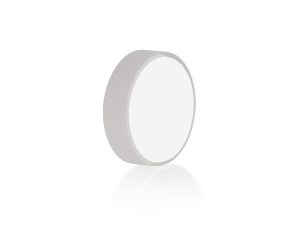 | 10QM20UF.F15Low GDD Mirror, Ytterbium Laser, 45° AOI, 25.4 mm, 1020-1050 nm | |||||
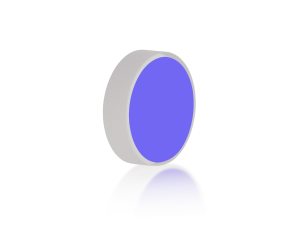 | 10QM20UF.F55Low GDD Mirror, Ytterbium Laser, 45° AOI, 25.4 mm, 505-530 nm |
Specifications
| Models | | | | |
|---|---|---|---|---|
| Wavelength Range | 505-530 nm & 1020-1050 nm | 1020-1050 nm | 505-530 nm | |
| Angle of Incidence | 45° | 45° | 45° | |
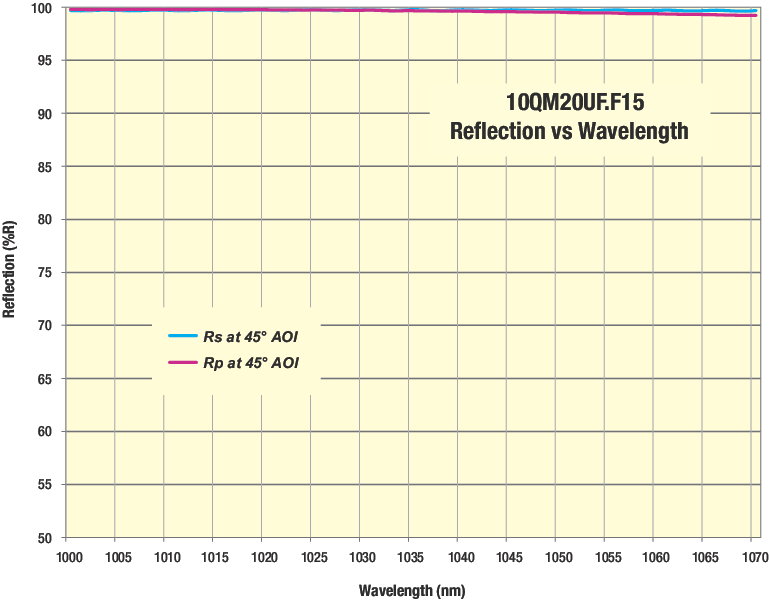
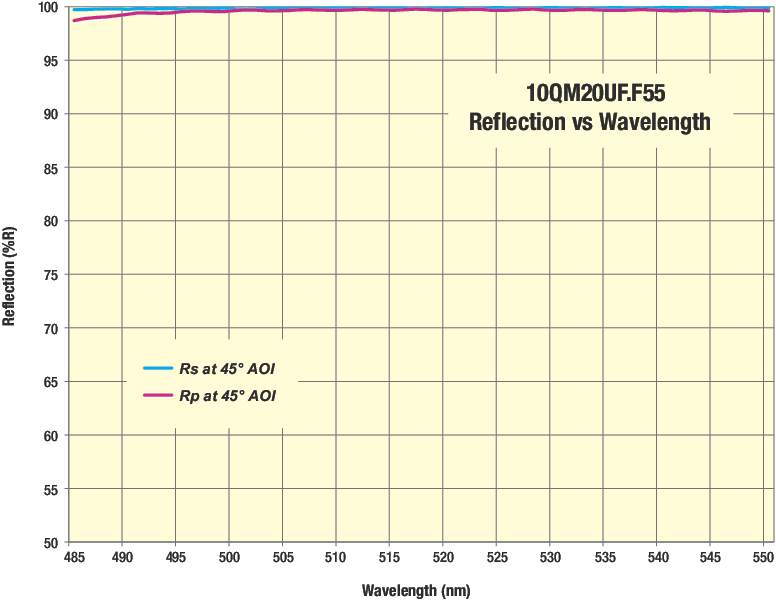
| Reflectivity | R > 99.5% @ 505-530 nm & 1020-1050 nm | Rp, Rs > 99.5% @ 1020-1050 nm | Rp, Rs > 99.5% @ 505-530 nm | |
| Material | Fused Silica | UV Grade Fused Silica | UV Grade Fused Silica | |
| Mirror Shape | Round | Round | Round | |
| Surface Flatness | λ/10 at 632.8 nm | λ/10 at 632.8 nm | λ/10 at 632.8 nm | |
| Surface Quality | 20-10 scratch-dig | 10-5 scratch-dig | 10-5 scratch-dig | |
| Back Surface | Commercial Polished | Commercial Polished | Commercial Polished | |
| Thickness | 6.0 mm | 6.35 mm | 6.35 mm | |
| Thickness Tolerance | ±0.5 mm | ±0.5 mm | ±0.5 mm | |
| Diameter | 25.4 mm | 25.4 mm | 25.4 mm | |
| Diameter Tolerance | +0/-0.3 mm | +0/-0.25 mm | +0/-0.25 mm | |
| Wedge | < 30 arc sec | ≤ 3 arc min | ≤ 3 arc min | |
| Clear Aperture | ≥central 80% of diameter | ≥central 80% of diameter | ≥central 80% of diameter | |
| Chamfers | 0.25–0.75 mm face width | 0.25–0.75 mm face width | 0.25–0.75 mm face width | |
| Chamfers Angle Tolerance | 45° ±15° | 45° ±15° | 45° ±15° | |
| Cleaning | See How to Clean Optics | See How to Clean Optics | See How to Clean Optics |
Features
The Popular Ytterbium Doped Laser
There are many types of Ytterbium doped lasers ranging from the compact fiber lasers to high performance femtosecond lasers such as the Spirit® laser from Spectra-Physics. Applications include ablation, cutting, drilling, welding, marking, laser sintering, and eye surgery.
High Reflectivities For Single Ytterbium Wavelengths
High reflectivities are offered for popular Ytterbium wavelengths. The 10QM20UF.F15 and 10QM20UF.F55 offer Rs, Rp > 99.5% for 1020-1050 nm or 505-530 nm, respectively. All mirrors are made from high quality fused silica with multilayer dielectric coatings.
Dual Wavelength Mirror
The 10QM20UF.DF55, is a dual wavelength mirror reflecting both the fundamental and second harmonic. This mirror offers an average reflectivity (S+P)/2 polarization > 99.5%. All mirrors are made from high quality fused silica with multilayer dielectric coatings.
Fused Silica Substrates
Fused Silica is synthetic amorphous silicon dioxide of extremely high purity. This non-crystalline, colorless silica glass combines a low content of inclusions with high refractive index homogeneity, a very low thermal expansion coefficient, and excellent transmittance in the wavelength regime from UV to NIR. As a result, these mirrors will perform better with temperature fluctuations and is ideal for high-energy laser applications due to its high energy damage threshold. For more information, please see our Optical Materials technical note.
Resources
Selection Guides
Technical Notes
Literature
Ultrafast Laser Optics-White Paper(477.2 kB, PDF)