Tunable Incoherent Light Sources
This section describes different TLS systems including their performance specifications and targeted applications.
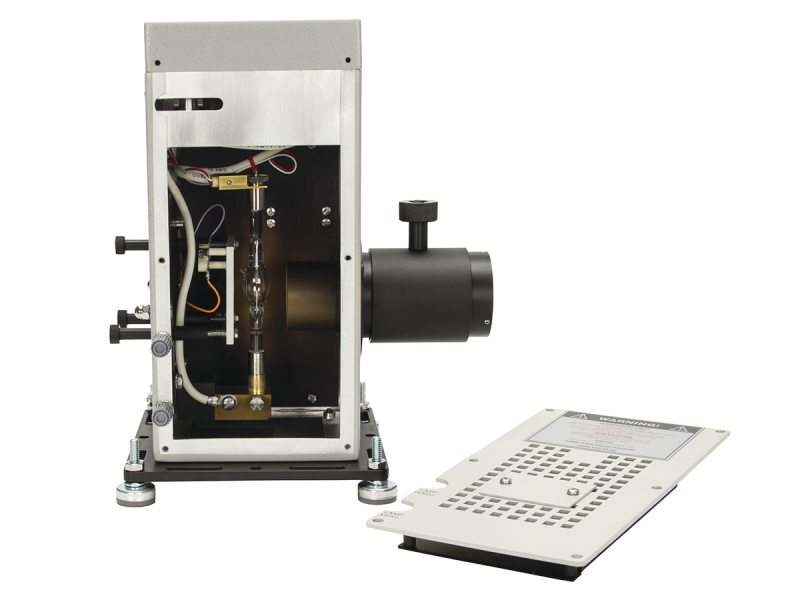
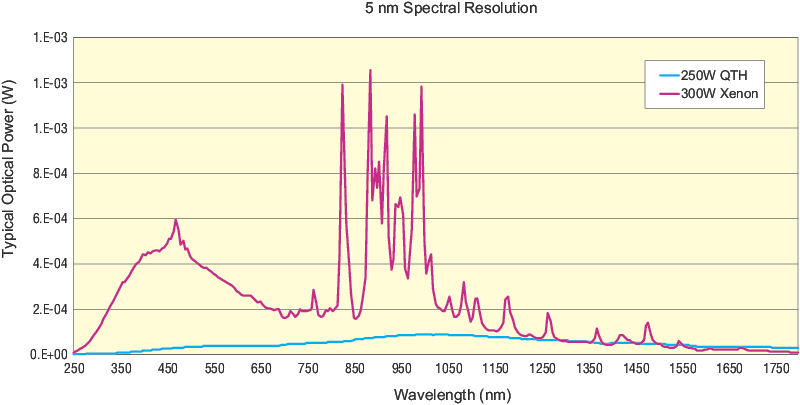
Bright Emissions vs. Monochromatic Throughput
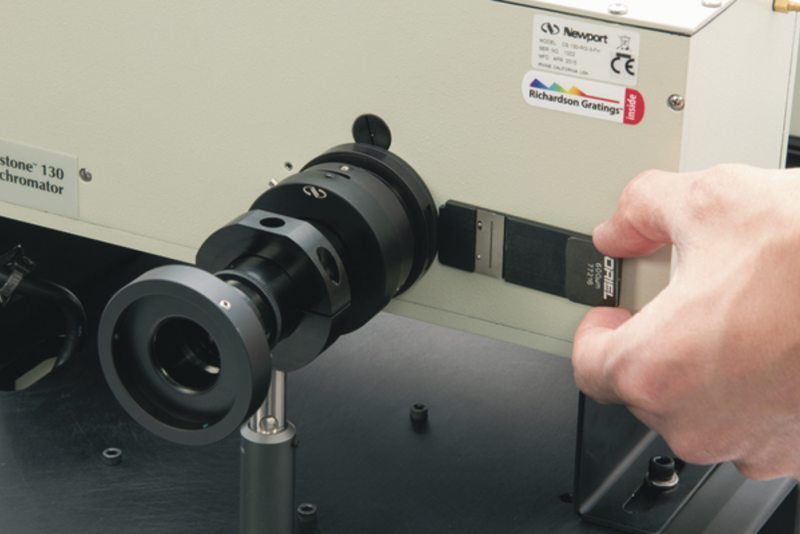
Monochromators
Measuring Quantum Efficiencies
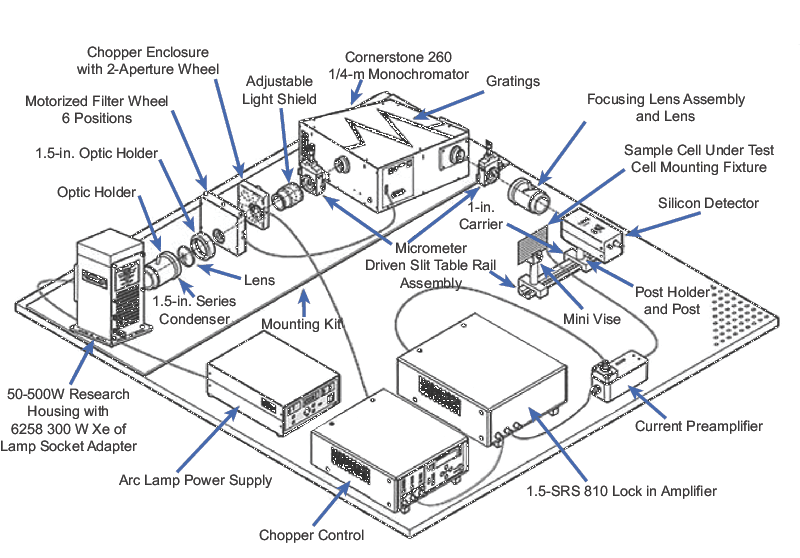
Figure 4 illustrates how a TLS is used to illuminate the solar cell in an IQE measurement. All components of the measurement system are software-controlled, including the monochromator and data acquisition components. The measurement of QE in 10 nm wavelength steps is typical and this requires a monochromator slit width of hundreds of microns. The slit width must be reduced if small wavelength increments are desired. For example, the slit width for 5 nm wavelength increments is approximately half that for 10 nm increments. However, the output optical power of the monochromator is reduced by more than 50% if the slit width is halved and this negatively impacts QE measurement since the solar cell under test will produce lower output currents that require extremely sensitive measurement equipment that often exhibit poor SNR. This will make errors more likely in the QE measurement.
For additional insights into photonics topics like this, download our free MKS Instruments Handbook: Principles & Applications in Photonics Technologies
Request a Handbook