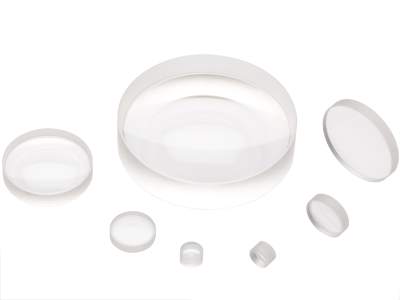
Visible Antireflection Coated UV Fused Silica Bi-Concave Lenses
Visible Antireflection Coated UV Fused Silica Bi-Concave Lenses
Our 430-700 nm UV fused silica precision bi-concave (double-concave) lenses are polished to tight tolerances using master test plates to ensure minimum wavefront distortion for demanding laser collimating applications.
- 430-700 nm anti-reflection coating
- UV grade fused silica substrates
- ≤λ/4 surface irregularity, 20-10 scratch-dig
- Double-concave shape for beam expansion applications
- Standardized focal lengths across different lens sizes See All Features
| Compare | Description | Drawings, CAD & Specs | Avail. | Price | ||
|---|---|---|---|---|---|---|
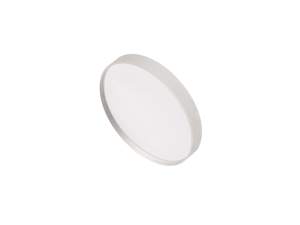 | SBC016AR.14Bi-Concave Lens, Fused Silica, 25.4 mm, -1000 mm EFL, 430-700 nm | |||||
| SBC019AR.14Bi-Concave Lens, Fused Silica, 25.4 mm, -250 mm EFL, 430-700 nm | |||||
| SBC022AR.14Bi-Concave Lens, Fused Silica, 25.4 mm, -200 mm EFL, 430-700 nm | |||||
| SBC025AR.14Bi-Concave Lens, Fused Silica, 25.4 mm, -150 mm EFL, 430-700 nm | |||||
| SBC028AR.14Bi-Concave Lens, Fused Silica, 25.4 mm, -100 mm EFL, 430-700 nm | |||||
| SBC031AR.14Bi-Concave Lens, Fused Silica, 25.4 mm, -75 mm EFL, 430-700 nm | |||||
| SBC034AR.14Bi-Concave Lens, Fused Silica, 25.4 mm, -50 mm EFL, 430-700 nm |
Mounting Options
We offer a full range of optical lens mounts to meet various experimental requirements. Below lists the recommended mounts for spherical lenses of standard sizes. Please see our Lens Mount Guide for additional information.
Note: besides the diameter, please check the Edge Thickness (Te) specification of the lens and the lens mount to ensure compatibility before purchasing.
| Lens Diameter | 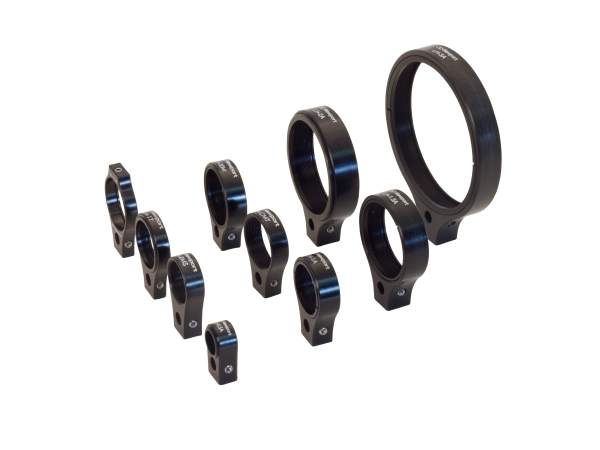 A-Line™ Lens Mounts |
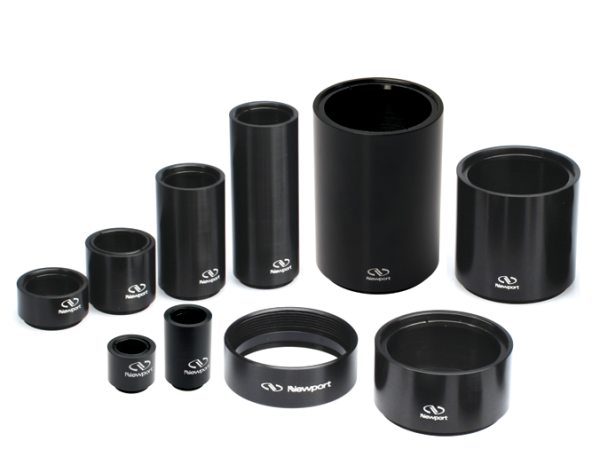 LT Series Lens Tubes |
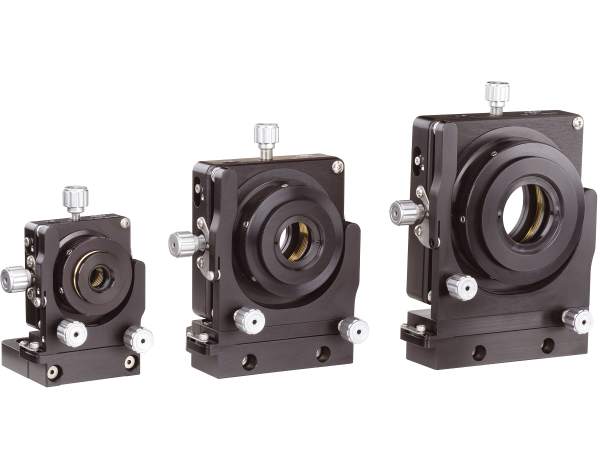 LP Series Lens Positioners |
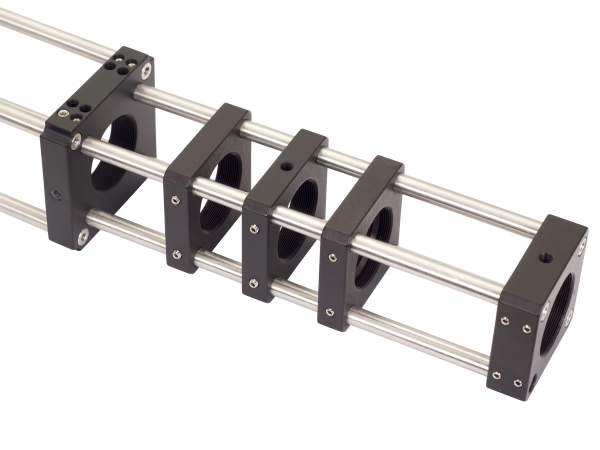 Optics Cage Plus Series |
|---|---|---|---|---|
| 76.2 mm | ( |
N/A | N/A | N/A |
| 50.8 mm | ( |
N/A | ||
| 38.1 mm | ( |
LT20 lens tube with |
LP-2 lens positioner with |
N/A |
| 25.4 mm | ( |
|||
| 12.7 mm | ( |
N/A | ||
| 6.35 mm | LT05 lens tube with |
LP-05 lens positioner with |
N/A |
For non-standard sizes not listed above, check out our variable size lens mounts.
Specifications
- Lens ShapeBi-Concave (Double-Concave)
- Lens MaterialUV Fused Silica
- Antireflection Coating430-700 nm
- Coating TypeVisible Multilayer
- Coating CodeAR.14
- Damage Threshold7.5 J/cm2, 10 ns pulses, 10 Hz at 532 nm
- Surface Quality20-10 scratch-dig
- Surface Flatnessλ/2
- Centration≤3 arc min
- Chamfers0-0.8 mm face width
- Chamfers Angle/Tolerance45° ±15°, typical
- Focal Length Tolerance±1 %
- Diameter Tolerance+0/-0.1 mm
- Center Thickness Tolerance±0.1 mm
- Clear Aperture≥central 90% of diameter
- Cleaning
Features
UV Fused Silica Substrates for UV, Laserline & Broadband Applications
UV Grade Fused Silica is synthetic amorphous silicon dioxide of extremely high purity providing maximum transmission from 195 to 2100 nm. This non-crystalline, colorless silica glass combines a very low thermal expansion coefficient with good optical qualities, and excellent transmittance in the ultraviolet region. Transmission and homogeneity exceed those of crystalline quartz without the problems of orientation and temperature instability inherent in the crystalline form. It will not fluoresce under UV light and is resistant to radiation. For high-energy applications, the extreme purity of fused silica eliminates microscopic defect sites that could lead to laser damage. For more information, refer to our optical materials Technical Note

Precision Bi-Convex Lens Surfaces
Our precision UV Fused Silica bi-convex lenses are polished to tight tolerances minimizing wavefront distortion. Tight surface quality tolerances minimize scatter and unwanted diffraction effects. These lenses have a 20-10 scratch-dig surface quality, and a λ/8 surface irregularity. For more information, refer to the optical surfaces technical note.
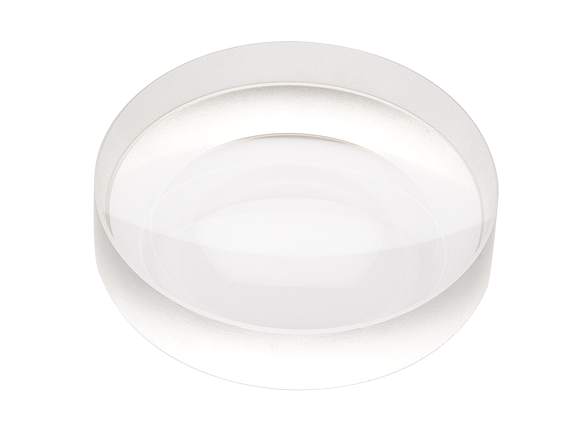
AR.14 Broadband Visible Antireflection Coating
Our AR.14 broadband multilayer antireflection coating markedly improves the transmission efficiency of these lenses by reducing surface reflections over a 430-700 nm wavelength range. This visible AR coating performs effectively for multiple visible wavelengths and tunable lasers eliminating the need for several sets of optics.

Standardized Bi-Concave Focal Lengths
Standard double concave effective focal lengths provide a systematic approach allowing for lenses of different sizes and materials to be interchanged without requiring other changes to your optical system.
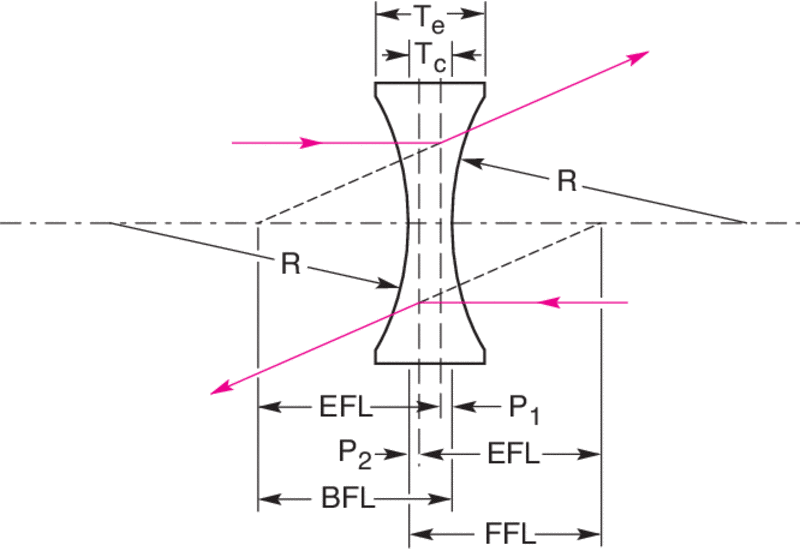
Bi-Concave Lens Shape for Beam Expansion
Bi-Concave lenses are the best choice where object and image are at absolute conjugate ratios closer to 1:1 with converging input beam. The output rays appear to be diverging from a virtual image located on the object side of the lens. The distance from this virtual point to the lens is known as the focal length. Similar to the Plano-Concave lenses, the Bi-concave lenses have negative focal lengths, thereby causing collimated incident light to diverge. Bi-Concave lenses have equal radius of curvature on both side of the lens. They are generally used to expand light or increase focal length in existing systems, such as beam expanders and projection systems.