
NIR Antireflection Coated N-BK7 Plano-Concave Lenses
NIR Antireflection Coated N-BK7 Plano-Concave Lenses
Our precision 650-1000 nm NIR antireflection coated N-BK7 plano-concave lenses are designed to meet demanding laser beam expansion applications.
- 650-1000 nm anti-reflection coating
- High performance 40-20 scratch-dig N-BK7 substrates
- Plano-concave lens shape for beam expansion
- Standardized focal lengths across different lens sizes
- RoHS Certified See All Features
| Compare | Description | Drawings, CAD & Specs | Avail. | Price | ||
|---|---|---|---|---|---|---|
 | KPC010AR.16Plano-Concave Lens, N-BK7, 6.35 mm Diameter, -25 mm EFL, 650-1000 nm | |||||
| KPC013AR.16Plano-Concave Lens, N-BK7, 6.35 mm Diameter, -12.5 mm EFL, 650-1000 nm | |||||
 | KPC016AR.16Plano-Concave Lens, N-BK7, 12.7 mm Diameter, -100 mm EFL, 650-1000 nm | |||||
| KPC019AR.16Plano-Concave Lens, N-BK7, 12.7 mm Diameter, -75 mm EFL, 650-1000 nm | |||||
| KPC022AR.16Plano-Concave Lens, N-BK7, 12.7 mm Diameter, -50 mm EFL, 650-1000 nm | |||||
| KPC025AR.16Plano-Concave Lens, N-BK7, 12.7 mm Diameter, -25 mm EFL, 650-1000 nm | |||||
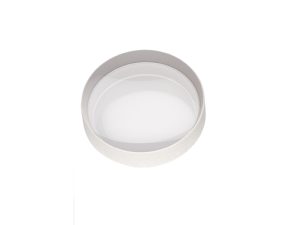 | KPC028AR.16Plano-Concave Lens, N-BK7, 25.4 mm Diameter, -200 mm EFL, 650-1000 nm | |||||
| KPC031AR.16Plano-Concave Lens, N-BK7, 25.4 mm Diameter, -150 mm EFL, 650-1000 nm | |||||
| KPC034AR.16Plano-Concave Lens, N-BK7, 25.4 mm Diameter, -100 mm EFL, 650-1000 nm | |||||
| KPC037AR.16Plano-Concave Lens, N-BK7, 25.4 mm Diameter, -75 mm EFL, 650-1000 nm | |||||
| KPC040AR.16Plano-Concave Lens, N-BK7, 25.4 mm Diameter, -50 mm EFL, 650-1000 nm | |||||
| KPC043AR.16Plano-Concave Lens, N-BK7, 25.4 mm Diameter, -25 mm EFL, 650-1000 nm | |||||
 | KPC064AR.16Plano-Concave Lens, N-BK7, 50.8 mm Diameter, -500 mm EFL, 650-1000 nm | |||||
| KPC067AR.16Plano-Concave Lens, N-BK7, 50.8 mm Diameter, -250 mm EFL, 650-1000 nm | |||||
| KPC070AR.16Plano-Concave Lens, N-BK7, 50.8 mm Diameter, -200 mm EFL, 650-1000 nm | |||||
| KPC073AR.16Plano-Concave Lens, N-BK7, 50.8 mm Diameter, -150 mm EFL, 650-1000 nm | |||||
| KPC076AR.16Plano-Concave Lens, N-BK7, 50.8 mm Diameter, -100 mm EFL, 650-1000 nm | |||||
| KPC079AR.16Plano-Concave Lens, N-BK7, 50.8 mm Diameter, -75 mm EFL, 650-1000 nm |
Mounting Options
We offer a full range of optical lens mounts to meet various experimental requirements. Below lists the recommended mounts for spherical lenses of standard sizes. Please see our Lens Mount Guide for additional information.
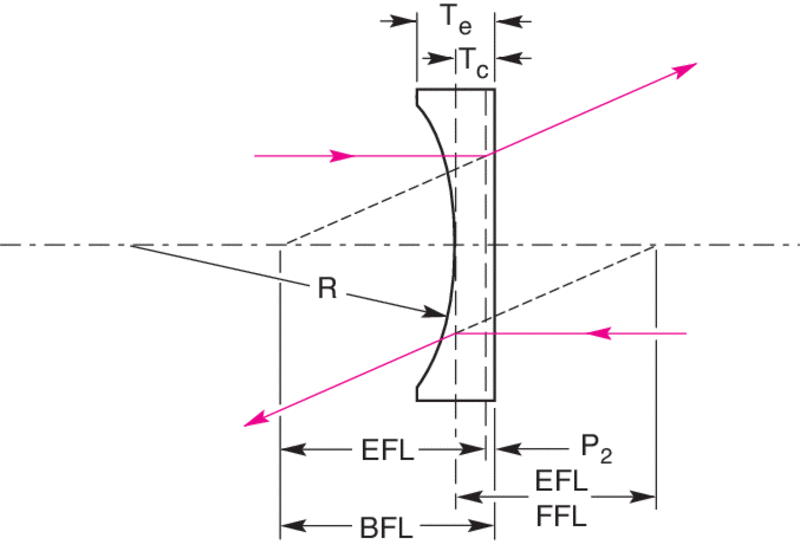
Note: besides the diameter, please check the Edge Thickness (Te) specification of the lens and the lens mount to ensure compatibility before purchasing.
| Lens Diameter | 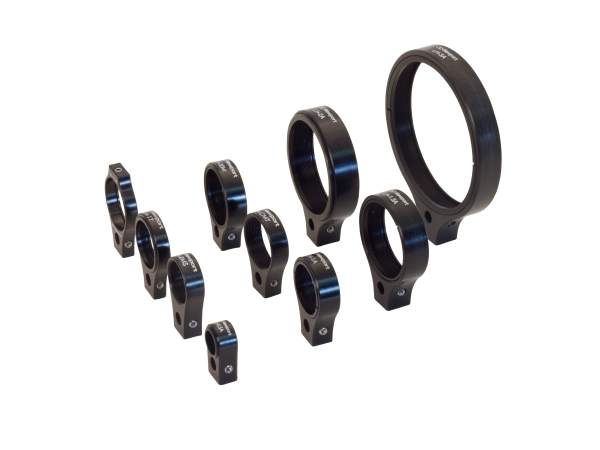 A-Line™ Lens Mounts |
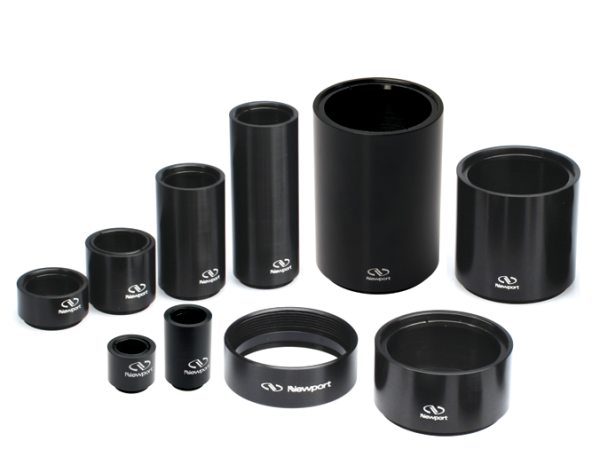 LT Series Lens Tubes |
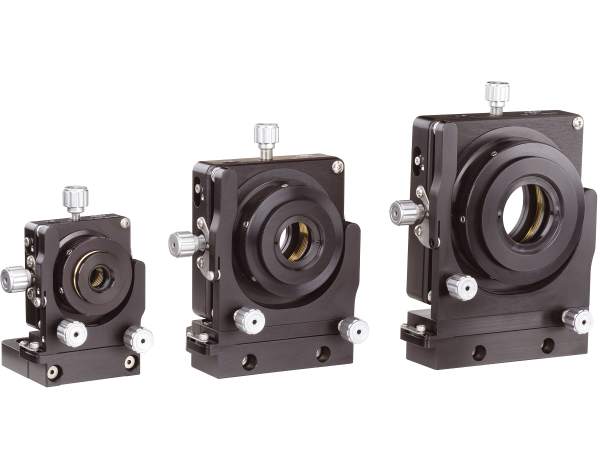 LP Series Lens Positioners |
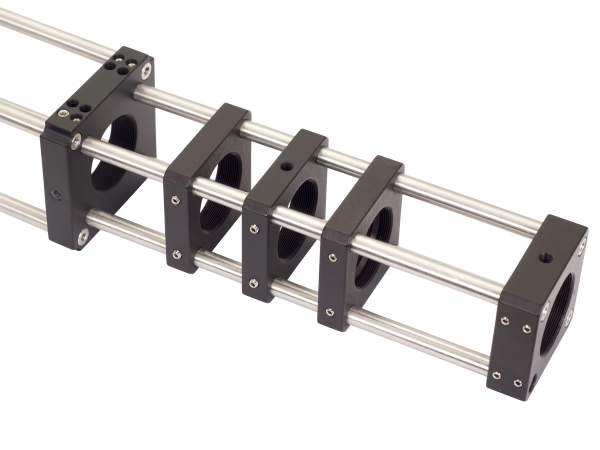 Optics Cage Plus Series |
|---|---|---|---|---|
| 76.2 mm | ( |
N/A | N/A | N/A |
| 50.8 mm | ( |
N/A | ||
| 38.1 mm | ( |
LT20 lens tube with |
LP-2 lens positioner with |
N/A |
| 25.4 mm | ( |
|||
| 12.7 mm | ( |
N/A | ||
| 6.35 mm | LT05 lens tube with |
LP-05 lens positioner with |
N/A |
For non-standard sizes not listed above, check out our variable size lens mounts.
Specifications
- Lens ShapePlano-Concave
- Lens MaterialN-BK7
- Antireflection Coating650-1000 nm
- Coating TypeNIR Multilayer
- Coating CodeAR.16
- Damage Threshold7.5 J/cm2, 10 ns pulses, 10 Hz at 1064 nm
- Surface Quality40-20 scratch-dig
- Centration≤3 arc min
- Chamfers0–0.8 mm face width
- Chamfers Angle/Tolerance45° ±15°, typical
- Focal Length Tolerance±1 %
- Diameter Tolerance+0/-0.1 mm
- Clear Aperture≥central 90% of diameter
- Cleaning
Features
N-BK7 Substrates for VIS and NIR Applications
N-BK7 is an excellent lens material for most visible and near infrared applications. It is the most common borosilicate crown optical glass, and it provides great performance at a good value. Its high homogeneity, low bubble and inclusion content, and straightforward manufacturability make it a good choice for transmissive optics. N-BK7 is also relatively hard and shows good scratch resistance. The transmission range for BK 7 is 380 to 2100 nm. It is not recommended for temperature sensitive applications, such as precision mirrors. For more information, refer to our optical materials technical note.

High Quality Precision Plano-Concave Lens Surfaces
Our precision plano-concave lenses are polished to tight tolerances minimizing wavefront distortion. Tight surface quality tolerances minimize scatter and unwanted diffraction effects. These lenses have a 40-20 scratch-dig surface quality, and a 1.5 λ surface power accuracy. For more information, refer to the optical surfaces technical note.

Broadband Multilayer NIR Antireflection Coatings
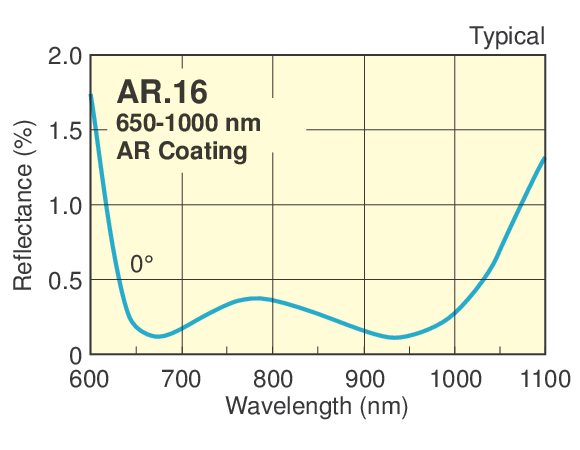
Our broadband AR.16 antireflection coating improves the transmission efficiency of these lenses by reducing surface reflections over a 650-1000 nm wavelength range. The NIR AR multi-layer coating improves the performance over uncoated surfaces. It features a damage threshold of 7.5 J/cm2 for 10 ns pulses at 10 Hz and 1064 nm.
Standardized Plano-Concave Focal Lengths
Standard effective focal lengths on our plano-concave lenses provide a systematic approach allowing for lenses of different sizes and materials to be interchanged without requiring other changes to your optical system.
Mounted Version - with Lens Tubes
The lenses can be mounted in LT series lens tube for constructing a complex optical system or quickly connecting to other threaded lens mounts: A-Line™ series fixed lens mount, or adjustable lens positioner (with thread adapter). Use LT-WR series spanner wrench for easy lens installation.

Expanding a Laser Beam with a Plano-Concave Lens
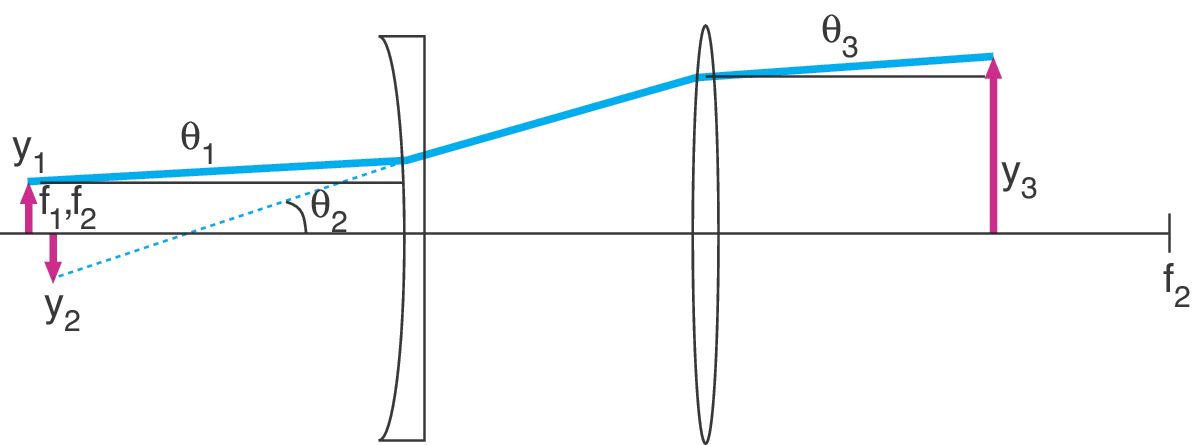
As an application example, consider a Newport R-31005 HeNe Laser with beam diameter 0.63 mm and a divergence of 1.3 mrad. Note that these are beam diameter and full divergence, so in the notation of our figure, y1 = 0.315 mm and θ1= 0.65 mrad. To expand this beam ten times while reducing the divergence by a factor of ten, we could select a plano-concave lens KPC043 with f1 = -25 mm and a plano-convex lens KPX109 with f2 = 250 mm. Since real lenses differ in some degree from thin lenses, the spacing between the pair of lenses is actually the sum of the back focal lengths BFL1 + BFL2 = -26.64 mm + 247.61 mm = 220.97 mm.
The expanded beam diameter is: 2y3 = 2y1f2/|-f1| = 2(0.315 mm)(250 mm)/|-25 mm|= 6.3 mm.
The divergence angle is: θ3 = θ1|-f1|/f2 = (0.65 mrad)|-25 mm|/250 mm = 0.065 mrad.
For minimal aberrations, it is best to use a plano-concave lens for the negative lens and a plano-convex lens for the positive lens with the plano surfaces facing each other. To further reduce aberrations, only the central portion of the lens should be illuminated, so choosing oversized lenses is often a good idea. This style of beam expander is called Galilean.


