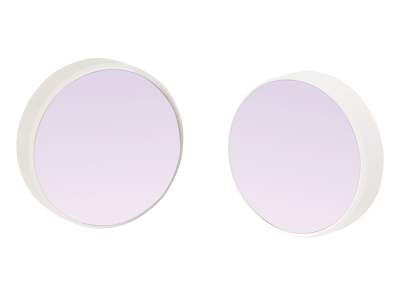
FemtoOptics™ Chirped Mirrors Matched Pair
FemtoOptics™ Chirped Mirrors Matched Pair
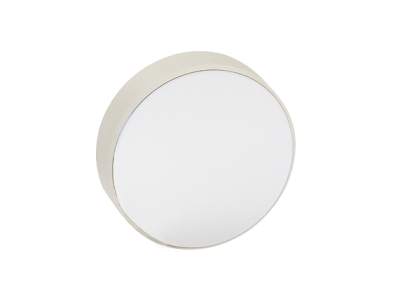
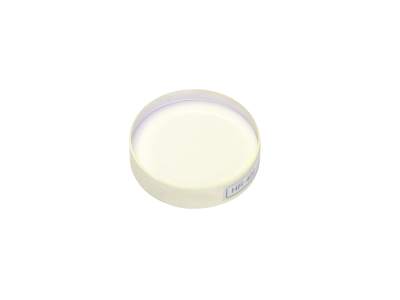
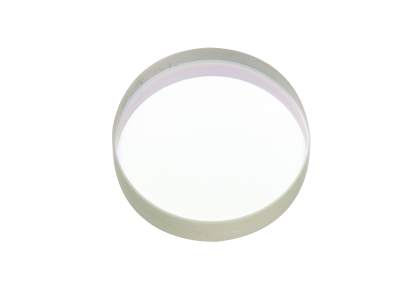
This matched pair of Ultrafast Chirped Mirrors provides a convenient method to do dispersion compensation for sub 10 fs pulses. The high reflectivity of the mirrors allows for high through put, and by using a couple of open quadrant mirror mounts, the footprint of the compressor can be very compact. The proprietary coating design accurately controls higher order dispersion.
- Negative GDD -45 fs2 at 800 nm per bounce
- R>99.5% @ 700-890 nm per bounce
- 0-10° AOI for S-pol, 0-15° AOI for P-pol
- Polished back surface allows transmission at other wavelengths
- Proprietary coating design optimized for 10 fs pulses and shorter
- 1 in. diameter matched pair sold together See All Features
| Compare | Description | Drawings, CAD & Specs | Avail. | Price | ||
|---|---|---|---|---|---|---|
 | 10Q20UF.42PAIRChirped Mirror Pair, Ultrafast, 25.4 mm, 700-890 nm |
Specifications
- Wavelength Range700-890 nm
- Diameter25.4 mm
- MaterialFused Silica
- Coating TypeBroadband Dielectric
- Surface Quality10-5 scratch-dig
- Surface Flatnessλ/10 at 632.8 nm
- Wedge<10 arc min
- Angle of Incidence0-10° (s pol), 0-15° (p pol)
- Clear Aperture≥ central 80% of diameter
- Back SurfaceCommercial Polished
- ReflectivityR>99.5% per bounce
- Thickness10 mm
- Thickness Tolerance+0/-0.2 mm
- Diameter Tolerance+0/-0.1 mm
- Chamfers0.3 ± 0.2 mm face width
- Chamfers Angle Tolerance45° ±15°
Features
Negative GDD for Dispersion Compensation
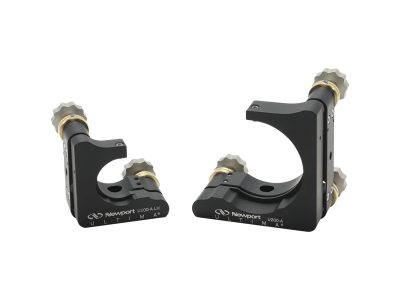
When transmitting an ultrashort pulse laser beam through a number of optical components, the pulse will spread and become chirped. This matched pair of mirrors are the solution to compensate for pulse broadening effects. These mirrors provide a negative group delay dispersion (-45 fs2 at 800 nm per bounce) to the incoming laser beam with every bounce off the surface. By setting up a two or three mirror configuration, the laser beam can bounce back and forth between the mirrors many times to compensate for pulse dispersion effects. These mirrors can be mounted into Newport's patented clear quadrant mounts - such as

Cancel Out GDD Oscillations
The coating design of dispersion compensation mirrors has inherent oscillatory fluctuations through the active wavelength band. This phenomenon is a natural result of the coating design. However these oscillations can be cancelled out when using two mirrors that are made such that their oscillations happen at a 180 degrees out of phase.
Equivalent to FemtoOptics GSM107.
Fused Silica Substrates
Fused Silica is synthetic amorphous silicon dioxide of extremely high purity. This non-crystalline, colorless silica glass combines a low content of inclusions with high refractive index homogeneity, a very low thermal expansion coefficient, and excellent transmittance in the wavelength regime from UV to NIR. As a result, these mirrors will perform better with temperature fluctuations and is ideal for high-energy laser applications due to its high energy damage threshold. For more information, please see our Optical Materials technical note.
Resources
Selection Guides
Technical Notes
Literature
Ultrafast Laser Optics-White Paper(477.2 kB, PDF)
Application Notes
Dispersion Compensation Using Chirped Mirrors(864.4 kB, PDF)