TLS260 High Intensity Tunable Light Sources
TLS260 High Intensity Tunable Light Sources
TLS260 Tunable Light Sources provide an upgrade from the standard TLS tunable sources for users seeking additional light intensity and simplified data acquisition capability. These light sources arrive fully assembled, optically pre-aligned, and with an individual characterization report. The broad tuning range and standalone scanning and data acquisition capabilities make these light sources ideal for a wide variety of spectroscopy applications with strict requirements.
- High intensity tunable sources from ultraviolet to near-infrared
- Integrated control with built in detector readout and utility software
- Rotating output flange provides flexible output beam orientation
- Flexible resolution adjustment via micrometer driven variable slit
- Arrives as a pre-assembled system with pre-aligned optics See All Features
Features
Highest Output Intensity

Tunable Broadband Output With 5 nm, 10 nm, 20 nm, and 30 nm Resolution Selection

Rotating Output Flange

Pre-Assembled and Pre-Aligned

TLS260-300X Lamp Installation and Alignment
TLS260-250Q Lamp Installation and Alignment
When the 6335 QTH lamp inside the TLS system has reached its end of lifetime and needs replacement, changing the lamp is as simple as unplugging the old one and plugging in a new one. Due to small manufacturing differences between lamps, a minor alignment procedure is required when a new lamp is installed into the TLS. This simple installation and alignment procedure can be done in minutes, as demonstrated in the video to the left.
Motorized Filter Wheel with Order Sorting Filters
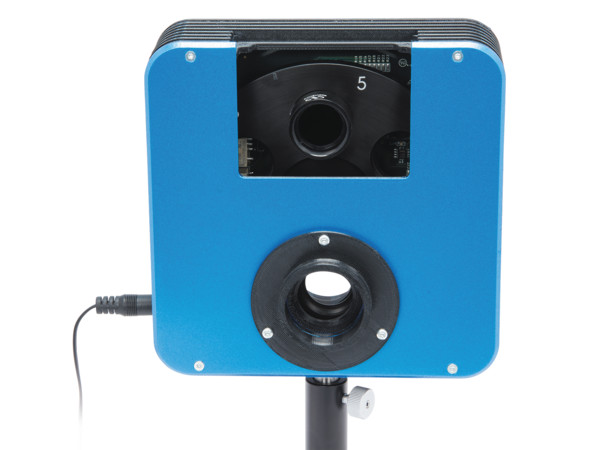
Built-in Detector Readout and Simple Communication Interface
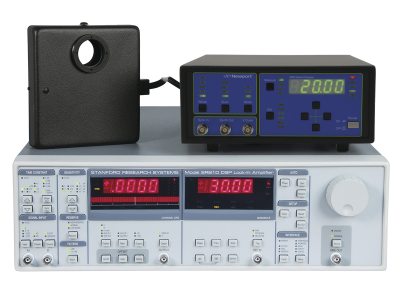
The integrated OPS power supply operates the Xe arc lamp or QTH lamp of the TLS with high light output intensity stability. An ability exclusive to the TLS260 series, the OPS power supply is also capable of reading the output current of any unamplified Oriel detector. Unlike TRACQ-BASIC-V066, the OPS power supply simplifies setup by not requiring an external meter to display real-time Oriel detector current readings.

Integrated TLS Utility Data Acquisition and Control Software

Easy Monochromator Removal and Re-Installation

Compatible with Newport 2 Inch Lens Tube and Oriel 1.5 Inch Flanged Products
Each Unit Tested to Meet Oriel Standards
Each TLS260 unit sold to a customer is tested prior to shipping to confirm that the unit meets factory standards. The customer receives this test report with his/her TLS unit for future reference. The final test data included with each unit includes:
- Optical power from 300 to 1650 nm for Xe source or 350 to 1650 nm for QTH source
- Beam diameter and divergence angle
- Light output stability
- Wavelength accuracy and resolution
Arc Lamp Safety
Arc lamps may emit dangerous levels of UV radiation depending on their source type. Ensure that only authorized personnel are in the vicinity of the source, and wearing the necessary safety equipment such as UV protective eyewear, clothing, and gloves. Lighted UV warning signs, posted outside laboratory doors where UV sources are operating, can prevent accidental exposure. Newport also recommends using an electronic shutter to block the beam when the source is not in use but remains turned on. Alternatively, the beam can be safely contained by using beam tubes or fiber optic cables to deliver the light to a sample. It is recommended to vent the ozone that is produced by some lamp models to the outside or use the

Accessories
UV Safety Equipment


Resources
Literature
Oriel Legacy TLS260 Light Source Datasheet(1.8 MB, PDF) Light Sources(1.6 MB, PDF)