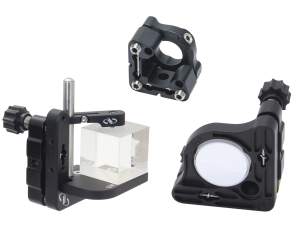
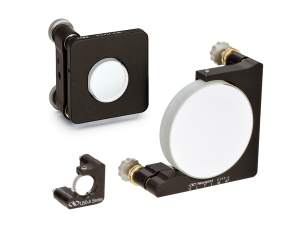
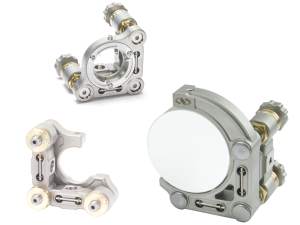
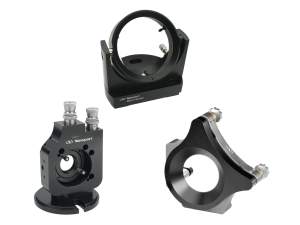
Optical Mirror Mount Guide
Overview
Learn how to quickly select the right optical mirror mount for your application. Also discover how various mirror mount types work along with the different optical mount options available.
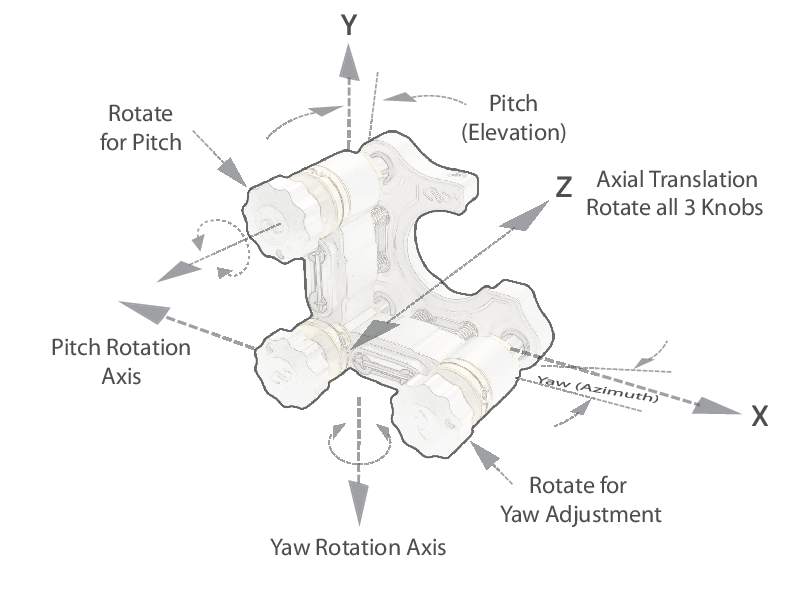
Summary of Options
The following table provides a quick snapshot of your main options for selecting a mirror mount.
| Mirror Diameters & Shapes | ø0.5 in., ø0.75 in., ø1.0 in., ø30 mm, ø1.5 in., ø2.0 in., ø3.0 in., ø4.0 in., ø6.0 in., ø8.0 in., Square, D-Shape |
| Materials | Aluminum, Alloy Steel, Stainless Steel |
| Configurations | Clear Edge, Top Adjust, Gimbal, Flexure, Low Distortion, Platform, Corner, Fixed, Low Outgassing, Industrial |
| Adjustments | θxθy-(Pitch/Yaw), zθxθy-(Pitch/Yaw/Focus), (Mounts without adjusters also available) |
| Sensitivity (Adjuster TPI) | 80-TPI, 100-TPI, 127-TPI, 170-TPI, 254-TPI |
| Actuator Types | Knob, Knob locking, Allen key, Allen key locking, Micrometer, Motor, No Actuator |
Mount Configurations
Mirror mounts are configured in several different ways to suite a variety of applications. Below are some of the available options.

Corner Mounts
Corner Mounts hold the mirror in a unique corner location to provide both a clearer beam path and enable gimbal movement. To achieve gimbal movement, two adjacent adjustment screws must be actuated the exact same distance
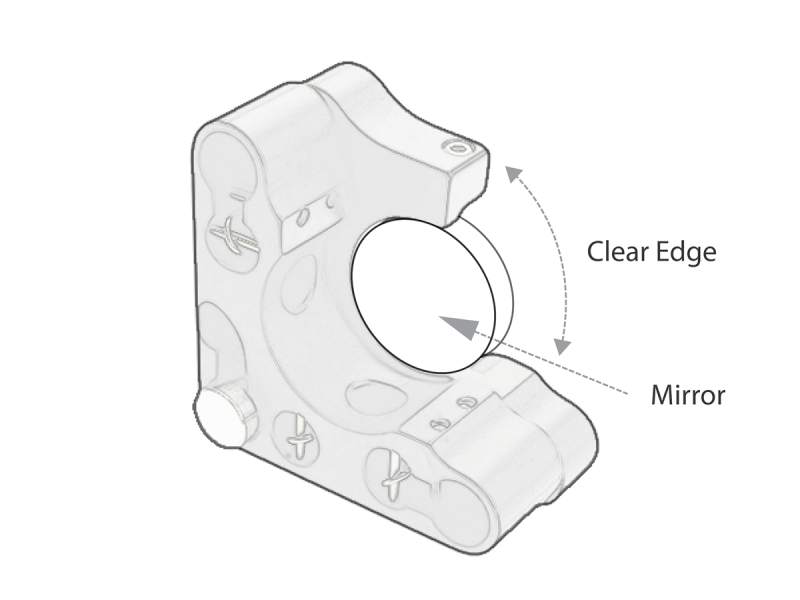
Clear Edge Mounts
With the clear edge design, beams can be reflected from one mount to another at smaller incident angles, taking less space. Clear Edge Mounts ideal for creating multiple reflections on Chirped Mirrors to compensate for pulse dispersion effects
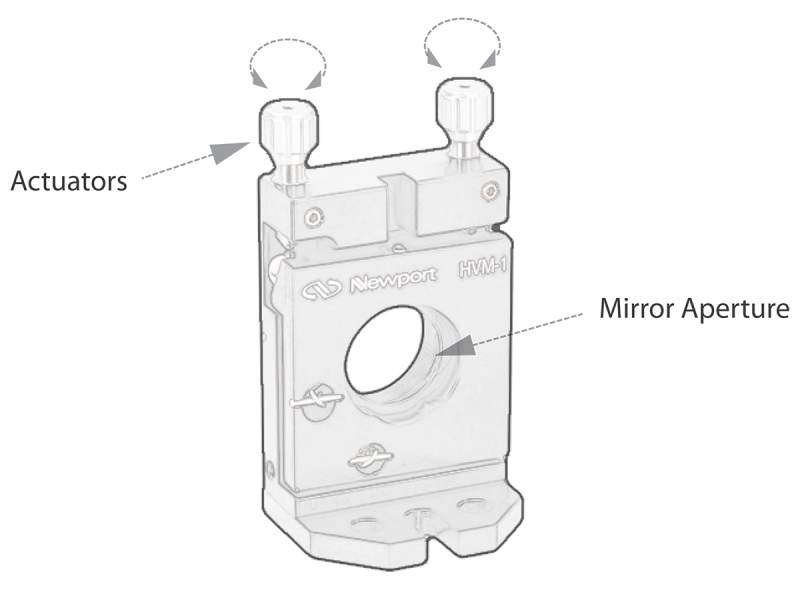
Top Adjust Mounts
Top Adjust mirror mounts provide adjustments access above the beam path so your hands never have to cross the beam. This configuration also lends itself for use in compact spaces
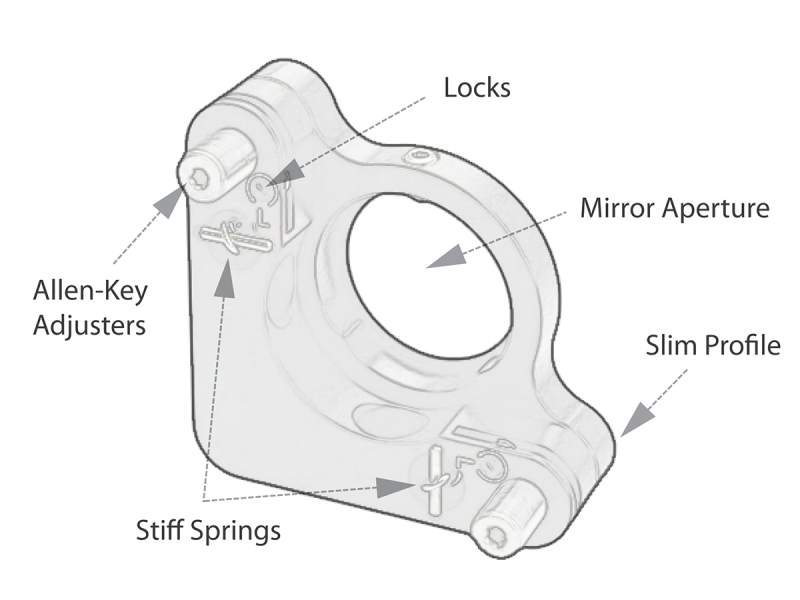
Industrial Mounts
Industrial mounts are specifically designed for "Set and Forget" OEM applications. They all have the key features that are required for Industrial Applications: 1) Slim and geometry 2) Hex Key (Knobless) Adjusters 3) Extra Stiff, 4) Optional Locking for added Long term Stability
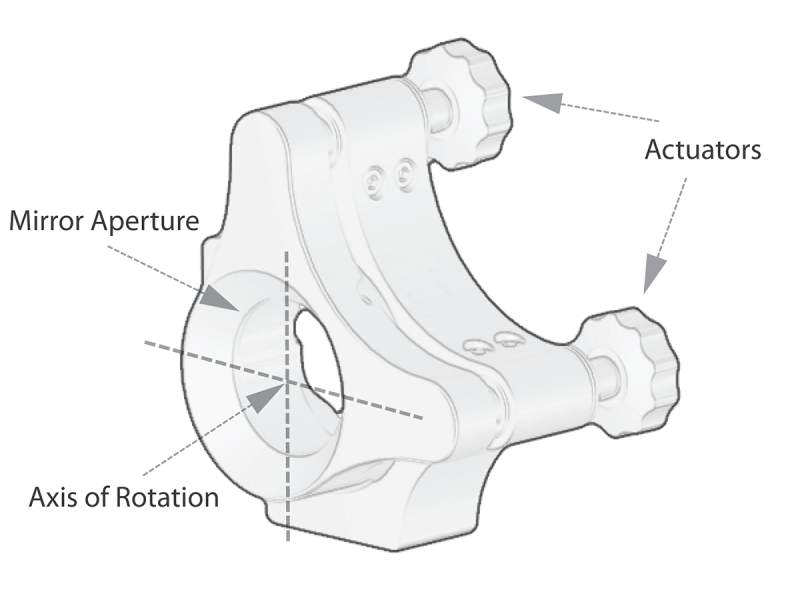
Gimbal Mounts
A gimbal mount has axes of rotation which intersect at the center surface of the optic. When the mount is adjusted, only the beam's angle changes, not its length. In contrast, a non-gimbal mount will shorten or lengthen a beam path as angle is adjusted
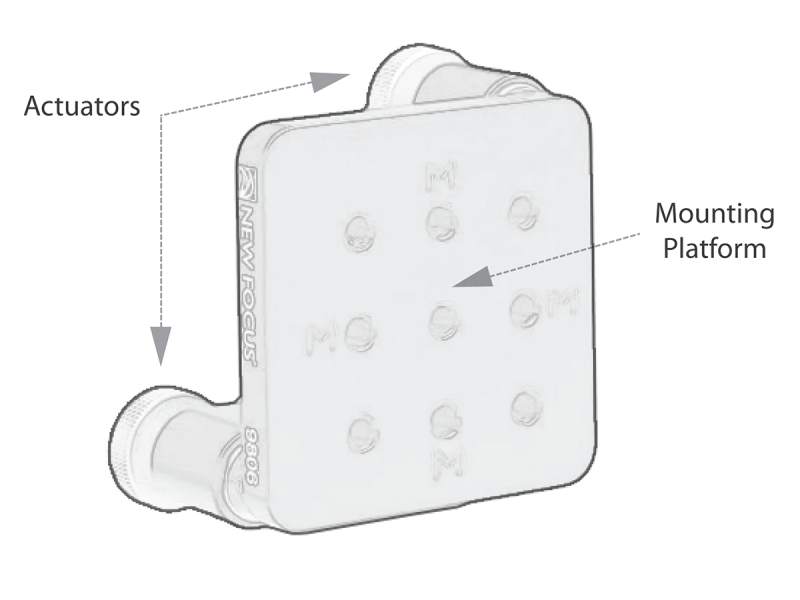
Platform Mounts
Platform mounts have a flat, square, adjustable surface for mounting square optics, prisms, and beamsplitter cubes. One benefit all platform mounts have over aperture mounts is their ability to hold mirrors which are as large as or larger than the actual mount itself.
Flexure Mounts
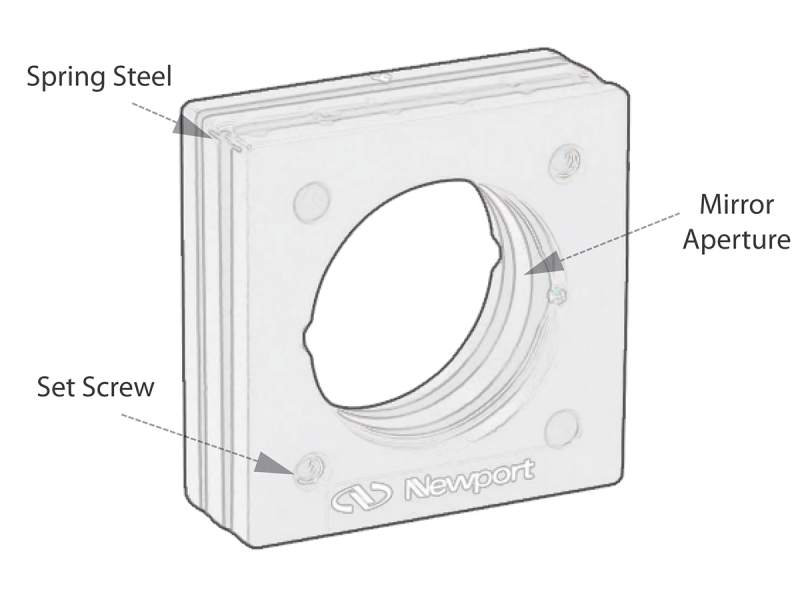
Flexure mirror mounts are designed for "set and forget" OEM applications. Welded construction, stiff flexure pivots, and precision adjustment screws provide excellent mechanical stability
Low Wavefront Distortion (LWD) Mounts
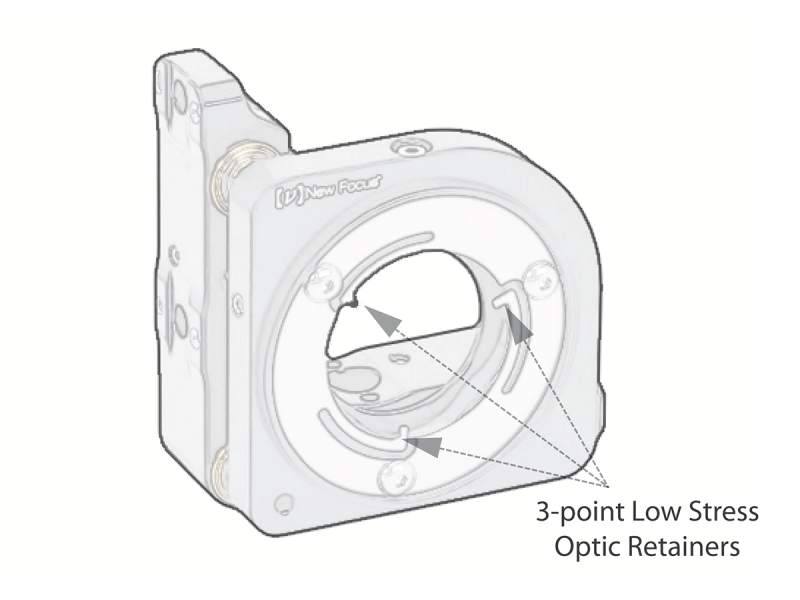
LWD optical mounts are specifically designed to hold mirrors in a way that will not induce optical distortion. They use an axial three-point mounting method to gently, but securely, hold optics so as not to affect tight flatness tolerances
Optical Mount Stability & Performance
In most applications, mirror mounts have the greatest influence on the stability and performance of an optical system. We use thermal tests to quantify this stability. In our thermal deflection test, the mount's temperature is cycled 10C from ambient and the pitch and yaw movement is recorded.
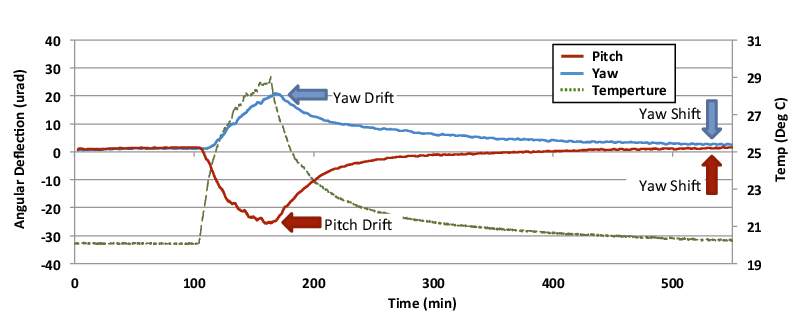
Two key pieces of test data are drift and shift. Drift is the maximum deflection of the mount over the duration of the test, which usually occurs at maximum temperature. Shift measures how well the mount returns to its original position following the thermal cycle. Newport optical mounts that perform best with the lowest shift and drift deflection include: Suprema® ZeroDrift™ Series, MFM Series Flexure Mounts
Adjustment Sensitivity
Adjustment sensitivity is a calculation of the smallest angular adjustment a mirror mount can make. It is determined by taking the inverse tangent of the adjuster's minimum incremental movement, (MIM), divided by the distance from the rotation axis of the actuator axis (R).
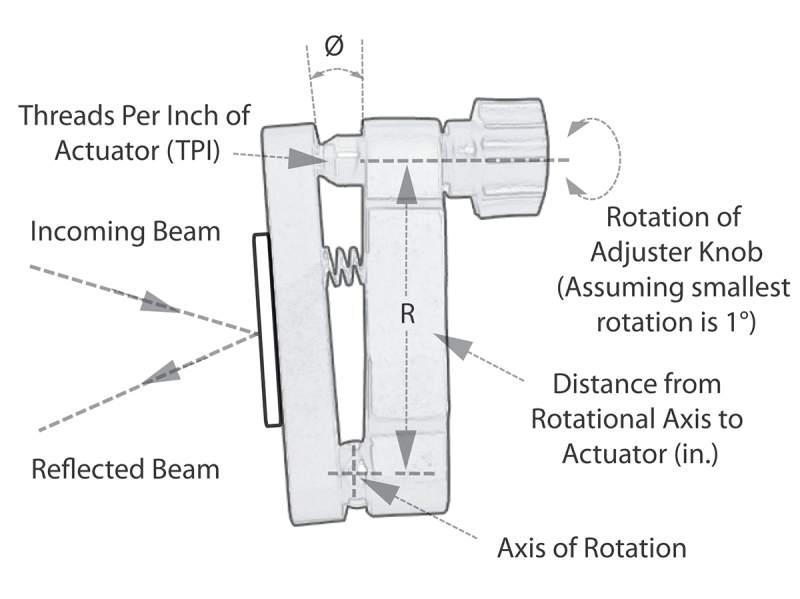

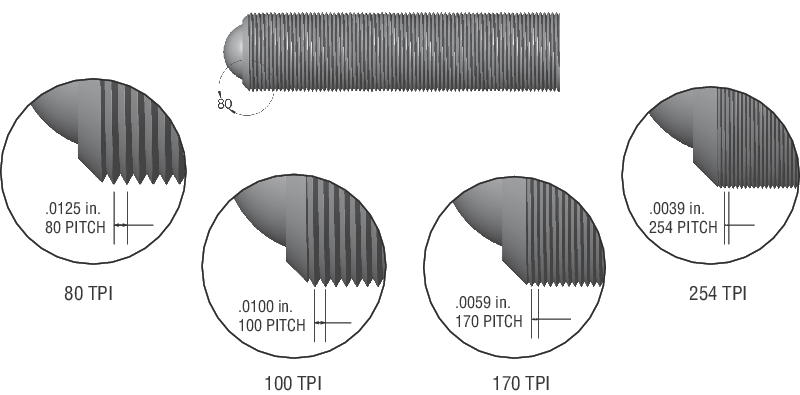
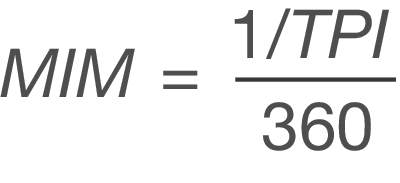
The reciprocal of TPI (also called thread pitch) is the axial length of just one thread. Thread pitch also represents how far the adjustment screw will travel with one full rotation of the adjustment knob. For calculating adjustment sensitivity we say that the smallest rotation a person can make on an adjustment knob is 1 degree. Calculating the adjuster's minimum incremental movement is simply the reciprocal of TPI divided by 360.
For example, to determine the sensitivity of the Suprema SU100-F2K-254 mirror mount, we first need to get the mounts information:
- The distance from the rotation axis of the actuator axis: R = 1.5 in
- The threads-per-inch (TPI) value of the adjustment screws: TPI = 254
Next we calculate the minimum incremental movement of the adjustment screw:

Finally, we can now calculate the adjustment sensitivity of the mirror mount:

Newport mounts with the highest TPI adjusters and, likewise, highest relative adjustment sensitivity include those listed below.
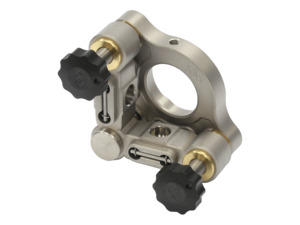
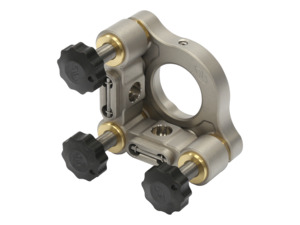
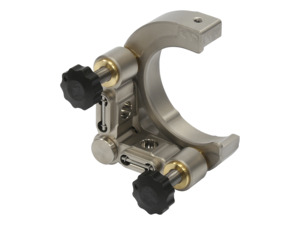
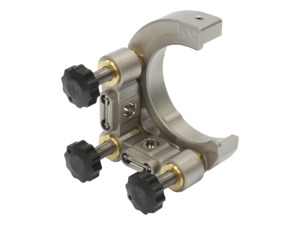
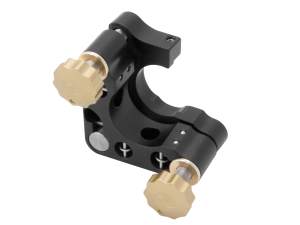
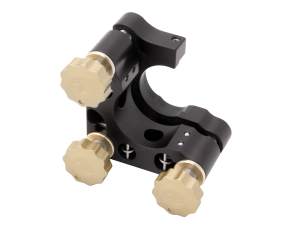
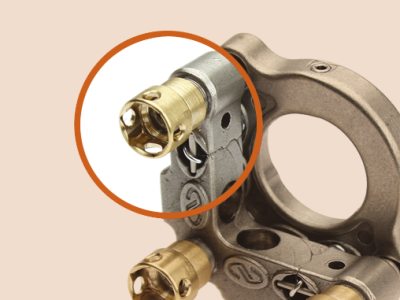
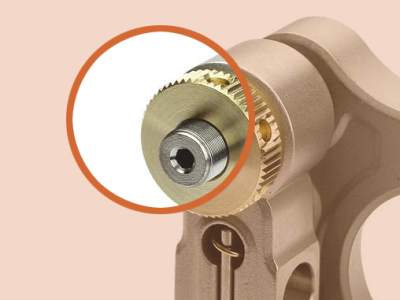
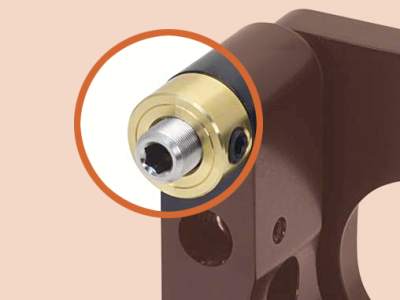
Mirror Mount Actuator Lock Types
 |
 |
 |
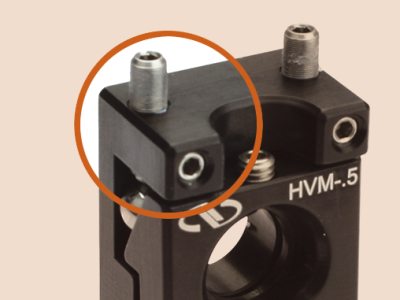 |
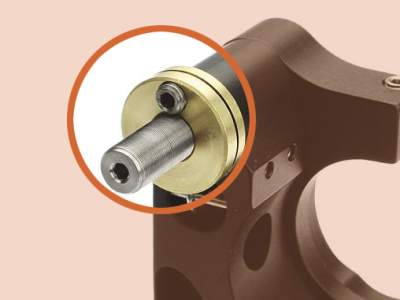
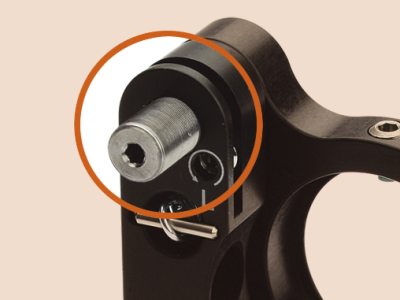
| Jam Nut Lock | Set Screw Lock | ||
| Key Benefits Exerts an axial force on the screw to prevent rotation. The jam nut lock with this design can be retrofitted onto the mount and can be tightened by hand or hex-key. |
Key Benefits Exerts a radial force against the screw to prevent rotation. The locking mechanism for this type of mount is space saving and compact. |
||
| Example Mounts |
Example Mounts |
||
 |
 |
 |
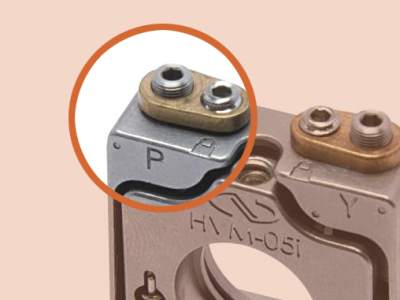 |
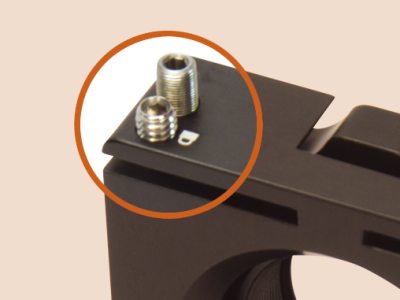
| Flexure Lock | Lever Lock | ||
| Key Benefits Exerts a tangental force on the screw to prevent rotation. Both adjustment and locking actions are accomplished using a single tool from the same side of the mount. |
Key Benefits Exerts a tangental force on the screw to prevent rotation. Both adjustment and locking actions are accomplished using a single tool from the same side of the mount. |
||
| Example Mounts |
Example Mounts |
||
Mirror Mount Materials
Mirror mounts are typically made exclusively from aluminum or stainless steel. Generally speaking, aluminum mounts are less expensive and stainless steel mounts are more stable. Below are a few characteristics and benefits of each material type:
| Aluminum | Stainless Steel | Advantages | |
|---|---|---|---|
| Stiffness | 69 Gpa | 200 Gpa | Stainless steel mounts are stiffer and easier to align. |
| Thermal Expansion | 22 µm/mK | 16 µm/mK | Stainless steel mounts have lower CTE and lower drift. |
| Density | 2700 kg/m³ | 7500 kg/m³ | Aluminum mounts have lower density and weight less. |
| Relative Machinability / Cost | LOW | HIGH | Mounts made with Aluminum are easier to machine thus costing less to manufacture. |
| Thermal Conductivity | 205 W/mK | 16 W/mK | Aluminum mounts have higher thermal conductivity and stabilize faster. |
Recommended Optical Mirror Mounts
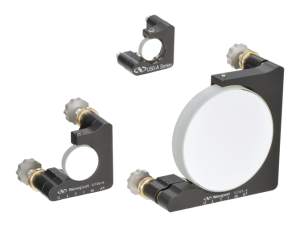 Most Popular |
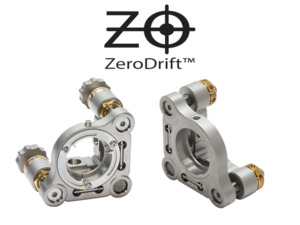 Most Stable |
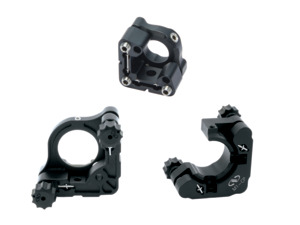 Most Value |
|---|---|---|
| ULTIMA® U100-A2K Mirror Mounts (U100-A2K, U100-A3K) are a longstanding customer favorite. Their full-featured design combines excellent stability and a competitive value. | Engineered with thermal drift compensation built-in, Suprema® ZeroDrift™ Series Mounts reduce mechanical drift by 85% compared with standard stainless steel mounts. | Priced 15-20% less than competing mounts, Newport's M Series Mounts (M05, M1, M1Q) are the industry's most cost effective. Save an additional 10% off individual prices with convenient 10-packs. |