Sorry, this family of products is no longer available.

MS257™ 1/4 m Monochromator
MS257™ 1/4 m Monochromator
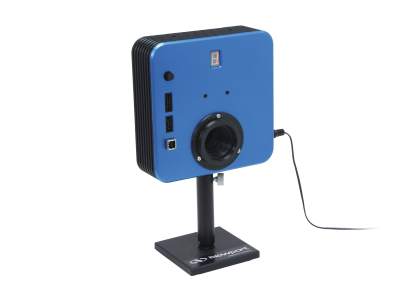
The Oriel® MS257™ 1/4m monochromator is a high performance instrument with features and benefits making it ideal for critical applications and extended wavelength range scanning. The MS257 holds up to four diffraction gratings, and users can choose among many available gratings operating from 200 nm to 20 um. The instrument can be set up to select gratings, filters, as well as input and output ports automatically during scans. Contact Newport for assistance with configuring this monochromator.
- Czerny-Turner optical configuration eliminates stray light caused by re-entrant spectra
- Diffraction grating configuration options enable 200 nm to 20 µm scans
- Dual output port accessibility option
- Micrometer driven and motorized slit assembly options
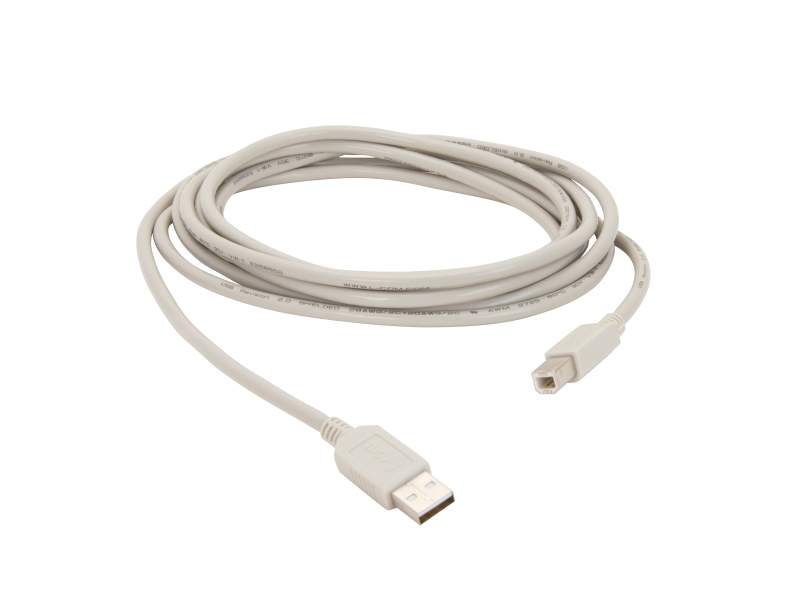
- Various control options including RS-232, USB, and hand controller
- Dual monochromator configurations available for additive and subtractive dispersion See All Features
Features
Czerny-Turner Optical Design

Grating Configurations Enable 200 nm to 20 µm Scans
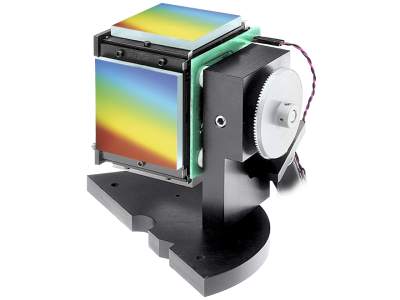
Newport's patented quadruple grating turret assembly holds four gratings. Our wide selection of grating configurations enable this one instrument to perform extended wavelength range scans beginning in the ultraviolet (UV), and extending into the visible and near-infrared (NIR) wavelength regions. Users can choose from a variety of options that meets the wavelength scanning range and/or resolution requirements of his/her application. Custom grating requirements such as gold or AlMgF2 coatings are also available upon request. A wide offering of MS257 models are available based on grating selection, micrometer driven or motorized slit assembly, and single (axial) or dual output port access. For more information on the advantages of each option, see below. For a full listing of each model number, click here. Please contact your Newport Sales Engineer for assistance in selection or purchasing a specific model.

Quadruple Grating Turret Installation
In order to protect the fragile optical components, the quadruple grating turret ships separately when ordered with a MS257 monochromator. A simple installation procedure can be done in minutes, as demonstrated in the video.
Dual Output Port Accessibility Option
When configuring the MS257 to specific needs, a single output port (axial) or access to both axial and lateral ports can be chosen. The axial output port is in the internal optics' light output path and therefore provides greater throughput. The lateral output port's position on the MS257 provides better flexibility for mounting a detector or other external component due to its accessibility. Choosing the dual output port option allows two detectors to simultaneously be mounted to the MS257 for extended wavelength range scans. A motorized output mirror with a precise, highly repeatable mirror position will direct the light to the user requested output port at the command of Newport software, low level commands, or the 77709 hand controller. Redirection of light to the desired output port can be selected at any time, or pre-programmed at specific wavelength ranges. Newport also offers the 77765 motorized beam steerer. When coupled to the input port of the MS257 the 77765 allows two different light sources to be utilized with the instrument. For example, a deuterium light source and quartz tungsten halogen (QTH) light source can be coupled to the monochromator for extended range UV to IR light input.

Controls Up to Two Filter Wheels

Various Control Options including RS-232, USB, and Hand Controller
The MS257 offers users a variety of control options:
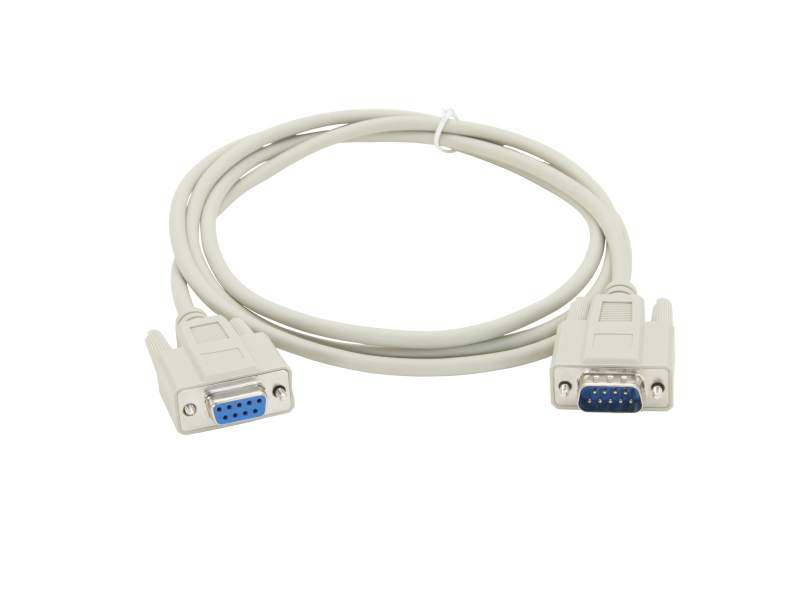
·USB and RS-232/GPIB (IEEE-448): The MS257 is equipped with both a USB and RS-232 port. For GPIB (IEEE-488) communication, the 77793 RS-232 to GPIB (IEEE-4878) External Interface is required.
·MS257 Utility Software: This utility program, included with the MS257 is written in National Instruments™ LabVIEW software. The program can be expanded upon to form a unique application software through use of the LabVIEW source code and VI's or .dll. Please note direct communication through the .dll is only available via USB 2.0 and not RS-232/GPIB (IEEE-488)
·TRACQ-BASIC Data Acquisition and Spectroscopy Software: This software application controls the MS257 as well as a variety of detectors to perform radiometric measurements. Data is graphed in real time and easily exportable for further analysis.
·77709 Hand Controller: This controller is a good option for those who do not wish to use a computer due to convenience or security concerns. It provides access to almost all of the MS257's functionality including grating selection, active filter position, current wavelength, shutter status and more.
·TTL signal as well as auxiliary input and output connectors are located on the back panel of the MS257. The TTL signal enables control of select functions such as the integrated shutter and output port mirror, for dual output port models.

Integrated Shutter
A solenoid driven shutter is integrated into the MS257. This shutter automatically closes when changing gratings and filters in order to protect the detector from possible high light intensities at various grating angles - particularly the zero order white light. The shutter can be closed for dark scans and dark current measurements at the command of the included MS257 utility software, TracQ™ Basic Data Acquisition and Radiometry Software, low level command, 74009 hand controller, or external TTL signal.
Double Monochromator Configuration for Additive Dispersion Available
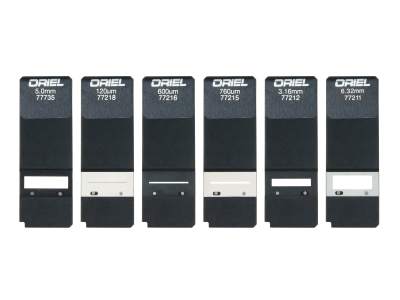
Two MS257 monochromators, configured with identical gratings and three slit assemblies, can be mechanically coupled via a light tight connection and mounted to a single baseplate to hold the proper optical alignment. Dual monochromator configurations are only controllable via RS-232. An additive double monochromator configuration uses the second monochromator to provide a second level of dispersion from the output light of the first monochromator. The result is linear light dispersion approximately double that of a single monochromator (ignoring all aberrations), and slightly better resolution. Contact a Newport Sales Engineer for assistance in configuring a double monochromator system.

Double Monochromator Configuration for Subtractive Dispersion Available
Two MS257 monochromators, configured with identical gratings and three slit assemblies, can be mechanically coupled via a light tight connection and mounted to a single baseplate to hold the proper optical alignment. Dual monochromator configurations are only controllable via RS-232. A subtractive double monochromator configuration uses the second monochromator to recombine the output light of the first monochromator. The result is almost zero linear light dispersion at the output of the second monochromator. This uniformity in wavelength between the left and right edges of the output slits is useful for applications such as spectral responsivity characterization of a detector. Contact a Newport Sales Engineer for assistance in configuring a double monochromator system.

Mounting Plate Accessory

Long Life Instrument
Accessories
Other Accessories
Optical Mounting Accessories
| Compare | Description | Drawings, CAD & Specs | Avail. | Price | ||
|---|---|---|---|---|---|---|
 | OAP-ADAPTParabolic Mirror Adapter, 1.5 in. Series Flange | |||||
 | RF-ADAPTOptical Fiber Adapter, Monochromator, Rectangular Fiber Bundle | |||||
 | 71260Optical Filter Holder, Quick Change, 1.75 - 2 in., 1.6 in. Clear Aperture | |||||
 | USFW-100Universal Filter Wheel, Flange Mount, Motorized | |||||
 | 77765Motorized Beam Steerer, Toggle or TTL Control |
Mounting Kits
| Compare | Description | Drawings, CAD & Specs | Avail. | Price | ||
|---|---|---|---|---|---|---|
 | APEX2-MS1-KITMounting Kit, APEX2 Illuminator to MS257 Monochromator |
Resources
Literature
MS257 Preconfigured Model List(606.2 kB, PDF)
Software
Oriel API Examples & Instructions(3.4 MB, ZIP)
Manuals
Oriel Legacy MS257 Monochromator User Manual(3.1 MB, PDF) Oriel Legacy MS257 Monochromator Programming User Manual(644.7 kB, PDF)