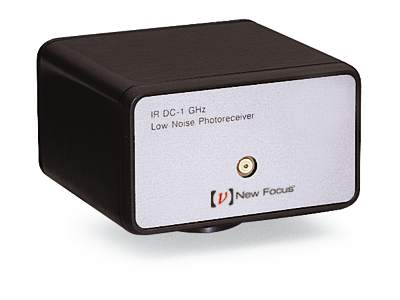
850 MHz/1 GHz AC Coupled Optical Receivers
850 MHz/1 GHz AC Coupled Optical Receivers
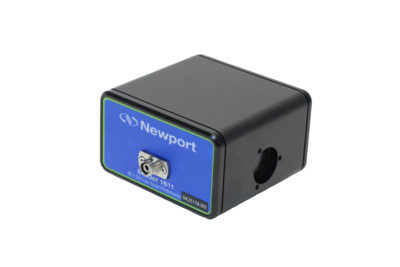
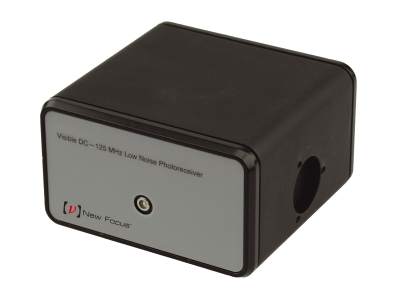
For experiments requiring up to 850 MHz (1611) and 1 GHz (1601) bandwidths and 500 ps rise times we recommend these optical receivers with a well-balanced combination of gain, bandwidth, and very low noise. These free-space, direct-illumination photoreceivers have been engineered to eliminate most common sources of noise and drift, and have enough gain to pick up even very weak signals making them ideal optical front ends for systems requiring a low-noise input.
- High transimpedance gain and low noise
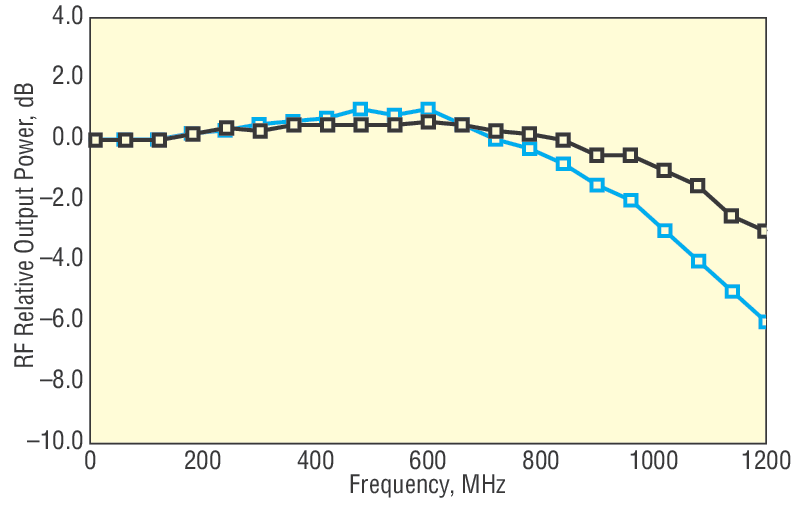
- 3 dB bandwidth of 30 kHz to 850 MHz (1611) and 1 GHz (1601)
- Silicon or InGaAs free space detectors
- AC coupled
- Excellent RF shielding See All Features

Specifications
- Detector Diameter1601FS-AC: 0.4 mm
1611FS-AC: 0.1 mm - 3 dB Bandwidth30 kHz to 850 MHz (1611) and 1 GHz (1601)
- Detector Material1601FS-AC: Silicon
1611FS-AC: InGaAs - Detector TypePIN
- Rise Time400 ps
- Maximum Pulse Power10 mW
- DC Bias Monitor Bandwidth20 kHz
- DC Bias Monitor Transimpedance Gain-10 V/mA
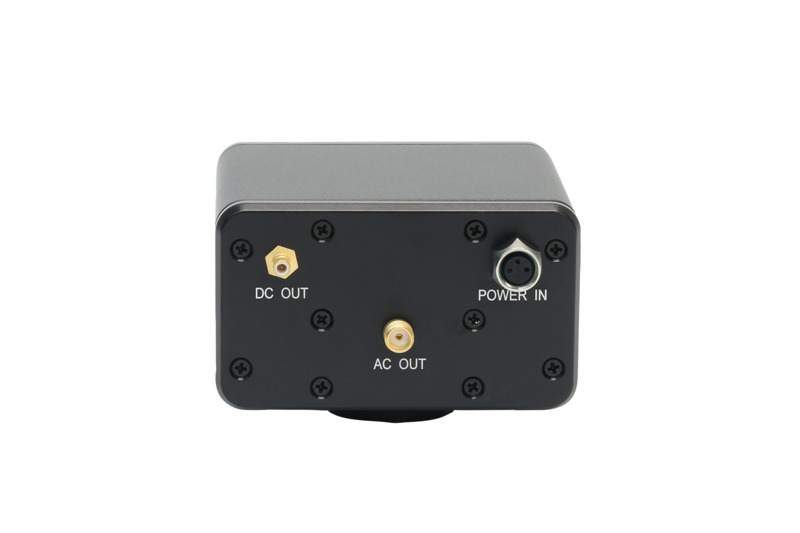
- Output ConnectorSMA
- Output Impedance50 Ω
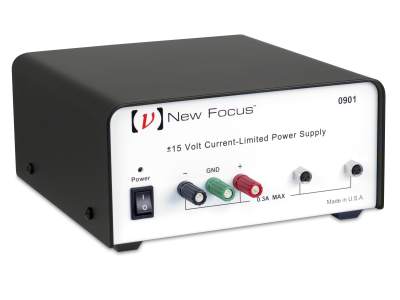
- Power Requirements±15 VDC, 250 mA
- Thread Type8-32 (includes M4 adapter)
Features
Silicon or InGaAs Versions
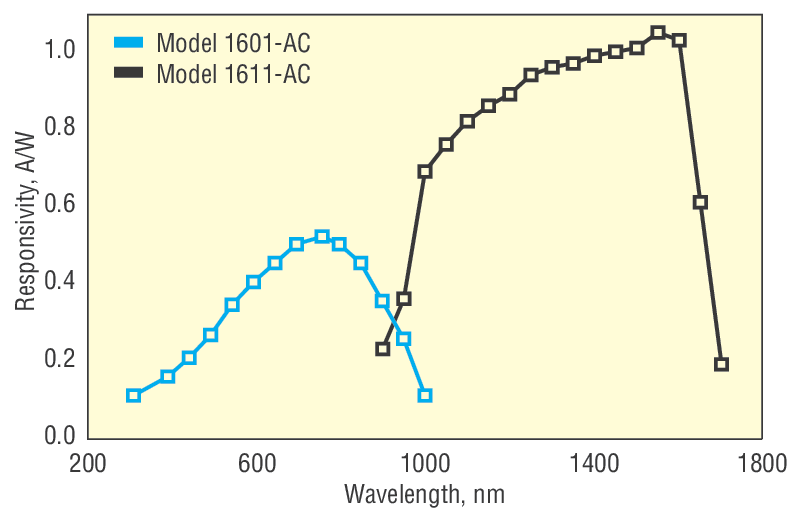
The Silicon model (1601) provides wavelength coverage from 320-1000 nm, and the InGaAs model (1611) provides coverage from 900-1700 nm. This enables wide bandwidth, low-noise detection of signals distributed over fiber-optic cables or found in high resolution spectroscopy, fiber-optic sensors, optical metrology, and many other applications.
High Transimpedance Gain and Low Noise
AC Coupled
RF Shielding

Resources
Technical Notes
Literature
High Speed Optical Receiver and Detector Brochure(3.8 MB, PDF)
Selection Guides
Manuals
90099909_B_16x1 Series 850-MHz 1-GHz User Manual.pdf(559.9 kB, PDF)
Other
16xx CE Declaration of Conformity.pdf(101.2 kB, PDF)