80 MHz Balanced Optical Receivers
80 MHz Balanced Optical Receivers
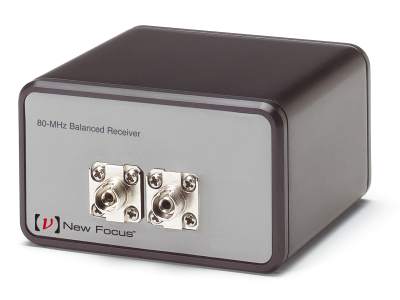
The 80 MHz Large Area Adjustable Gain Balanced Photoreceivers are effective in reducing common-mode noise so that you can see your small signal. With a well-balanced combination of gain, bandwidth, and low noise, these photoreceivers are extremely flexible and are ideal for coherent heterodyne-detection applications including doppler LIDAR and optical coherence tomography.
- Reduces common-mode noise by 25 dB
- High gain with low noise
- Visible and near-IR versions See All Features
| Compare | Description | Drawings, CAD & Specs | Avail. | Price | ||
|---|---|---|---|---|---|---|
 | 1807-FCBalanced Fiber-Optic Receiver, 320-1000 nm Silicon Detectors, 80 MHz | |||||
| 1807-FSBalanced Optical Receiver, 320-1000 nm Silicon Detector, 80 MHz, Free Space | |||||
| 1817-FCBalanced Fiber-Optic Receiver, 900-1700 nm InGaAs Detector, 80 MHz | |||||
| 1817-FSBalanced Optical Receiver, 900-1700 nm InGaAs Detector, 80 MHz, Free Space |
Specifications
| Models | | | |
|---|---|---|---|
| Optical Input | Fiber-optic | Fiber-optic | |
| Detector Material | Silicon | InGaAs | |
| Detector Type | PIN | PIN | |
| Detector Diameter | 0.4 mm | 0.15 mm | |
| Wavelength Range | 320-1000 nm | 900-1700 nm | |
| 3 dB Bandwidth | DC to 80 MHz | DC to 80 MHz | |
| Common Mode Rejection | 25 dB | 25 dB | |
| Rise Time | 3 ns | 3 ns | |
| Maximum Conversion Gain | 2 x 10⁴ V/W | 4 x 10⁴ V/W | |
| Maximum Transimpedance Gain | 40 V/mA | 40 V/mA | |
| Integrated Noise | 5 mVrms | 5 mVrms | |
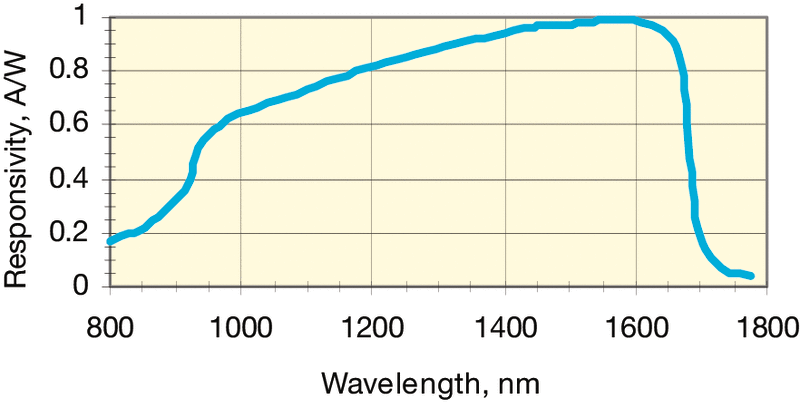
| Peak Responsivity | 0.5 A/W @ 800 nm | 1.0 A/W @ 1550 nm | |
| Saturation Power | 110 µW @ 760 nm | 55 µW @ 1550 nm | |
| Maximum Differential Power | 10 mW @ 760 nm | 5 mW @ 1550 nm | |
| Maximum Balanced Power per Photodiode | 10 mW @ 760 nm | 5 mW @ 1550 nm | |
| Maximum RF Power | +12 dBm bei 50 Ω | +12 dBm bei 50 Ω | |
| Output Connector | SMA | SMA | |
| Output Impedance | 33 Ω | 33 Ω | |
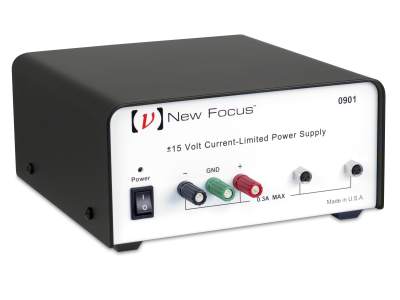
| Power Requirements | ±15 VDC, 250 mA | ±15 VDC, 250 mA | |
| Thread Type | 8-32 | 8-32 |
Notes:
The -FS models feature a free space optical input but otherwise have the same specifications as their corresponding -FC fiber-optic receiver model.
Features
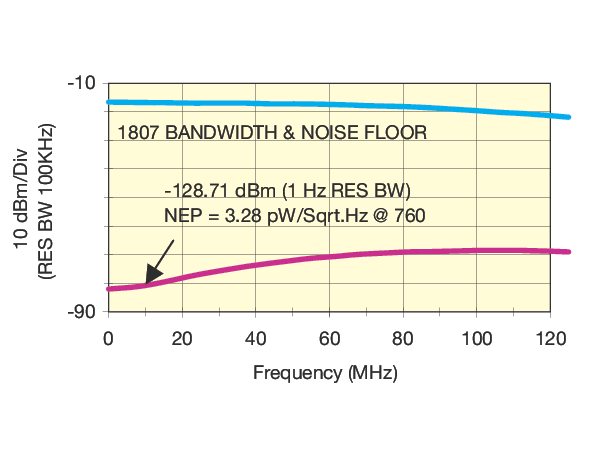
Reduces Common-Mode Noise by 25 dB
Model 1807 Frequency Response
Model 1817 Frequency Response
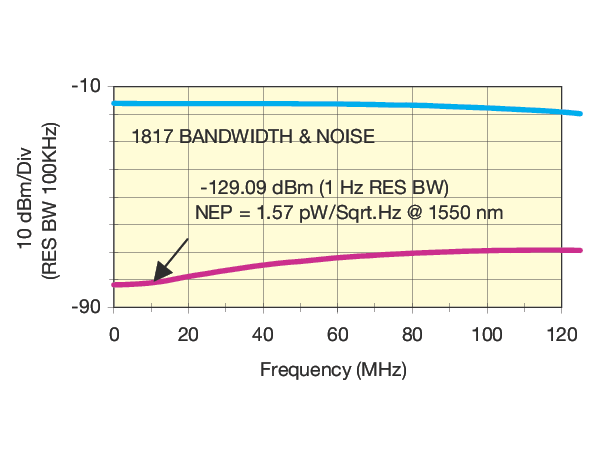
High Gain and Low Noise
The 80 MHz Balanced Photoreceivers feature high gain of up to 40V/mA while maintaining very low noise.
Ideal for Balanced Photodetection
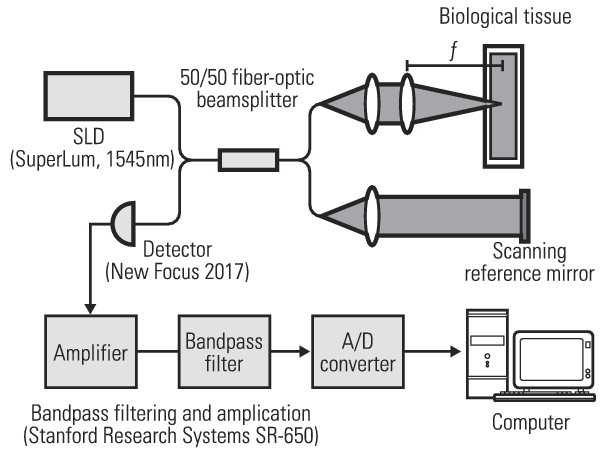
Newport's balanced optical receivers are ideal for optical detection applications that require sensitive measurements and increased signal-to-noise. Balanced photodetection is a method that can very effectively cancel common mode noise and detect small signal fluctuations on a large DC signal. Detection methods in the time domain (such as femtosecond ultrasonics and frequency modulation spectroscopy) and frequency domain (like absorption spectroscopy), and coherent heterodyne detection (such as optical coherence tomography) can be substantially improved by using Newport balanced photoreceivers and can allow detection of signals not otherwise possible with other means. For more information, please see our application note A Survey of Methods Using Balanced Photodetection.
Model 1807 Responsivity
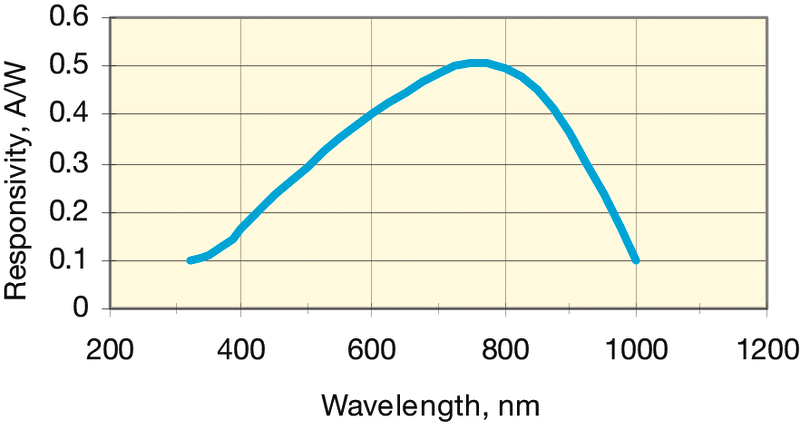
Model 1817 Responsivity