Sorry, this family of products is no longer available.
Flood Exposure Sources
Flood Exposure Sources
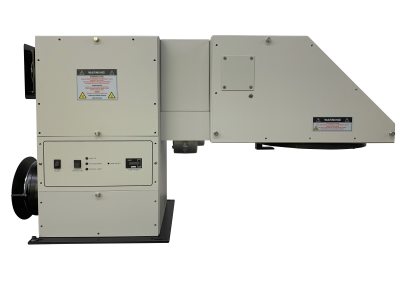
Oriel Instruments' 1000 W Flood Exposure Sources cover the near UV (350 - 450 nm), mid UV (260 - 320 nm) and deep UV (220 - 260 nm). NUV is designed to expose most photoresists, MUV is used for polymer cross-linking and novel resists, and DUV for deep ultraviolet studies. These models have illumination areas of 6" x 6".
- High intensity outputs
- Highly uniform, large collimated beams
- Efficient out of band rejection
- Timed exposures See All Features
Features
Oriel Solar Simulator Set Up Demonstration
Getting any solar simulator up and running is a straightforward process, as demonstrated in this video.
Flood Illuminator Housing
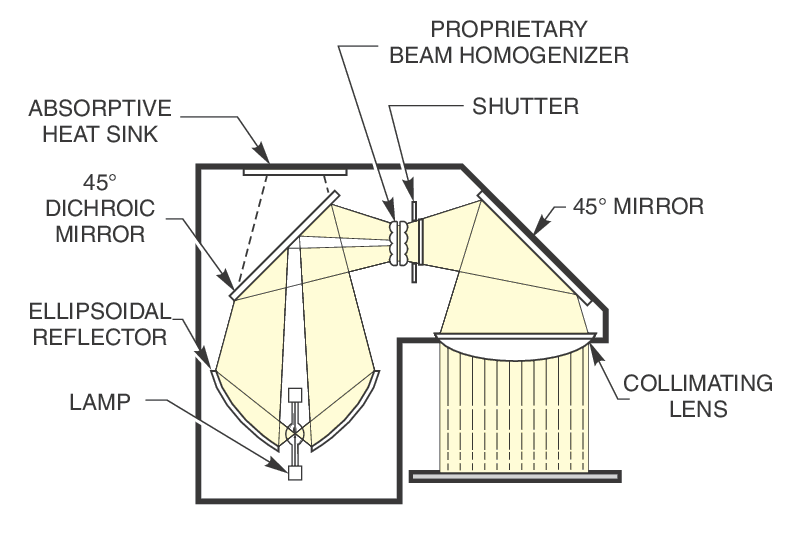
An efficient ellipsoidal reflector, coated with AlSiO for the NUV or enhanced Rhodium for MUV and DUV systems, collects up to 70% of the arc lamp output. A 45° primary dichroic mirror spectrally reflects the light after passing through a proprietary design beam homogenizer. The homogenizer, or optical integrator, is similar to a compound fly's eye. It scrambles the arc lamp's non-uniform irradiance to produce many diverging beams. These diverging beams overlap at the collimating lens to produce a highly uniform, collimated beam at the work plane. A robust electronic split-blade shutter system is located after the homogenizer. It consists of a highly accurate and repeatable shutter, and a shutter power supply. It may be opened and closed manually with a switch on the housing side panel or via the 68955 Hand-Held Switch. For automated exposure control, we offer the 68951 Digital Exposure System.
Arc Lamp Options
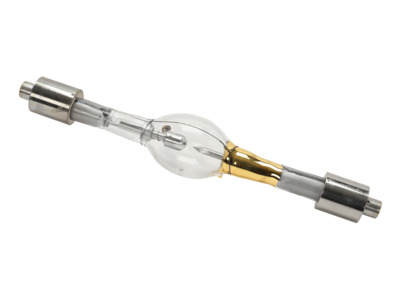
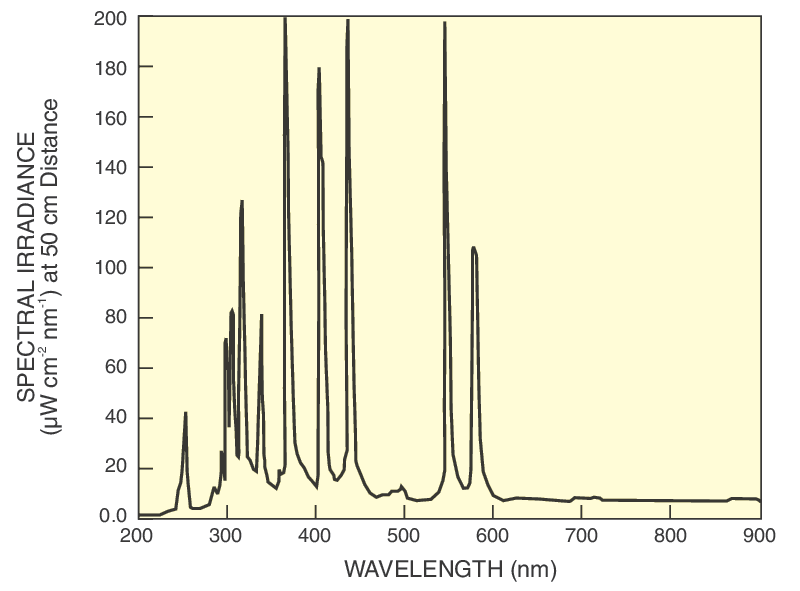
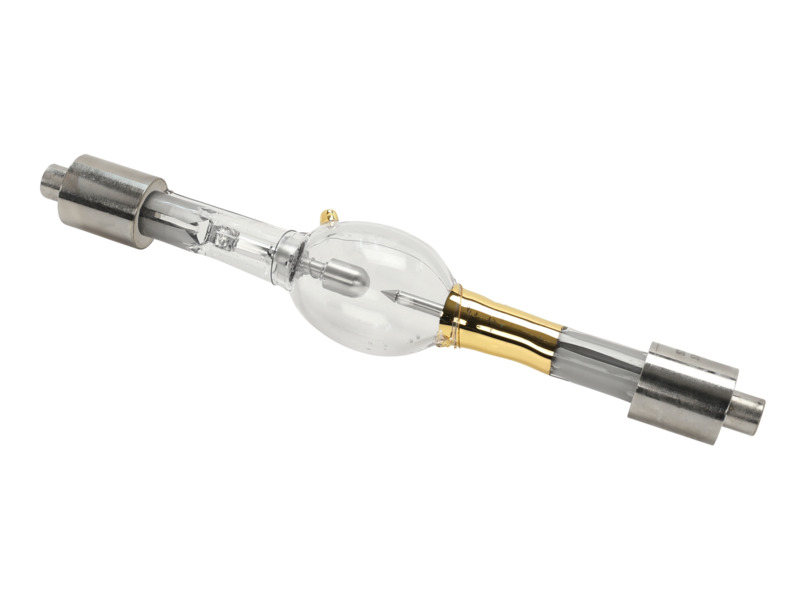
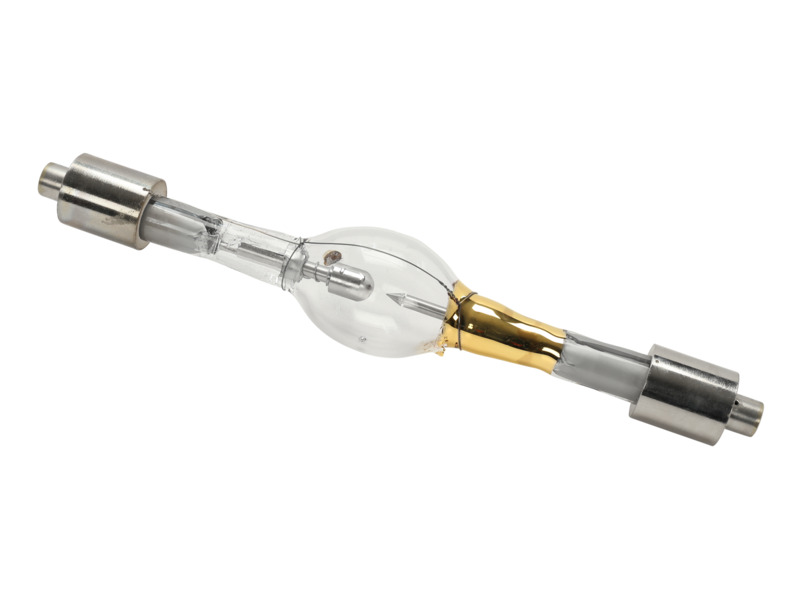
The NUV source runs Hg(Xe) short arc lamps which contain a precise amount of mercury and xenon, which act as a starter gas. Strong mercury lines through the ultraviolet and visible wavelengths dominate their output spectrum. The 365 nm line makes it ideal for use in the NUV. The MUV and DUV sources operate Hg(Xe) short arc lamps, which are similar to Hg lamps but contain more xenon gas than just the starter gas. The additional xenon enhances the short wave UV making it ideal for use below 350 nm. We supply ozone free Hg(Xe) lamps with the NUV and MUV sources, and UV enhanced models for the DUV models. Typical output of the 6285 500 W Hg lamp is shown.
Three Spectral Ranges
The spectral output of the illuminator is determined by the lamp type, the dichroic mirror, and the collimating lens. NUV sources run an Hg(Xe) lamp, use a BK 7 glass collimating lens (which does not transmit below 350 nm), and have the appropriate dichroic mirrors. MUV and DUV sources also run an Hg(Xe) lamp, but use a UV grade fused silica collimating lens (which transmits down to 200 nm), and have the appropriate dichroics.
Three Safety Interlocks
Soft Start Igniter
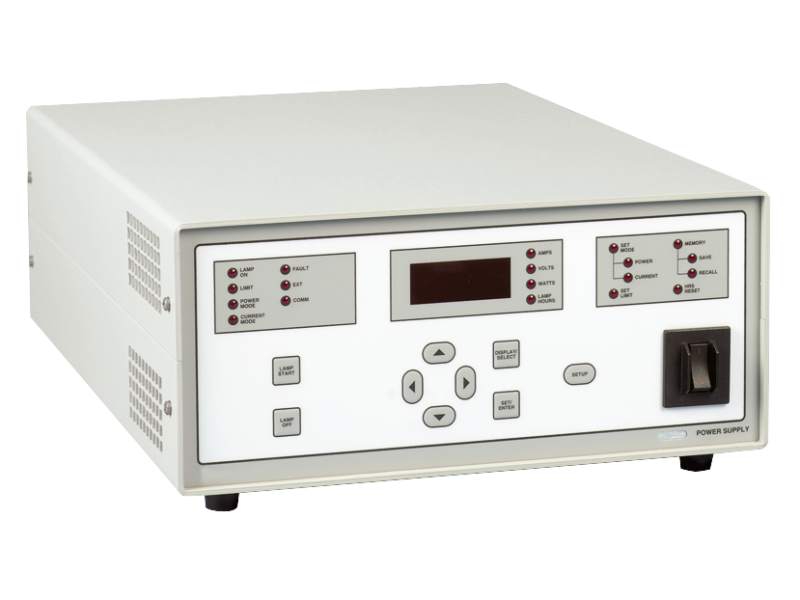
Our 1000 W Hg(Xe) housings contain a high voltage ignitor, necessary to ignite this lamp type. These ignitors apply a high voltage (25 kV) pulsed discharge across the lamp electrodes. Close proximity to the lamp reduces the path length the pulse must travel, facilitating ignition and reducing EMI.
Safety Considerations
Arc Lamp Safety
Arc lamps may emit dangerous levels of UV radiation depending on their source type. Ensure that only authorized personnel are in the vicinity of the source, and wearing the necessary safety equipment such as UV protective eyewear, clothing, and gloves. Lighted UV warning signs, posted outside laboratory doors where UV sources are operating, can prevent accidental exposure. Newport also recommends using an electronic shutter to block the beam when the source is not in use but remains turned on. Alternatively, the beam can be safely contained by using beam tubes or fiber optic cables to deliver the light to a sample. It is recommended to vent the ozone that is produced by some lamp models to the outside or use the

Accessories
Replacement Lamps
Safety Equipment


Replacement Power Supply and Cables


Optional Accessories

Resources
Manuals
Oriel 69920 Power Supply User Manual(264.3 kB, PDF)