Mercury-Xenon HgXe Arc Lamps
Mercury-Xenon HgXe Arc Lamps
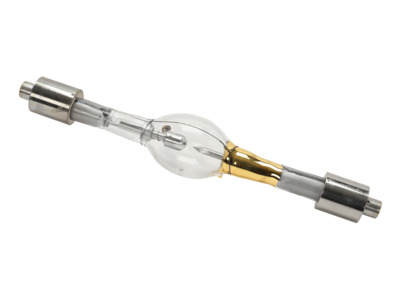
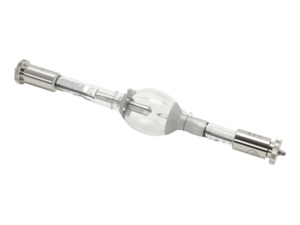
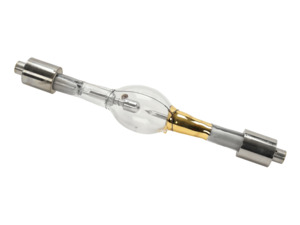
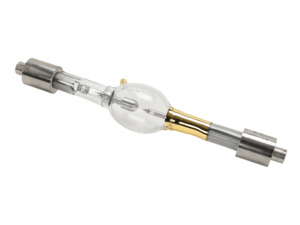
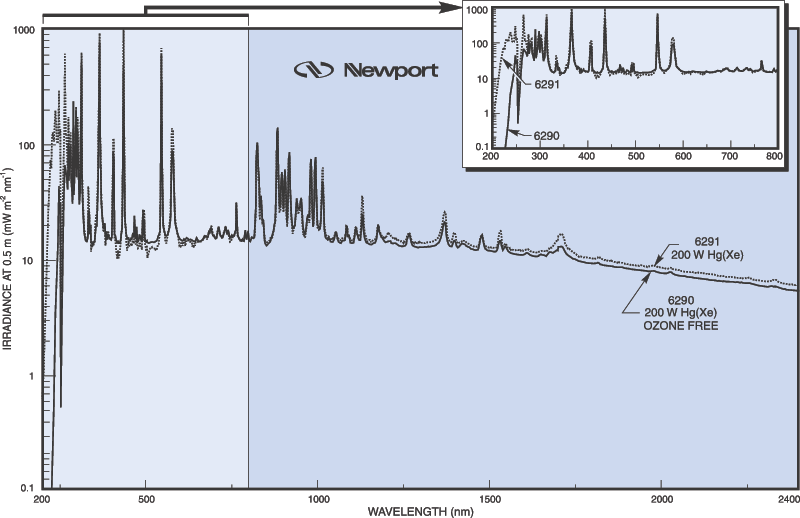
Mercury-Xenon arc lamps contain a tightly controlled mixture of xenon gas and mercury given them the combined UV spectral lines of an Hg lamp with the IR spectral lines of a Xe lamp.
- Enhanced UV of a Mercury Lamp
- Enhanced IR of a Xenon Lamp
- Ozone Free Versions Available See All Features
Compatibility
We offer complete light source systems as well as components for you to easily build your own systems. When used with a Research Series lamp housing, the system will need the following components:
- Lamp
- Lamp Socket Adapter
- Lamp Housing (includes rear reflector and condensing lens assembly)
- Power Supply and appropriate cables
| Lamp Housing Options | Lamp Model | Lamp Socket Adapter | Power Supply | Cable | Complete System |
|---|---|---|---|---|---|
|
50-500 W |
Medium Power Hg-Xe | ||||
|
450-1000 W |
High Power Hg-Xe | ||||
| *70052 cable set is included in 69921 and 69923 housing. | |||||
Features
Mercury-Xenon Arc Lamp Shelf Life
We recommend purchasing replacement mercury-xenon lamps only as needed. Hg(Xe) arc lamps do have an unspecified shelf life, which over time can cause the end cap seals to leak and degrade lamp performance. Newport strives to keep Hg-Xe bulbs in stock to reduce lead times when ordering a replacement.
Ozone Free Mercury-Xenon Lamps
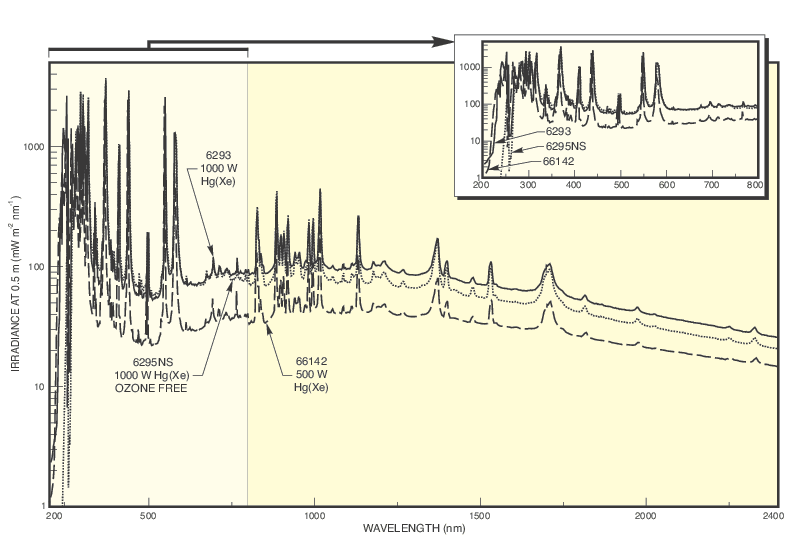
UV wavelength emissions below ~260 nm create toxic ozone. Ideally, an arc lamp is operated outdoors or in a room with adequate ventilation to protect the user from ozone created. If this is not possible, an Ozone Eater should be used. However, if the application does not require wavelength emission below ~260 nm from the arc lamp, using an ozone free lamp is a convenient option. An ozone free lamp is coated to remove the unwanted UV wavelengths.
200 W Hg(Xe) Lamps
500 and 1000 W Hg(Xe) Lamps
Arc Lamp Safety
Arc lamps may emit dangerous levels of UV radiation depending on their source type. Ensure that only authorized personnel are in the vicinity of the source, and wearing the necessary safety equipment such as UV protective eyewear, clothing, and gloves. Lighted UV warning signs, posted outside laboratory doors where UV sources are operating, can prevent accidental exposure. Newport also recommends using an electronic shutter to block the beam when the source is not in use but remains turned on. Alternatively, the beam can be safely contained by using beam tubes or fiber optic cables to deliver the light to a sample. It is recommended to vent the ozone that is produced by some lamp models to the outside or use the

Accessories
UV Safety Equipment


Resources
Literature
Light Sources(1.6 MB, PDF)