125 MHz Fiber-Optic Receivers
125 MHz Fiber-Optic Receivers
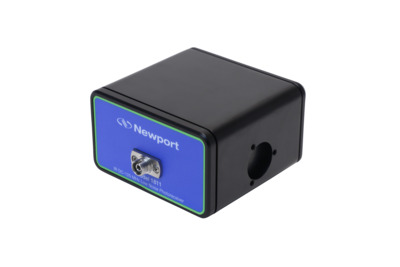
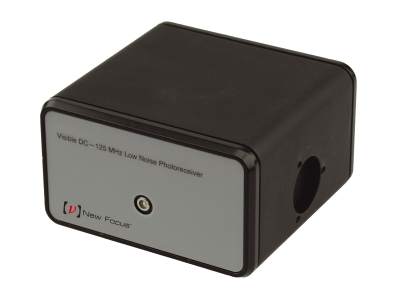
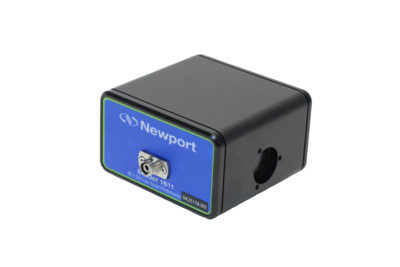
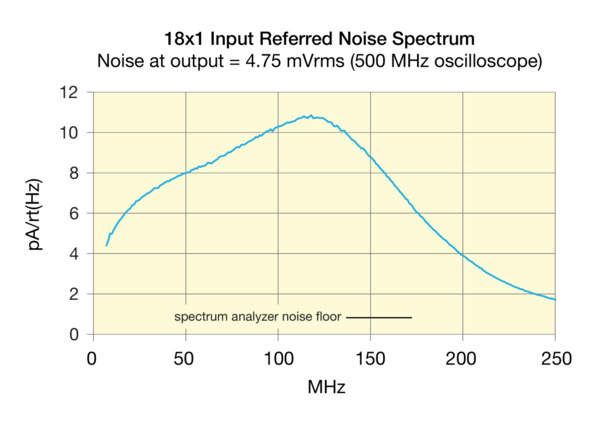
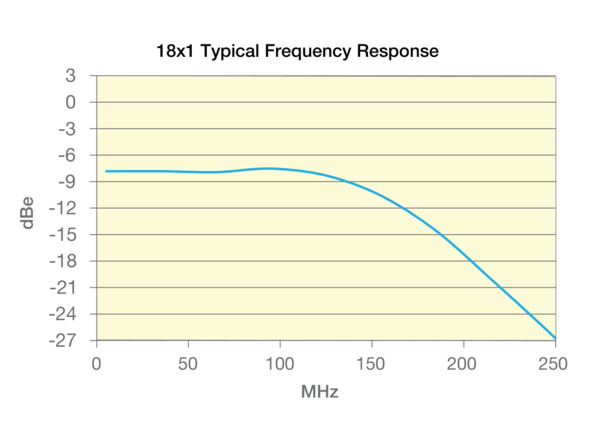
These 125 MHz fiber-optic receivers offer a well-balanced combination of gain, bandwidth, and low noise over the DC–125-MHz frequency range. Because of their high transimpedance gain and low noise-equivalent power (NEP), they offer the best in sensitivity for signals with rise and fall times as short as 3 ns. This high sensitivity, combined with their high-level output, reduces the effects of downstream noise sources. They have been engineered to eliminate most common sources of noise and drift, and have enough gain to pick up even very weak signals making them ideal optical front ends for systems requiring a low-noise input.
- High transimpedance gain and low noise
- Silicon or InGaAs versions
- FC Fiber-coupled receivers
- AC & DC coupled versions
- Excellent RF shielding See All Features
| Compare | Description | Drawings, CAD & Specs | Avail. | Price | ||
|---|---|---|---|---|---|---|
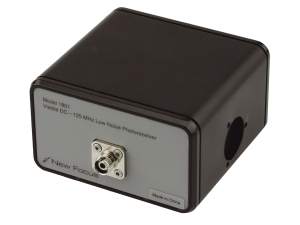 | 1801-FC | |||||
| 1801-FC-AC | |||||
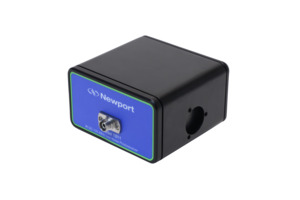 | 1811-FC | |||||
| 1811-FC-AC |
Specifications
- Detector Diameter1801: 0.4 mm
1811: 0.1 mm - Detector Material1801: Silicon
1811: InGaAs - Detector TypePIN
- Fiber-Optic ConnectorFC/UPC
- Fiber TypeSinglemode or Multimode
- Maximum Transimpedance Gain4x104 V/A
- Rise Time3 ns
- Saturation Power1801: 110 µW @ 800 nm
1811: 55 µW @ 1550 nm
- Output ConnectorSMA
- Output Impedance50 Ω
- DC Bias Monitor Bandwidth50 KHz (for -AC models only)
- DC Bias Monitor Transimpedance Gain10 V/mA (for -AC models only)
- DC Bias Monitor OutputSMB (for -AC models only)
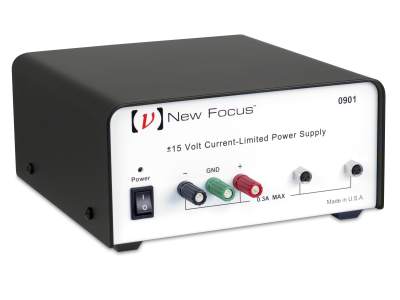
- Power Requirements±15 VDC, 200 mA
- Thread Type8-32 (M4 adapter included)
Features
Silicon or InGaAs Versions
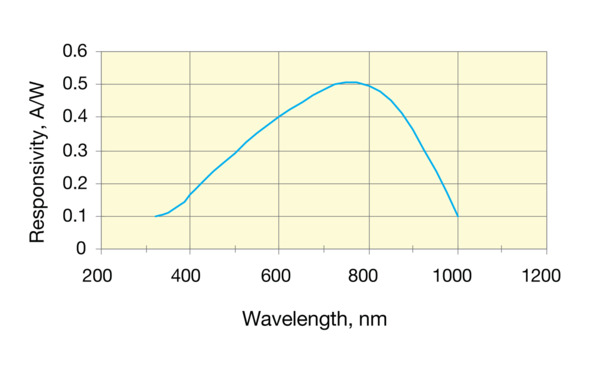
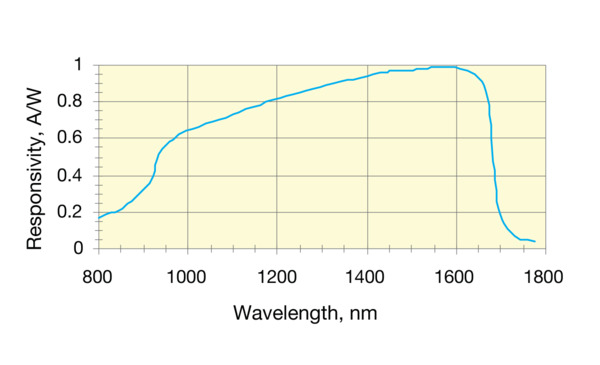
Silicon models provide visible wavelength coverage from 320-1000 nm and use a silicon-PIN photodiode with a high-gain, low-noise transimpedance amplifier. The near-IR version uses an InGaAs-PIN photodetector that provides coverage from 900-1700 nm. These receivers will enable wide bandwidth low-noise detection of signals distributed over fiber-optic cables or found in high resolution spectroscopy, fiber-optic sensors, optical metrology and many other applications.
Typical Responsivity of Model 1801 (Silicon)
Typical Responsivity of Model 1811 (InGaAs)
High Transimpedance Gain and Low Noise
DC Coupled Versions
With true DC coupling, these photoreceivers give linear responses to transient signals without artificial ringing, tails, or other anomalies. For applications where you need to measure both the AC modulation and the DC component, choose the DC coupled receiver.
AC Coupled Versions
AC-coupled versions with a low-frequency roll-off at 25 kHz are available. These photoreceivers are useful for measuring AC signal with a higher resolution, even when you have a large DC component, than the DC version. To make alignment easier, AC-coupled versions are equipped with an additional DC photocurrent monitor output. The monitor output has a 50-kHz bandwidth and a gain of 1 V/mA.
RF Shielding
Typical Frequency Response
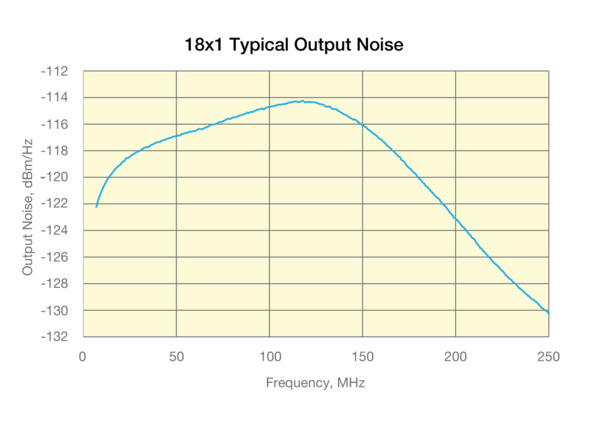
Typical Output Noise

Resources
Literature
High Speed Optical Receiver and Detector Brochure(3.8 MB, PDF)
Technical Notes
Selection Guides
Manuals
Other
RoHS_Declaration 18x1 family.pdf(595.9 kB, PDF) 18xx CE Declaration of Conformity.pdf(101.3 kB, PDF)