818-ST2 Series Wand Style Calibrated Photodiode Power Sensors
818-ST2 Series Wand Style Calibrated Photodiode Power Sensors
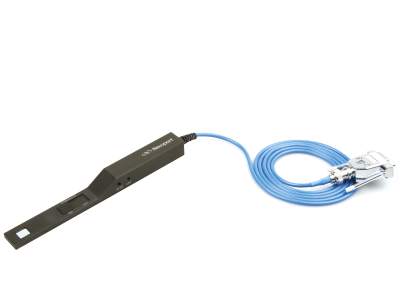
818-ST2 Series wand-style slim photodiode optical power sensors are ideal for measurements in a tight space with busy setups and are NIST-traceable calibrated for use with newport power meters. They feature a built-in, switchable OD3 attenuator.
- NIST traceable calibration with lowest uncertainty available
- Switchable OD3 attenuation filter
- Detachable DB15 calibration module
- Protective and rugged hand held aluminum housing
- Perfect for space tight applications See All Features
| Compare | Description | Drawings, CAD & Specs | Avail. | Price | ||
|---|---|---|---|---|---|---|
 | 818-ST2-UV/DBPower Detector, Wand-Style, UV-Silicon, 200-1100 nm, OD3, DB15 | |||||
 | 818-ST2/DBPower Detector, Wand-Style, Silicon, 400-1100 nm, OD3 Attenuator, DB15 | |||||
| 818-ST2-IR/DBPower Detector, Wand-Style, Ge, 780-1800 nm, OD3 Attenuator, DB15 |
Compatible Power Meters
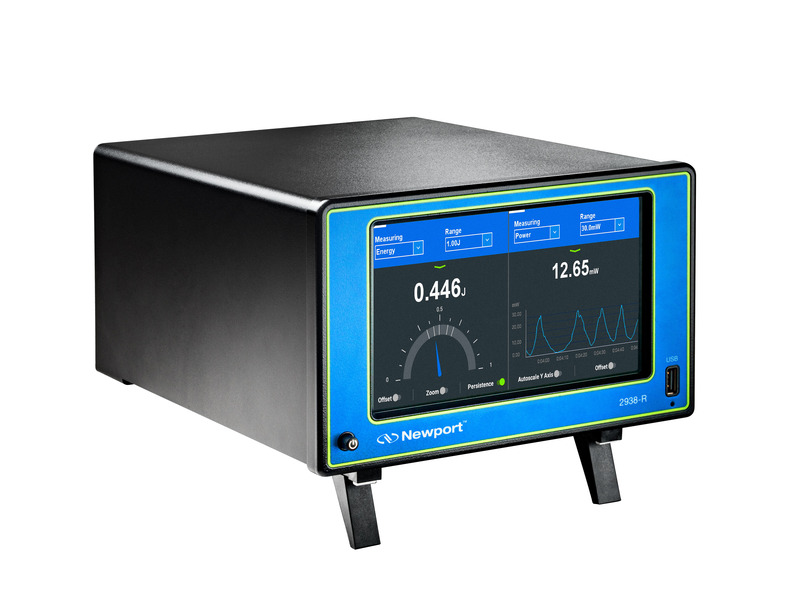
Newport offers a comprehensive range of optical power meters from low cost, hand-held meters to the most advanced dual-channel benchtop meter available in the market. Presented here is a list of meters compatible with the 918D Series sensors. For more detailed information about our power meters, please see our Optical Power Meter Guide.
 1938-R/2938-R |
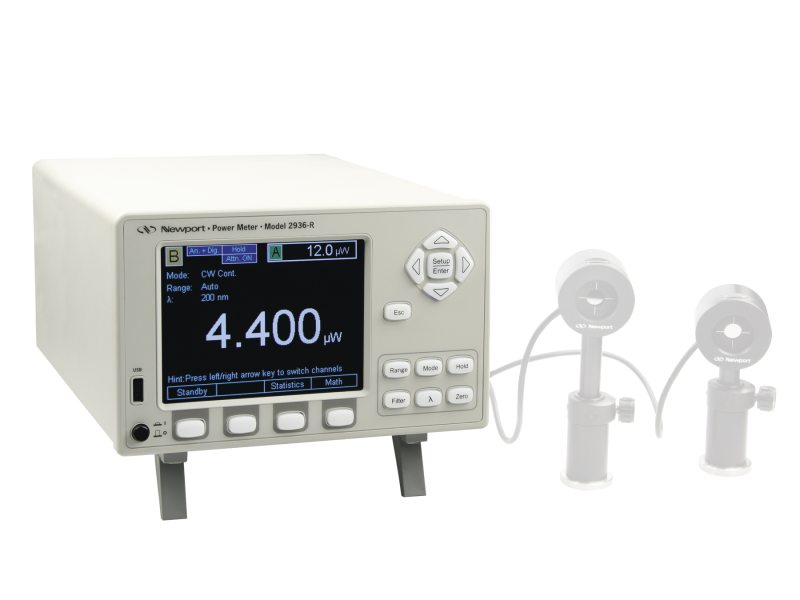 1936-R/2936-R |
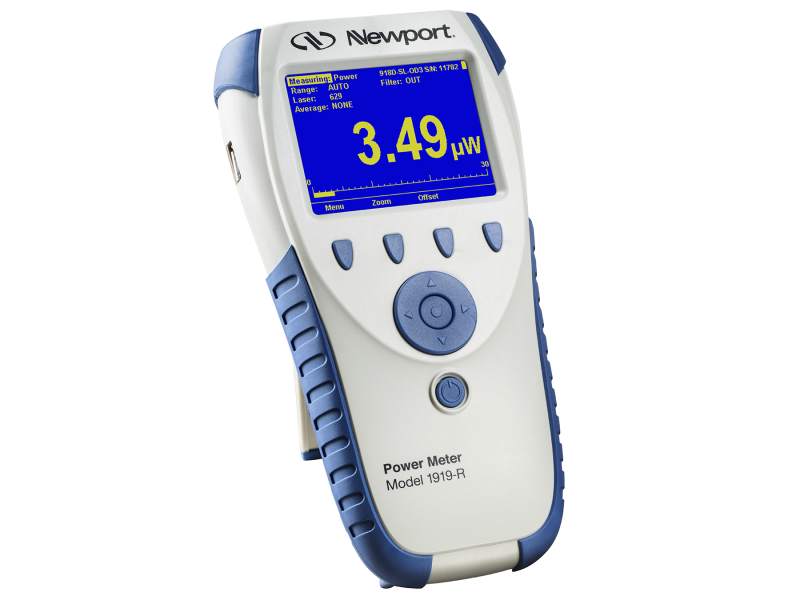 1919-R |
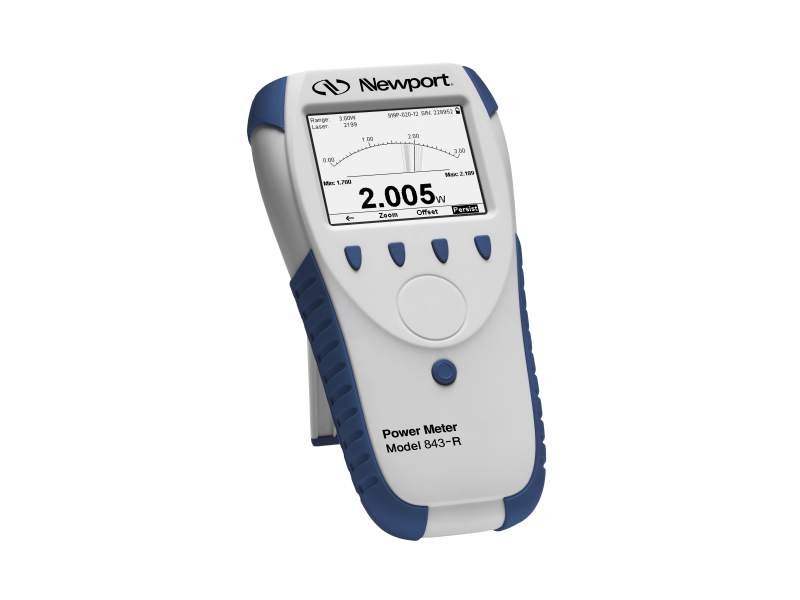 843-R/843-R-USB |
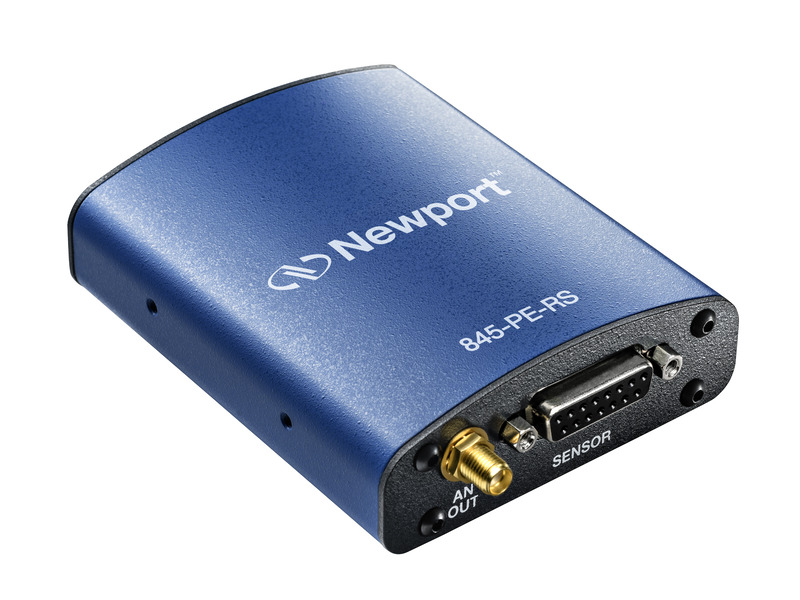 845-PE-RS |
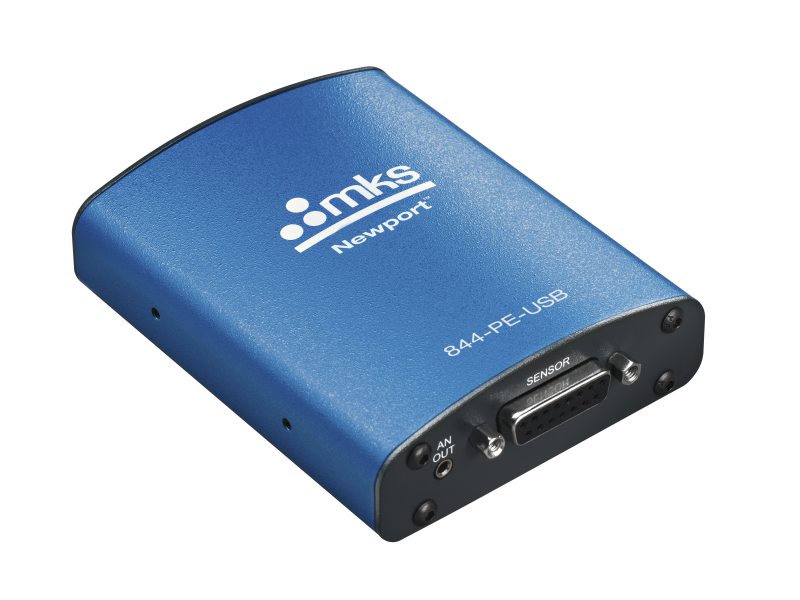 844-PE-USB |
|
|---|---|---|---|---|---|---|
| User Interface | Touchscreen | Advanced | Advanced | Simple | User Commands, PM Manager | PMManager only |
| Measurement Modes | Power, Low Freq. Power, Peak-to-Peak Power, RMS Power, Exposure, Current |
Power, Peak-to-Peak Power, RMS Power, Current |
Power, Low Freq. Power Exposure |
Power | Power, Low Freq. Power |
Power, Low Freq. Power |
| Analog Bandwidth | Up to 200 kHz | Up to 400 kHz | 15 Hz | 15 Hz | 15 Hz | 15 Hz |
| Data Storage | 2 GB internal, External USB memory size, Via PMManager |
250,000 pts internal | Limited by USB memory size | User Commands, PM Manager | Via PMManager | |
| Measurement Rate per Second | 10,000 | 10,000 | 15 | 15 | 15 | 15 |
| Trigger In/Out | ✔ | ✔ | ||||
| Analog Out | ✔ | ✔ | ✔ | ✔ | ✔ | ✔ |
| Computer Interface | USB RS232 Ethernet |
USB RS232 |
USB RS232 |
RS232 | USB |
Please refer to Newport Power Meter and Detector Legacy and Compatibility for a complete list of meters that are compatible with this model.
Specifications
| Models | | | | |
|---|---|---|---|---|
| Detector Type | Wand Style, Post Mounted | Wand Style, Post Mounted | Wand Style, Post Mounted | |
| Detector Input | Free Space | Free Space | Free Space | |
| Detector Material | UV Enhanced Silicon | Silicon | Germanium | |
| Spectral Range | 200 - 1100 nm | 400 - 1100 nm | 780 - 1800 nm | |
| Sensor Size | 10 x 10 mm | 10 x 10 mm | 10 x 10 mm | |
| Attenuator | OD3, Built-in | OD3, Built-in | OD3, Built-in | |
| Maximum Measurable Power | 200 mW | 2000 mW | 2000 mW | |
| Maximum Measurable Power Without Attenuator | 0.3 mW (200 - 400 nm); 0.1 mW (400 - 600 nm, >1050 nm) , 0.07 mW (600 - 1050 nm) | 4 mW (1830-R, 1918-R, 1936-R/2936-R), 2.5 mW (843-R, 1919-R, 841-PE-USB) | 5 mW (1830-R, 1918-R, 1936-R/2936-R), 1.3 mW (843-R, 1919-R, 841-PE-USB) | |
| Minimum Measurable Power | 20 pW | 20 pW | 5 nW | |
| Maximum Power Density | 30 W/cm2 | 30 W/cm2 | 30 W/cm2 | |
| Maximum Power Density without Attenuator | 0.2 W/cm2 | 3 W/cm2 | 3 W/cm2 | |
| Maximum Pulse Energy | 0.5 µJ | 5 µJ | 5 µJ | |
| Maximum Pulse Energy Without Attenuator | 0.5 nJ | 1 nJ | 5 nJ | |
| Linearity | ±0.5 % | ±0.5 % | ±0.5 % | |
| Uniformity | ±2 % | ±2 % | ±2 % | |
| Rise Time | ≤3 µs | ≤3 µs | ≤3 µs | |
| Calibration Module | Removable DB15 Connector | Removable DB15 Connector | Removable DB15 Connector | |
| Connector Type | DB15 | DB15 | DB15 | |
| Operating Temperature Range | 5 to 50°C | 5 to 50°C | 5 to 50°C | |
| Operating Humidity | <70% RH | <70% RH | <70% RH | |
| Cable Length | 1.5 m | 1.5 m | 1.5 m |
Features
Excellent Photodiode Linearity

These photodiodes show excellent linearity over a large dynamic range. This is ideal for use in applications that require high accuracy measurements down to the pW level, especially when combined with a high sensitivity power meter that can accommodate the large dynamic range of the optical signal.
Post-Mountable for Steady Positioning
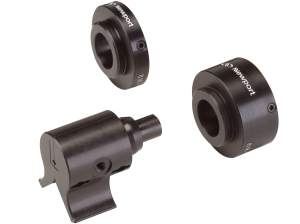
The sensor can be placed in a fixed, steady position by mounting it on an optical post. Each wand detector includes 8-32 and M4 mounting holes on both sides of the device for versatility in placement within optical systems.

Responsivity Variation over Temperature

A natural characteristic of a photodiode is for the its optical response to change as the temperature changes near the bandgap of semiconductor materials. Newport’s 918D series sensors feature a thermocouple near the photodiode, which allows certain Newport meters to read the temperature and automatically adjust the responsivity, ensuring the most accurate measurements.
Factors that Affect Maximum Measurable Power
The maximum measurable power of photodiode sensors is dependent on several factors such as the wavelength of incoming light, photodiode current output saturation, temperature, use of an attenuator and a power meter's maximum current input value. Newport provides maximum power specifications based on the power meter models, with and without an attenuator, and wavelength-dependent maximum power level. With these factors affecting measurable power in mind, choosing the proper detector for your application is critical.
NIST-traceable Sensor Calibration
Our calibrated photodiode sensors include a full spectral response calibration utilizing NIST-traceable standards calibrated with high-precision equipment maintained in Newport’s optical detector calibration facility. Tight calibration facility and process control allows the tightest calibration uncertainty in industry. Each detector is shipped with the calibration data, which is electronically stored inside the detector's EEPROM. A certificate of calibration as well as the actual calibration curves and data are shipped with each detector for attenuator and no attenuator models. To maintain accuracy and guarantee performance, Newport recommends annual photodiode detector calibration.
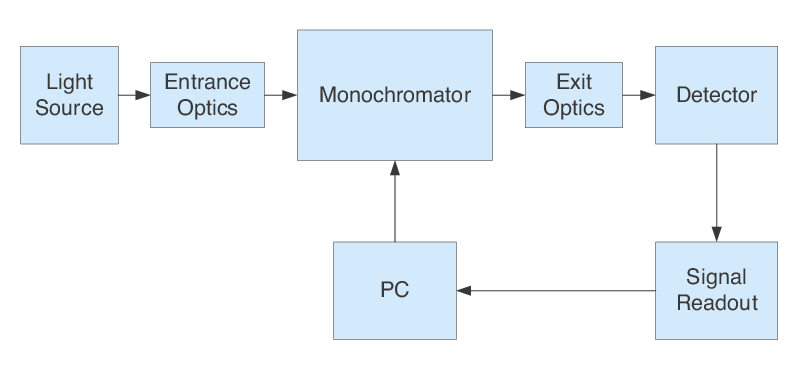
Wide Dynamic Range with OD3 Attenuator
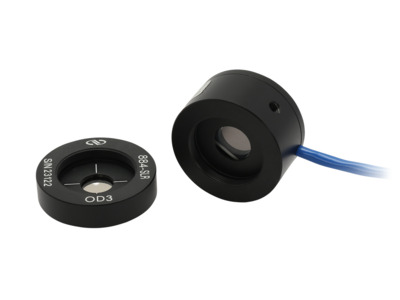
The OD3 attenuators built in the housing extend the calibrated optical dynamic range of our detectors by three decades. Both the attenuator and detector have their serial number scribed on the part which, to maintain calibration, must match. Our attenuator design provides high damage threshold and spectral flatness. With the low noise equivalent power (NEP) associated with the photodiodes being used, a wider dynamic range is achieved. The clear aperture of the 884 Series attenuators is 10.3 mm.

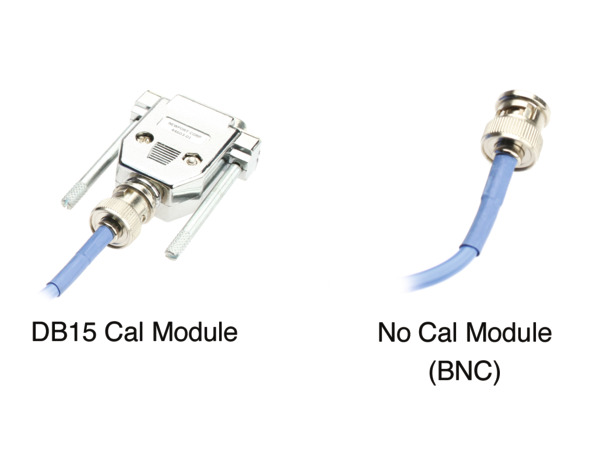
Removable Calibration Module
The 818 series detectors include a BNC connector with a removable calibration module. The /DB suffix indicates a DB15-style calibration module that is directly compatible with Newport’s current power meters. For older instruments that require no calibration module (BNC), we recommend that customers purchase 818-xx/DB and simply remove the DB15 calibration module. Please order the
Switchable OD3 Attenuation Filter with On/Off Sensor
These 818 Series wand-style photodiode sensors feature a built-in OD3 attenuation filter that is engaged with an On/Off switch. The OD3 attenuator when engaged can add up to 3 decades of power measurement range.

Clear Anodization for UV Detectors
Newport’s 918D-ST-UV and 818-ST2-UV/DB are offered in clear, anodized aluminum housings for maximum durability in harsh environments and to avoid laser burns, particularly in the UV range. The plastic materials in which many competitors' wand detectors are packaged are highly absorbent to high power laser beams, especially in the short UV wavelength range, potentially evaporating materials and causing damage to UV wavelength optical coatings.

Resources
Literature
Wand_Detectors_Datasheet(1.5 MB, PDF) Maximum Measureable Power for Photodiode Detector(438.4 kB, PDF)
Manuals
Technical Notes
Tutorials
Other
818-ST2 RoHS Certificate(280.4 kB, PDF) 818 Series EU27 Declaration of Conformity(208 kB, PDF)