Calibrated Integrating Sphere Photodiode Sensors for Diverging Input Beams
Calibrated Integrating Sphere Photodiode Sensors for Diverging Input Beams
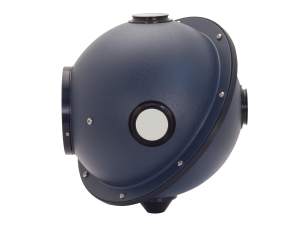
819D Series integrating sphere photodiode power sensors feature NIST traceable calibration for use with Newport power meters. They are ideal for high power measurements of diverging beams requiring fast response.
- Integrating sphere designed for diverging input beams
- NIST traceable calibration with lowest uncertainty available
- Faster response for high power measurement than thermopiles See All Features
| Compare | Description | Drawings, CAD & Specs | Avail. | Price | ||
|---|---|---|---|---|---|---|
 | 819D-UV-2-CALV2Integrating Sphere Detector, Diverging Beam, 2.0 in., 200-1100 nm | |||||
 | 819D-UV-5.3-CALIntegrating Sphere Detector, Diverging Beam, 5.3 in., 220-1100 nm | |||||
 | 819D-SL-2-CAL2V2Integrating Sphere Detector, Diverging Beam, 2.0 in., 400-1100 nm | |||||
 | 819D-SL-3.3-CAL2Integrating Sphere Detector, Diverging Beam, 3.3 in., 400-1100 nm | |||||
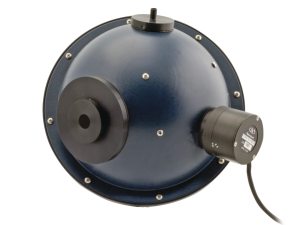 | 819D-SL-5.3-CAL2Integrating Sphere Detector, Diverging Beam, 5.3 in., 400-1100 nm | |||||
| 819D-IG-2-CAL2Integrating Sphere Detector, Diverging Beam, 2.0 in., 800-1650 nm | |||||
 | 819D-IG-3.3-CAL2Integrating Sphere Detector, Diverging Beam, 3.3 in., 800-1650 nm | |||||
| 819D-IG-5.3-CAL2Integrating Sphere Detector, Diverging Beam, 5.3 in., 930-1650 nm |
Compatible Power Meters
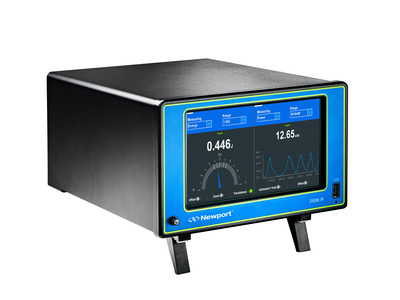
Newport offers a comprehensive range of optical power meters from low cost, hand-held meters to the most advanced dual-channel benchtop meter available in the market. Presented here is a list of meters compatible with the 918D Series sensors. For more detailed information about our power meters, please see our Optical Power Meter Guide.
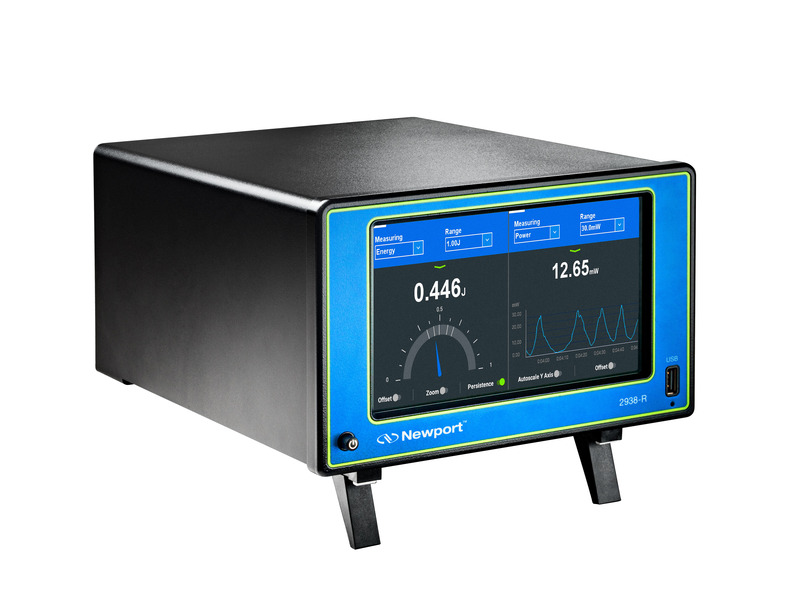 1938-R/2938-R |
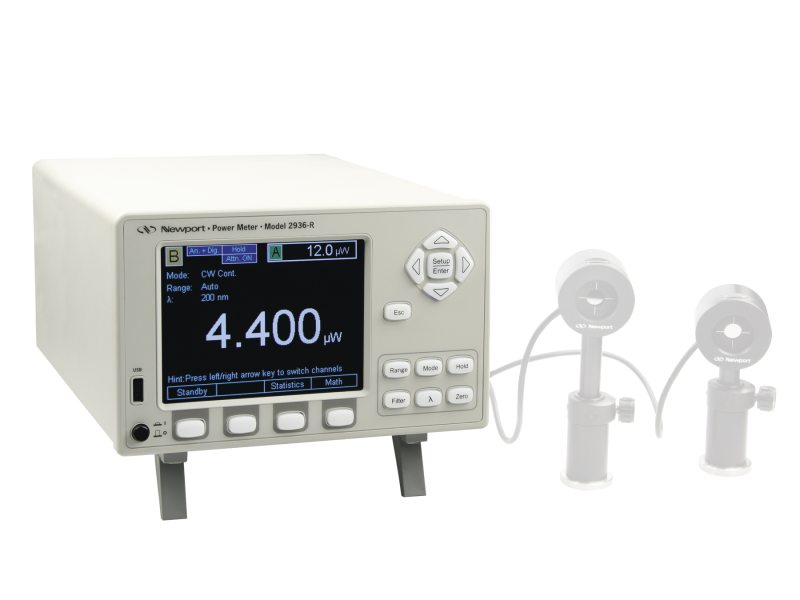 1936-R/2936-R |
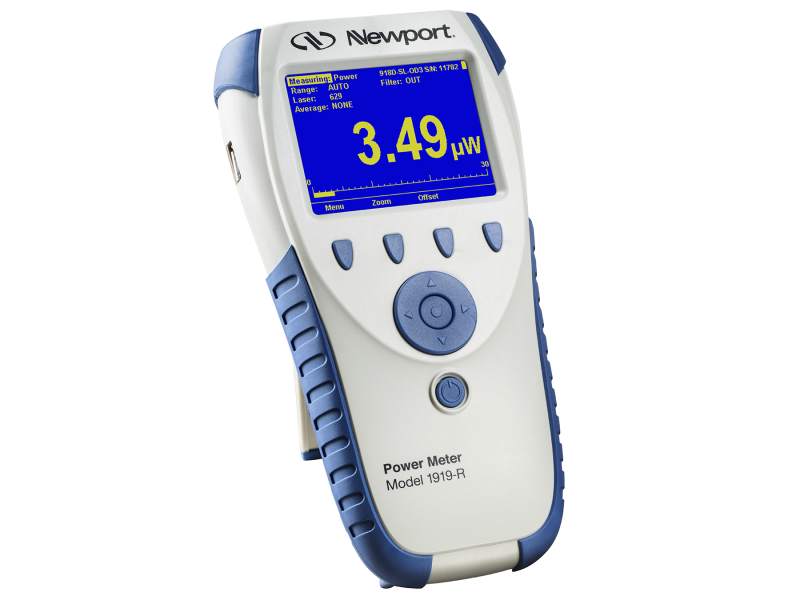 1919-R |
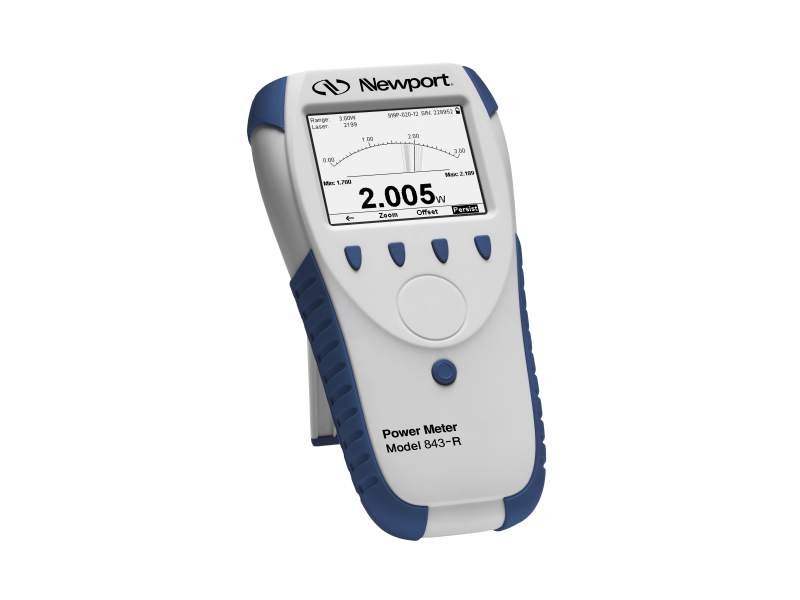 843-R/843-R-USB |
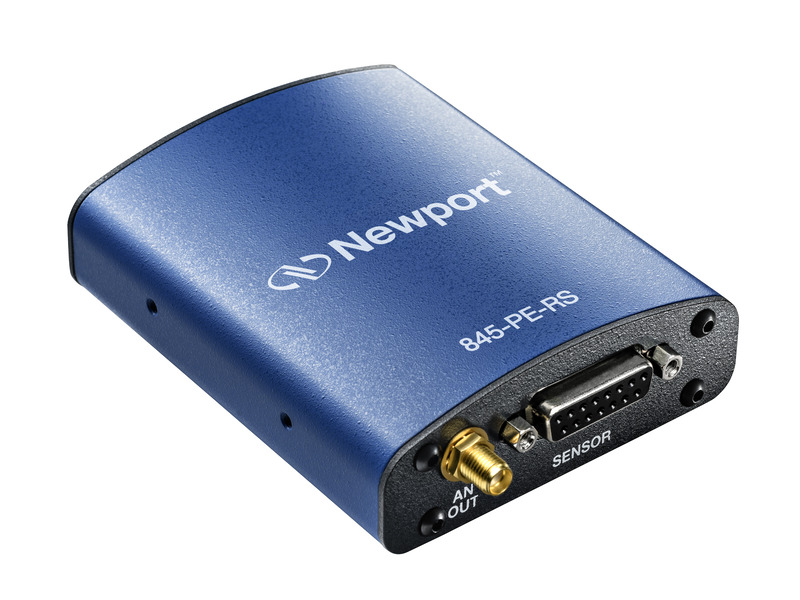 845-PE-RS |
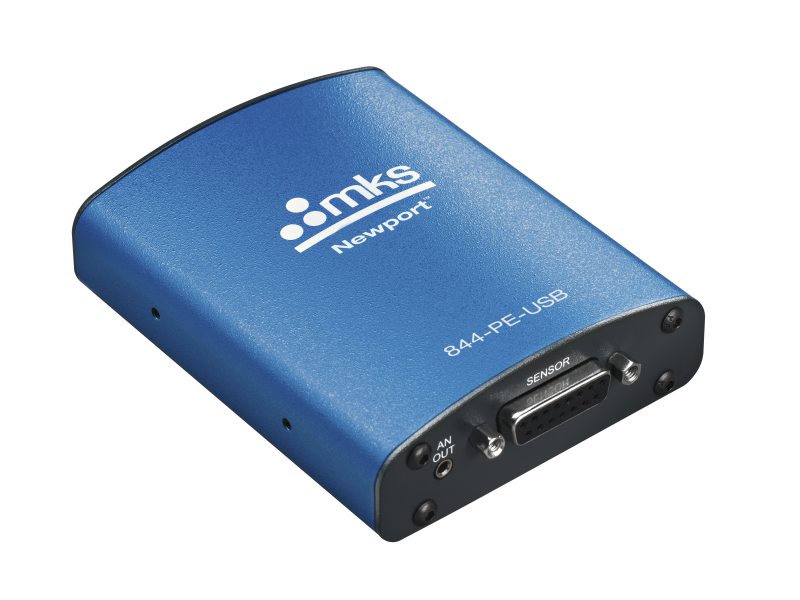 844-PE-USB |
|
|---|---|---|---|---|---|---|
| User Interface | Touchscreen | Advanced | Advanced | Simple | User Commands, PMManager | PMManager only |
| Temperature Sensing | Enabled for -CAL2 and CAL2v2 models | Enabled for -CAL2 and CAL2v2 models | Enabled for -CAL2 and CAL2v2 models | Enabled for -CAL2 and CAL2v2 models | Enabled for -CAL2 and CAL2v2 models | |
| Automatic Attenuator Sensing | Enabled for -CAL2 and CAL2v2 models | Enabled for -CAL2 and CAL2v2 models | Enabled for -CAL2 and CAL2v2 models | Enabled for -CAL2 and CAL2v2 models | Enabled for -CAL2 and CAL2v2 models | |
| Measurement Modes | Power, Low Freq. Power Peak-to-Peak Power, RMS Power, Exposure, Exposure Fast Power Current Voltage |
Power, Peak-to-Peak Power, RMS Power, Current |
Power, Low Freq. Power Exposure |
Power | Power Low Freq. Power |
Power Low Freq. Power |
| Analog Bandwidth | Up to 200 kHz | Up to 400 kHz | 15 Hz | 15 Hz | 15 Hz | 15 Hz |
| Data Storage | 2 GB internal, External USB memory size, Via PMManager |
250,000 pts internal | Limited by USB memory size | User Commands, PMManager | Via PMManager | |
| Measurement Rate per Second | Normal: 15 Fast Mode: 10,000 |
10,000 | 15 | 15 | 15 | 15 |
| Trigger In/Out | ✔ | ✔ | ||||
| Analog Out | ✔ | ✔ | ✔ | ✔ | ✔ | ✔ |
| Computer Interface | USB RS-232 |
USB RS-232 |
USB RS-232 |
RS232 | USB |
1 Only available with model
Additionally, please refer to Newport Power Meter and Detector Legacy and Compatibility for a complete list of meters that are compatible with this model.
Specifications
Features
Divergent Beam Input
Depending on the beam divergence characteristics of the light source, Newport offers two different types of integrating sphere detectors – Divergent or Collimated. The 819D series detectors are designed for a diverging light source, including laser diodes, lensed LEDs and lensed lamps. In the 819D series, the baffle is placed between the input port and the detector, so that the undiffused beam does not hit the detector directly.

Integrating Sphere Accessories
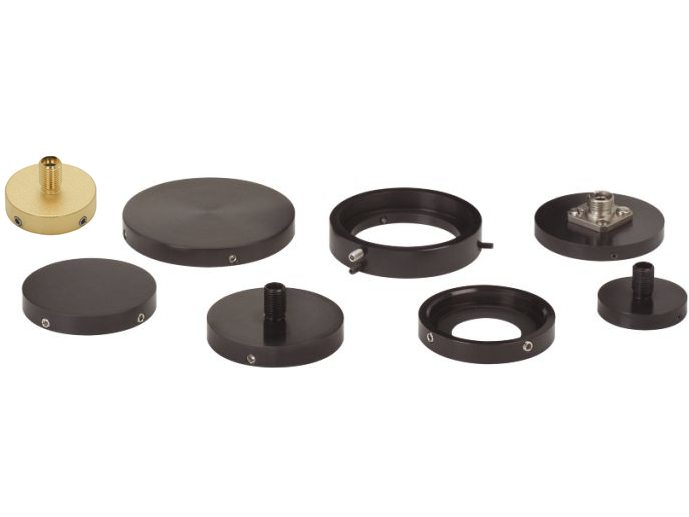
Newport offers accessories that are compatible with our integrating spheres to build a complete integrating sphere system. Various adapters are available to change port frame diameter, reduce an input port's clear aperture, measure fiber optic power, connect lens tubes and mount sensors. Port plugs to block an unused sphere port are also available.
Why Integrating Sphere Detectors?
One of the major advantages of using an integrating sphere is to diffuse the input beam so that the detector readings are insensitive to errors caused by detector positioning or problems associated with overfilling, or saturation of the active area of the detector. The detector should see a completely diffused input field. Then, a key technical consideration, when deciding which configuration one has to choose, is whether the input beam will directly hit the detector, influencing the optical power at the detector. For this purpose, each integrating sphere includes a baffle. For more information, please refer to our Integrating Sphere Fundamentals and Applications Tutorial.
Factors that Affect Maximum Measurable Power
The maximum measurable power of photodiode sensors is dependent on several factors such as the wavelength of incoming light, photodiode current output saturation, temperature, use of an attenuator and a power meter's maximum current input value. Newport provides maximum power specifications based on the power meter models, with and without an attenuator, and wavelength-dependent maximum power level. With these factors affecting measurable power in mind, choosing the proper detector for your application is critical.
Tightest Calibration Uncertainty
UV, Visible, and IR Wavelength Ranges Available
Post-Mountable for Accurate Measurements
To ensure accurate measurements, it is recommended to mount these integrating spheres securely. One way to do so is by mounting them on an optical post.

Advanced –CAL2 Models
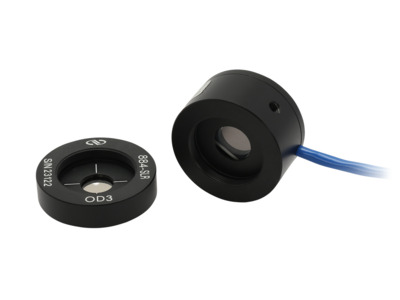
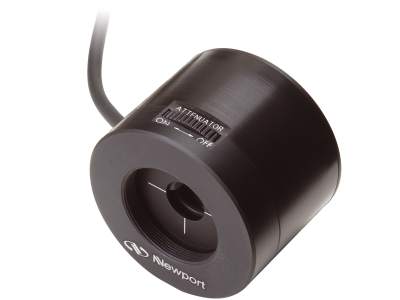
Advanced models that end with a “-CAL2” suffix feature a detector that has an integrated thermocouple and OD1 attenuator. When these models are connected to power meter models 1830-R, 1918-R, 1936-R or 2936-R, they will automatically recognize both the attenuator “on/off” position as well as the detector head temperature. The advanced models are designed for added convenience and ease of use.
SMA Fiber Adapter on the North Pole
All the spheres come with an SMA fiber adapter on the North pole as a standard feature, allowing a small amount of light pickoff for wavelength measurement or any further analysis without affecting the overall system calibration. All sphere detectors are calibrated with the adapter already installed.
It is important to determine whether enough signal can be sent to the spectrometer or a monochromator. A rough estimate on how much light will couple to the optical fiber can be obtained by taking the ratio between the core area or the effective mode area of the fiber and the surface area of the sphere, which can be very small. We recommend using a spectrometer that accepts at least 400 to 600 um diameter fiber input.

Note on User Modification of Configuration
Resources
Tutorials
Literature
Maximum Measureable Power for Photodiode Detector(438.4 kB, PDF) Calibrated Divergent Beam Integrating Sphere Sensors Datasheet(1.8 MB, PDF)